The industrial revolution of the 18th century was a noisy one. Then again, it was powered by steam engines and coal, neither of which are particularly well-known for their stealth qualities. You’d think the modern digital revolution would be different - it’s all 1s and 0s, after all - however, that’s not the case.
The vast data centers that power email, social media, crypto, and AI require colossal amounts of energy (Bitcoin servers, on their own, use enough annual electricity to power Switzerland for a year). With such massive energy consumption comes massive cooling requirements - and with cooling comes noise pollution.
As data centers scale up across the globe to meet digital demand, the relentless, low-frequency hum they generate is driving local residents to protest. Digital tech may be advanced, but when it comes to noise, it’s taking us back to the 18th century.
In this article, we’ll explore data center noise pollution, the impact it’s having on communities, and how companies like Memtech Acoustics can help deliver your digital services a little quieter.
Key Takeaways
- The primary cause of noise pollution from data centers is the constant operation of powerful cooling systems. The resulting low-frequency hum is highly disruptive to neighboring communities.
- Noise reduction requires a multi-pronged approach: Source Control (using quieter equipment and silencers), Path Control (implementing engineered acoustic barriers and enclosures), and Isolation (using vibration isolators to prevent structure-borne noise).
- Residents, such as those in Augusta Charter Township, Michigan, are actively opposing new data centers due to concerns over noise and air pollution.
- Controlling complex industrial noise requires professional intervention. Firms like Memtech Acoustics provide an engineering-first, data-driven approach that delivers custom-built solutions for community well-being.
Why data centers are such a noise problem
A data center is a non-stop, 24/7 operation. The thousands of interconnected servers, storage units, and networking equipment generate immense amounts of heat. To prevent hardware from failing, powerful systems need to run continually, with these systems being the primary source of noise pollution.
The key components in the data center noise equation are as follows:
Cooling systems (Fans, Chillers, and HVAC): These are the loudest and most common sources of noise, particularly the large external air handling units (AHUs) and cooling towers. The noise from high-velocity fans and the low-frequency drone from compressors are what often travel farthest into a community.
Back-up diesel generators: While only designed to run during power outages or for maintenance tests, these units are incredibly loud, sometimes generating noise levels up to 110 dBA* close to the source. Their regular, mandated testing poses a major, albeit temporary, noise event for neighbors.
Transformers and electrical infrastructure: Large electrical components emit a distinct, low-frequency humming sound (often described as tonal noise) that, while not as high in decibels as the fans, can be particularly irritating because of its constancy.
Indoor servers and fans: Inside the facility, each server rack contains multiple cooling fans. While shielded by the building structure, the cumulative noise within the server hall itself can reach levels dangerous for workers.
What are the other downsides of data centers?
Noise is just one part of a much larger environmental and social footprint. Data centers are resource-intensive structures that place major demands on local infrastructure and ecosystems.
Vast energy consumption and emissions
The huge amounts of electricity that data centers need are often sourced from local grids. If that grid relies on fossil fuels (coal or natural gas), the facility contributes substantially to greenhouse gas emissions and local air pollution. The surge in AI and cloud computing, in particular, is dramatically increasing this energy demand, potentially undermining state-level clean-energy goals.
Strain on water resources
Many cooling systems, particularly evaporative cooling towers, use enormous volumes of water. An average Google data center consumes around 450,000 gallons of water per day, putting severe stress on local municipal water supplies, especially in drought-prone or water-scarce regions.
Air pollution from diesel generators
The required back-up diesel generators, when tested or running, emit major levels of pollutants, including particulate matter and nitrogen oxides. These pollutants degrade local air quality and pose serious health risks, such as respiratory issues, to nearby residents.
Loss of rural character and light pollution
The construction of massive, often windowless industrial buildings on former farmland or undeveloped sites leads to the permanent loss of rural landscapes. What’s more, the security and operational lighting needed can create a disruptive permanent glow that impacts local wildlife and residents' quality of life.
How to reduce data center noise
While solving every problem associated with data centers is beyond the remit of a single blog post, we can certainly take a meaningful look at noise pollution. The most cost-effective and successful ways to control data center noise are implemented during the initial design and planning phase, addressing sound at the source, along the path, and at the receiver (the nearby community).
Source control (quieter equipment and cooling)
Low-noise equipment selection: Prioritize chillers, fans, and transformers that are specifically rated for low-noise operation. Using Variable Frequency Drives (VFDs) on fans allows their speed - and thus their noise output - to be reduced during periods of lower cooling demand.
Innovative cooling tech: Systems like liquid immersion cooling or direct-to-chip liquid cooling can dramatically reduce or entirely eliminate the need for loud, high-volume air cooling fans and huge air conditioning units.
Mufflers and silencers: Install high-performance industrial silencers on the exhaust ports of back-up diesel generators and large air handling systems.
Path control (barriers, enclosures, and building design)
Acoustic barriers and sound walls: Constructing engineered acoustic barriers (walls or fences) around noisy external equipment (chillers, cooling towers, generators) is one of the most effective measures. For maximum noise reduction, these barriers must be sufficiently high, long, and constructed from materials that are sound-absorbent rather than merely reflective.
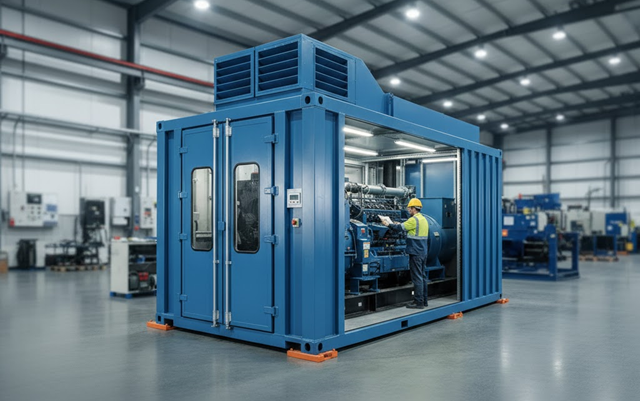
Acoustically rated enclosures: Completely enclosing the loudest equipment, such as chillers or generators, within a dedicated, sound-insulated shelter is a highly effective approach. These enclosures use specialized acoustic panels and materials to dampen and absorb sound before it can radiate outward.
Optimized site layout: It’s important to place the noisiest equipment (like the cooling plant) as far as possible from the nearest noise-sensitive receptors, such as residential property lines, and use existing terrain or structures as natural acoustic shields.
Acoustic louvers: Install specialized acoustic louvers on all external air intake and exhaust openings to allow necessary airflow while reducing sound transmission.
Isolation and internal absorption (treating noise generated within the building structure)
Vibration isolation: Use engineered isolators like spring mounts and elastomeric pads under all heavy mechanical equipment, including chillers, pumps, and generators. This prevents structure-borne noise (vibration transmitted through the building frame) from turning walls and floors into large, noisy speaker cones.
Internal acoustic treatment: Within the plant rooms and generator rooms, lining walls and ceilings with high-performance sound-absorbent panels and baffles reduces noise reverberation, which lessens the overall sound energy available to break out through walls and openings.
People vs data centers: The Michigan conflict
Across the U.S., communities are increasingly clashing with the rapid expansion of data centers. In Michigan, for example, this growing national debate has taken center stage in Augusta Charter Township, where residents are organizing themselves in a bid to stop a proposed 822-acre data center project.
Local residents have united under the banner of Protect Augusta Charter Township (PACT), a grassroots group that represents a broader struggle between corporate development and community well-being. While the proposed project-backed by New York-based developer Thor Equities - promises millions in new tax revenue and infrastructure improvements, for many local residents, these benefits come at too high a price.
Noise and quality of life: Opponents warn that the constant, low-frequency hum of industrial cooling systems and diesel generators would permanently ruin the tranquility of their rural community. They argue that current noise regulations fail to capture the cumulative impact of 24-hour operations, particularly in quiet, agricultural settings. What might be acceptable in an urban industrial zone could become unbearable in a small township.
Environmental degradation: Environmental concerns are at the heart of the opposition. The center could consume up to 1 million gallons of water per day, threatening local wells and wetlands that are already under stress. Diesel backup generators may also release pollutants, adding to worries about deteriorating air quality and habitat loss on what is currently farmland and wetland.
Economic concerns: While township officials hail the potential for tax revenue, many residents question whether that revenue will actually materialize. They fear the project’s enormous energy demands could drive up electric rates and strain the regional power grid-forcing ordinary residents to shoulder hidden costs through higher utility bills and reduced reliability.
Loss of character: Beyond environmental and economic arguments, residents speak emotionally about losing their “sense of place.” They worry that acres of glowing lights and concrete buildings will erase the rural charm and open landscapes that define their community’s identity.
Having collected nearly a thousand signatures for a May 2026 ballot initiative, Augusta residents are asserting local control where they feel higher authorities have failed. To them, this is not mere NIMBY-ism (not-in-my-backyard) but a defense of self-determination - a stand against the unchecked industrialization of small-town America.
How Memtech Acoustics Can Help
No matter how people may fight against the proliferation of data centers, the fact of the after is we need them. At Memtech Acoustics, we deliver the acoustic insight and engineering precision needed to tackle noise issues before they become deeply rooted problems. Using advanced modeling and instrumentation, we identify all sources of noise-whether it's the pulse of a generator or the drone of a cooling system-and predict how this will ripple through the surrounding environment.
Analysis is only the beginning, however. We design tailored, integrated solutions that bring quiet efficiency to every corner of a facility. From acoustically engineered generator enclosures to high-performance barriers that tame cooling tower noise, each design is grounded in data, tested in real conditions, and refined for long-term resilience.
The result is much more than just regulatory compliance - it’s the creation of spaces where technology operates smoothly, workers can focus, and communities can coexist without the need to appoint legal teams. To find out how Memtech Acoustics can help you build a more community-friendly data center, you can contact us here.