How We Work
Discover. Assess. Solve.
From field testing to engineered reporting, every solution we deliver is defined by data, driven by expertise, and validated for performance.
How We Work
At Memtech Acoustics, we believe that noise and vibration control isn’t an afterthought, it’s an essential part of how rooms, systems, and structures perform. From a single conference area to a large-scale industrial complex, our engineering team approaches every project with precision, purpose, and accountability.
We combine scientific analysis with real-world insight, applying field measurements, advanced modeling, and standards-based testing to understand each environment in detail. Whether you’re designing a new facility, retrofitting an existing space, or troubleshooting a persistent issue, we operate as an extension of your team. We collaborate with owners’ representatives, architects, engineers, contractors, safety professionals, and end users to achieve shared goals.
Every engagement begins with a thorough acoustic and vibration assessment, leading to custom-engineered solutions that balance performance, practicality, and cost. Whether the objective is enhancing speech privacy, improving workplace safety, reducing environmental noise, or achieving specification-driven targets, Memtech delivers effective solutions that are maintainable, within budget, and built to last. Every solution is engineered and integrated by Memtech Acoustics.
We combine scientific analysis with real-world insight, applying field measurements, advanced modeling, and standards-based testing to understand each environment in detail. Whether you’re designing a new facility, retrofitting an existing space, or troubleshooting a persistent issue, we operate as an extension of your team. We collaborate with owners’ representatives, architects, engineers, contractors, safety professionals, and end users to achieve shared goals.
Every engagement begins with a thorough acoustic and vibration assessment, leading to custom-engineered solutions that balance performance, practicality, and cost. Whether the objective is enhancing speech privacy, improving workplace safety, reducing environmental noise, or achieving specification-driven targets, Memtech delivers effective solutions that are maintainable, within budget, and built to last. Every solution is engineered and integrated by Memtech Acoustics.
STEP 1
Discovery & Qualification
We start with a collaborative focus to understand your site conditions, challenges, and goals.
We assess risk, establish requirements, determine appropriate metrics, and align with your priorities.
We assess risk, establish requirements, determine appropriate metrics, and align with your priorities.
Here are the types of questions we ask:
What is the current acoustic performance or concern you’re experiencing?
What are the room characteristics? (e.g., dimensions, geometry, construction materials, mechanical configuration, environmental factors, etc.)
What are the specific sound sources or types of noise/vibration (impact, airborne, mechanical, etc.)?
How is the space currently used, and how might that change in the future?
What level of speech intelligibility or sound isolation is required?
Have you established target levels? Are there any legal or company criteria to be met?
STEP 2
On-Site Assessment
We then begin the process of data acquisition. A site visit fee may apply based on the complexity and scope discussed during the discovery call.
The data acquisition plan and diagnostics are engineered to address your specific noise and vibration challenges. Here’s what to expect depending on the type of project:
The data acquisition plan and diagnostics are engineered to address your specific noise and vibration challenges. Here’s what to expect depending on the type of project:
- Project Scoping: We align on goals, identify key areas of concern, and confirm regulatory or stakeholder requirements.
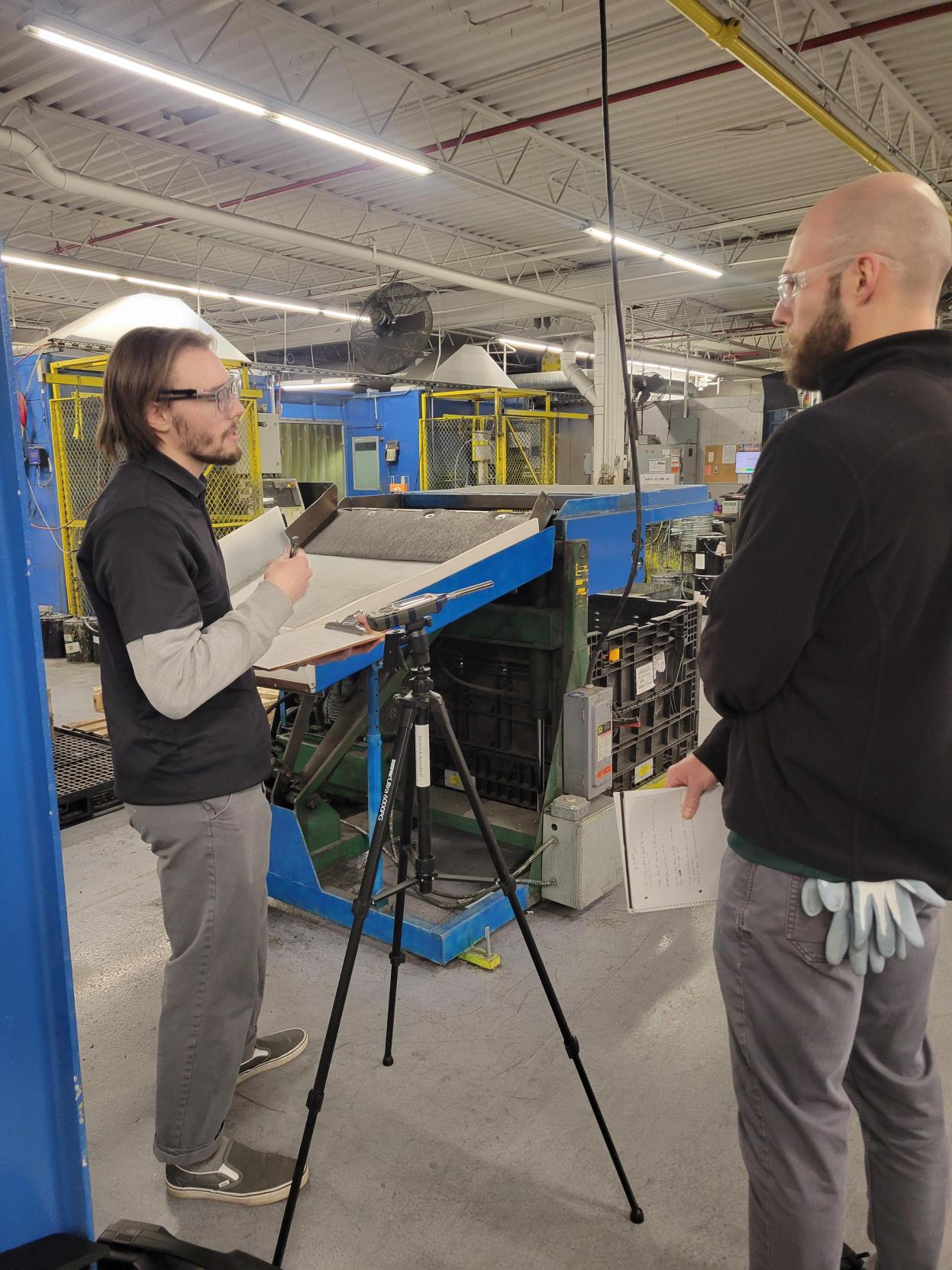
- Site Walkthrough & Observation: Our engineers conduct a detailed walkthrough to understand physical layout, noise/vibration sources, and operational dynamics.
- Measurements: We deploy the appropriate instrumentation and data acquisition systems to capture real-time data. This may include sound pressure levels, reverberation time, background noise, or vibration readings.
- Data Logging & Environmental Context: For projects needing extended monitoring (e.g., environmental or occupational exposure), we set up data loggers and document site conditions, weather, and workflows.
- Source Identification & Mapping: We isolate dominant sources of noise or vibration and evaluate potential transmission paths (structural, airborne, or mechanical).
- Initial Findings & Recommendations: We review key observations on-site, answer immediate questions, and outline next steps.
- Follow-Up Reporting: You’ll receive a comprehensive report that includes data visuals, site photos, benchmarks, and clear recommendations for your stakeholders, regulators, or project team.
.jpeg)
STEP 3
Support That Scales With Your Needs
Choose the level of engagement that aligns with your timeline, scope, and in-house expertise.
Full-Service Implementation
We take full ownership of the solution so your team can focus on what they do best without juggling vendors, specs, or compliance.
End-to-end project management, from testing to install
Product sourcing, procurement, and installation
Ongoing support during implementation phase
Post-install validation
Collaborative Deployment
Perfect for teams who can install themselves, but need the right materials and expert support.
Site evaluation and testing as needed
Design recommendations and calculations
Material selection guidance and sourcing support
Project timeline coordination with your internal team
Self-Guided Solutions
For projects with clear scopes and completed takeoffs, especially those led by your architect or contractor.
Product recommendations based on project needs
Material supply only (panels, baffles, enclosures, etc.)
Basic installation guidelines included
Support via phone or email for clarification
Let’s Engineer the Right Solution, Together.
STEP 4
Proposal & Recommendations
Whether your project begins with an on-site assessment or a remote review of plans and specifications, we translate findings into actionable next steps. Our team delivers a clear proposal tailored to your objectives, constraints, and performance requirements.
Depending on scope, this may include:
- A summary of key findings and diagnostic benchmarks.
- Prioritized recommendations aligned with your operational goals and constraints.
- Scalable options based on internal capabilities and implementation readiness.
- Phased strategies when appropriate, especially for projects with evolving performance targets, or with incremental budgets.
- A detailed proposal outlining our recommended solution, approach, timeline, and deliverables.
Our approach is built for flexibility without compromising integrity, so you can move forward with confidence, one phase at a time.
STEP 5
Execution & Results
Once the project is approved, we support execution at the level that fits your project needs.
Depending on scope, this may include:
- Pre-install handoff to project manager
- Scheduling and site coordination
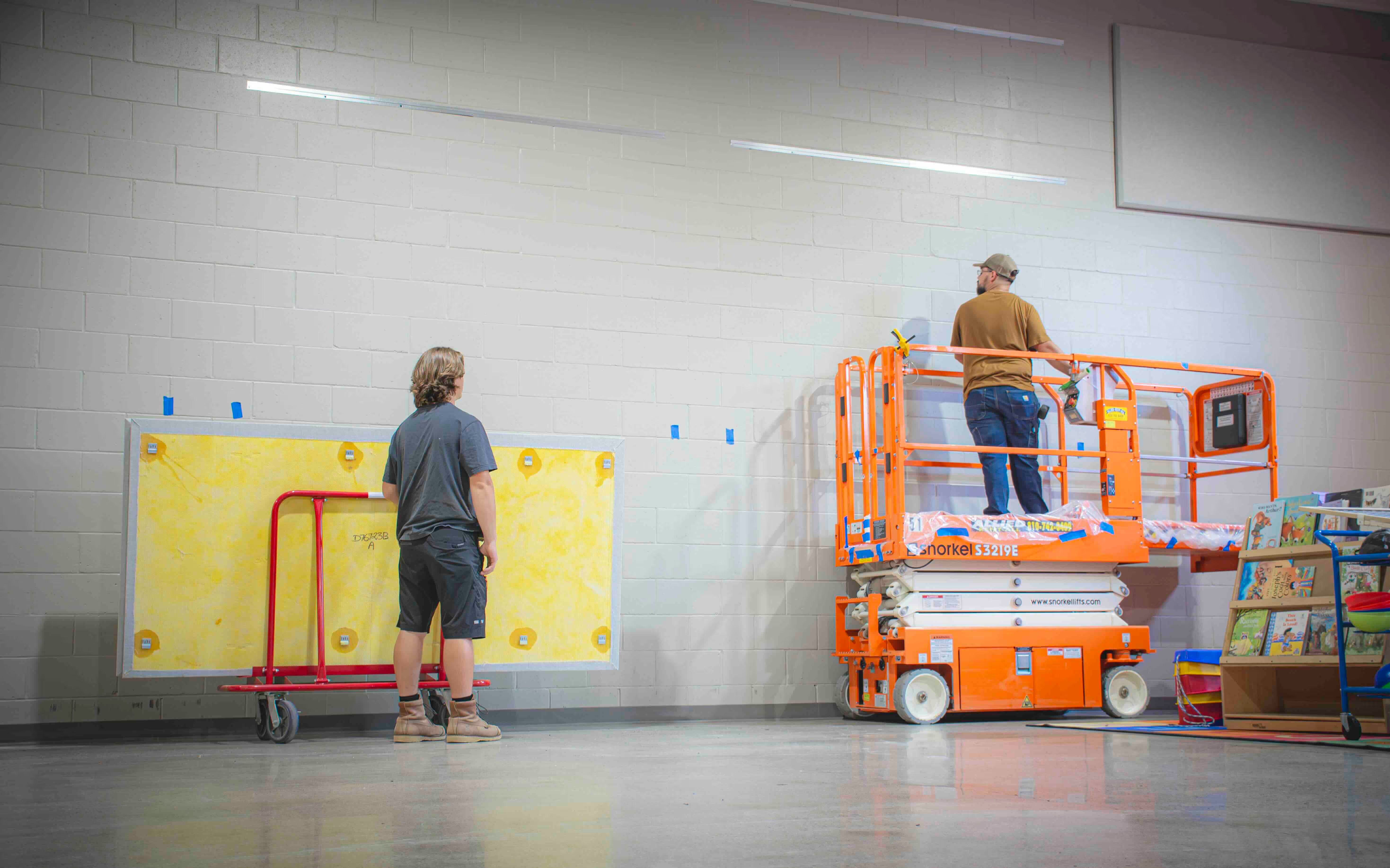
- Professional installation
- Post-treatment performance validation
- Final walkthrough and confirmation
Whether you're managing the installation in-house or partnering with us for delivery, our goal remains the same: lasting results you can trust.
HOW WE WORK
Analytical Visits
Survey visits are intended for noise control situations where a problem is too complex to discuss over the phone, or where the customer may be unable to provide drawings or noise data. We also suggest site visits when a customer is unsure of the nature of the problem or is dealing with noise complaints from others. These visits allow a member of our team to fully understand the problem, and acquire sufficient data to support the generation of a viable and targeted solution.
Survey visits are typically completed in 2 hours or less.
Survey visits are typically completed in 2 hours or less.
Survey visits typically include:
- Making sound pressure and frequency-content measurements
- Performing comprehensive dimensional and/or layout measurements of the facility or area
- Discussions with all key stakeholders to fully understand the scope and nature of the problem
- Inspection of involved area(s) to identify problems
- The generation of a brief summary report, showing key findings and recommended solutions
- The generation of a quote (where appropriate) for necessary acoustic materials and/or installation labor to resolve the problem.
Note: Site visits are not intended to resolve legal noise issues (e.g. ordinance violations), or for OSHA/NIOSH noise level violations, as these matters require a great deal of preparation, proper documentation and analysis. Nor are they appropriate for highly complex or large-scale noise problems.

Ongoing Support
Our support plans are designed to assure satisfactory performance long after the initial project wraps.
- Optional routine on-site measurements to ensure continued regulatory compliance
- Hearing conservation program management & documentation
- Compliance advisement for audits, permits, and ordinance reviews
- Support for employee training and hearing conservation education
- On-call expert access for operational or layout changes

Let's Get Started. Contact Us.
Talk to our experts. We’ll assess your needs and recommend a solution that works for your project.



© 2025 Memtech Acoustics. All rights reserved.