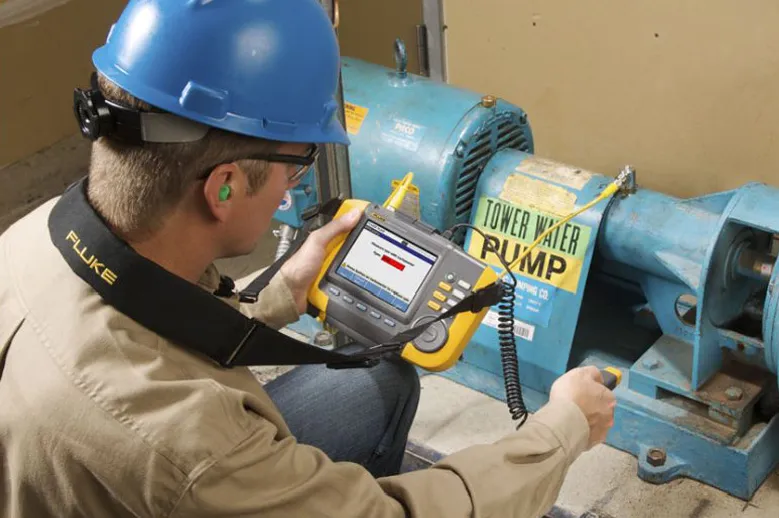
The Hidden Cost of Vibration
Uncontrolled vibration from machinery and equipment doesn’t just create noise, it accelerates wear, reduces machining tolerances, and disrupts productivity. Left untreated, vibration can lead to increased maintenance costs, safety concerns, and poor working conditions.
Memtech Acoustics supplies a full line of anti-vibration mounts, pads, and isolation systems designed to stop vibration at its source. These engineered solutions can also isolate vibrating machines from floors and building structures, ensuring smoother operation, longer equipment life, and a safer working environment.
Memtech Acoustics supplies a full line of anti-vibration mounts, pads, and isolation systems designed to stop vibration at its source. These engineered solutions can also isolate vibrating machines from floors and building structures, ensuring smoother operation, longer equipment life, and a safer working environment.
Our anti-vibration solutions are engineered to help you:
- Reduce impact noise and vibration transmission
- Improve machine accuracy and extend service life
- Minimize downtime when relocating or resetting equipment
- Create a safer, more comfortable environment for operators
- Save costs through reduced maintenance and energy efficiency
The result is a more reliable facility where people and equipment perform at their best. When the problem also involves airborne noise, Memtech Acoustics pairs isolation with acoustic enclosures and the wider industrial noise control program.
Industries That Benefit Most

Manufacturing & Assembly
CNC and transfer-line machining, stamping, injection molding, and production lines

Energy & Utilities
Power generation, turbines, pumps, and HVAC systems

Healthcare & Laboratories
MRI, CT, and diagnostic imaging equipment requiring vibration-free environments

Education & Research
Universities and labs with sensitive test instruments

Aerospace & Defense
Vibration control for mission-critical aerospace and defense environments

VIBRATION ISOLATION Mounts & PADS
Isolating Presses and Metal Forming Equipment
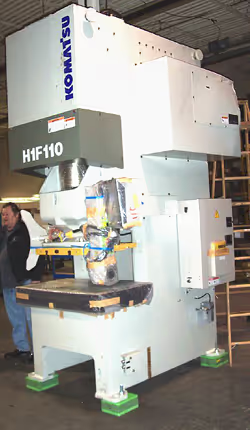
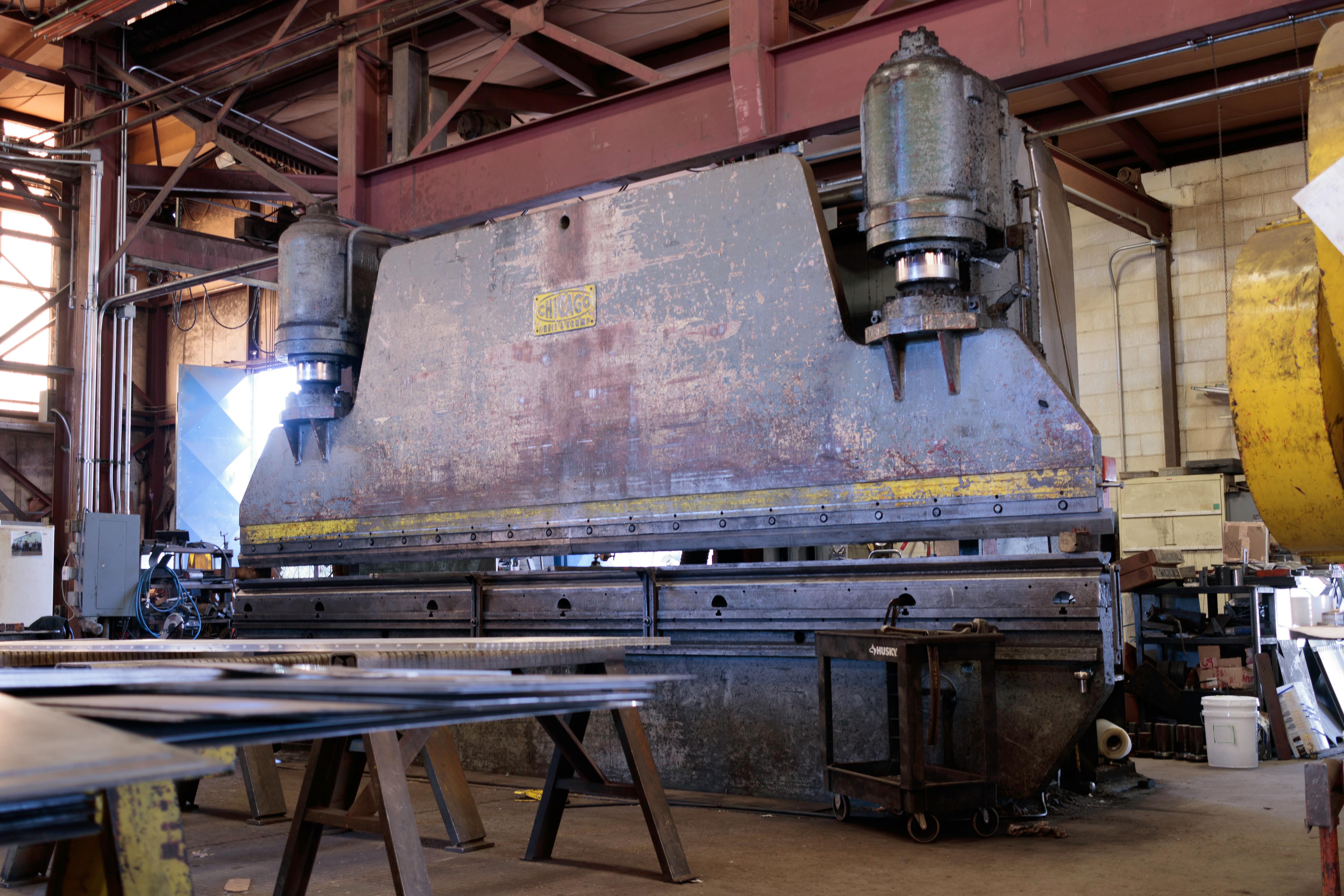
Stamping presses, punch presses, shears, and die casting machines create high dynamic forces with every stroke. That force travels through the machine feet into the slab, where it disturbs nearby machine tools and inspection equipment and reradiates as low-frequency noise in other parts of the plant.
Memtech Acoustics supplies isolation pad grades developed specifically for machines with high dynamic force, such as presses, shearing machines, and stamping machines. Pad grade, area, and thickness are matched to the press weight on each support point and to its stroke rate, because an isolator tuned too close to the operating frequency amplifies motion instead of reducing it. For larger presses, we also review whether the foundation itself needs to be isolated from the surrounding floor.
What we review for a press installation:
- Press weight and the load on each support point
- Stroke rate and the vibration frequencies it produces
- Slab construction and any sensitive equipment nearby
- Anchoring and stability requirements while the press runs

VIBRATION ISOLATION Mounts & PADS
Isolation for CNC Machine Tools, CMMs, and Molding Machines
Machining centers, lathes, transfer lines, and injection molding machines need two things from their mounts: isolation and a stable, level base. Leveling mounts combine both, so a machine can be set, aligned, and later relocated or re-leveled without rebuilding its foundation.
Precision equipment such as coordinate measuring machines (CMMs), laboratory instruments, and weighing equipment has the opposite problem. The vibration comes in from the floor, often from presses or traffic nearby, and the goal is to keep it out of the instrument. Memtech Acoustics supplies softer, thicker pad grades for this kind of passive isolation and for isolating the foundations of very sensitive systems.
Matching the pad to the machine:
- Machining centers and machine tools: grades built for high static loads with a low structure height
- Transfer lines and long-bed machines: high load capacity grades
- CMMs, lab instruments, and weighing equipment: passive isolation grades
- Printing presses, paper, and textile machines: high-damping general-purpose grades
Vibration Isolation Systems

VIBRATION ISOLATION Mounts & PADS
Adjustable Levelers
Effective equipment mounts that combine leveling and vibration control in one system.
Performance & Design Highlights:
- Height adjustment capability ensures stability on uneven or sloped floors
- Integrated damping elements absorb shock and vibration, reducing wear on moving parts
- Quick adjustment design allows machines to be relocated or re-leveled without lengthy downtime
- Commonly used for machining centers, transfer-line equipment, packaging equipment, and laboratory devices where alignment and accuracy are critical

VIBRATION ISOLATION Mounts & PADS
Damping Pads
Flexible, high-resilience pads designed for direct placement under machines and equipment.
Performance & Design Highlights:
- Constructed of oil- and chemical-resistant materials for industrial durability
- Provide broadband vibration absorption, reducing noise across a wide frequency range
- Fast and straightforward installation makes them an economical option for lighter equipment
- Ideal for HVAC units, pumps, compressors, and small machine bases where simplicity and cost efficiency matter

VIBRATION ISOLATION Mounts & PADS
Machine Mounts
Heavy-duty mounts engineered for industrial machinery with significant levels of vibration.
Performance & Design Highlights:
- Designed to support high load capacities while isolating vibration at its source
- Reduce coupled vibration that may impact machining tolerances or affect neighboring equipment
- Available in low-profile or high-deflection designs depending on frequency and load requirements
- Commonly applied to CNC machines, transfer-line equipment, presses, stamping equipment, injection molding machines, and power tools

VIBRATION ISOLATION Mounts & PADS
Foundation Isolation Systems
Large-scale solutions that decouple entire equipment foundations from surrounding structures.
Performance & Design Highlights:
- Custom-engineered isolators sized to weight, source frequency, and facility requirements
- Protects against structural resonances and reduces coupled transmission through concrete floors and building frames
- Isolates external sources of vibration caused by trains, shipping, construction equipment, etc.
- Essential for turbines, test cells, large compressors, and power generation systems.
- Supports facilities where vibration can disrupt operations, testing, or nearby sensitive equipment.
VIBRATION ISOLATION Mounts & PADS
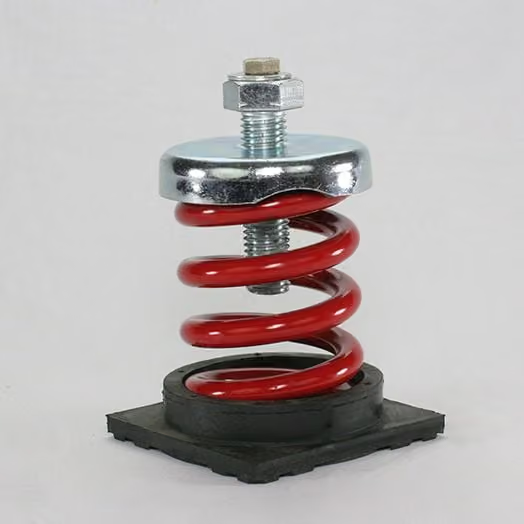
Kinetics® FDS Free-Standing Spring Isolators
FDS spring isolators support floor-mounted mechanical equipment on large-diameter, laterally stable steel springs, limiting the vibration and structure-borne noise passed into the building. Springs are selected to the static deflections on the project's vibration isolation schedule.
Performance & Design Highlights:
- Static deflections up to 4" (102 mm) and load capacities up to 23,200 lb as standard products, with custom capacities available
- Lateral spring stiffness greater than 1.0 times the rated vertical stiffness, with a minimum 50% overload capacity
- Powder-coated springs rated for 1,000 hours of salt spray per ASTM B117, with leveling bolts on the upper load plate
- Used under compressors, pumps, packaged air handling units, fans and engines that are not subject to lateral forces such as wind
VIBRATION ISOLATION Mounts & PADS
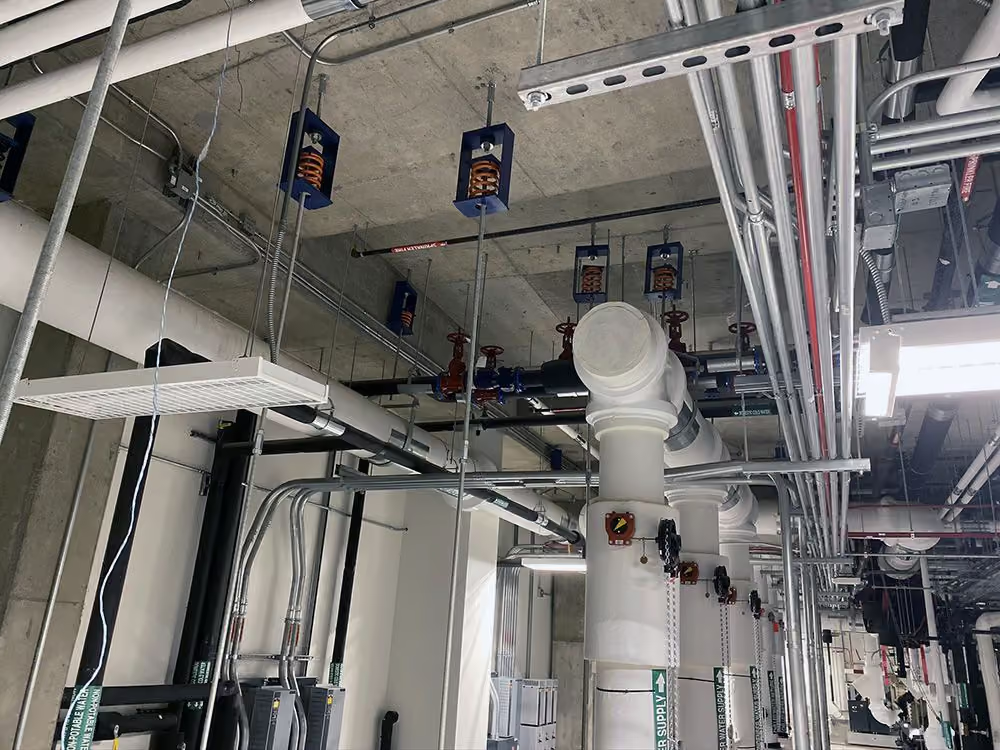
Kinetics® SRH Spring and Rubber Isolation Hangers
SRH hangers isolate suspended mechanical equipment and piping. A laterally stable steel spring in series with an elastomer-in-shear element addresses both low-frequency vibration and higher-frequency structure-borne noise.
Performance & Design Highlights:
- Static deflections from about 1" to over 4" across a wide range of load capacities
- Spring lateral stiffness at least equal to vertical stiffness, allowing up to 30° of hanger rod misalignment without short-circuiting
- Hanger brackets designed to withstand up to 500% overload without failure
- Color-coded, powder-coated springs, also available preloaded (SRPH)
- For piping, the manufacturer recommends the three hangers nearest the equipment match the equipment isolator deflection, with at least 1" deflection on the rest
VIBRATION ISOLATION Mounts & PADS
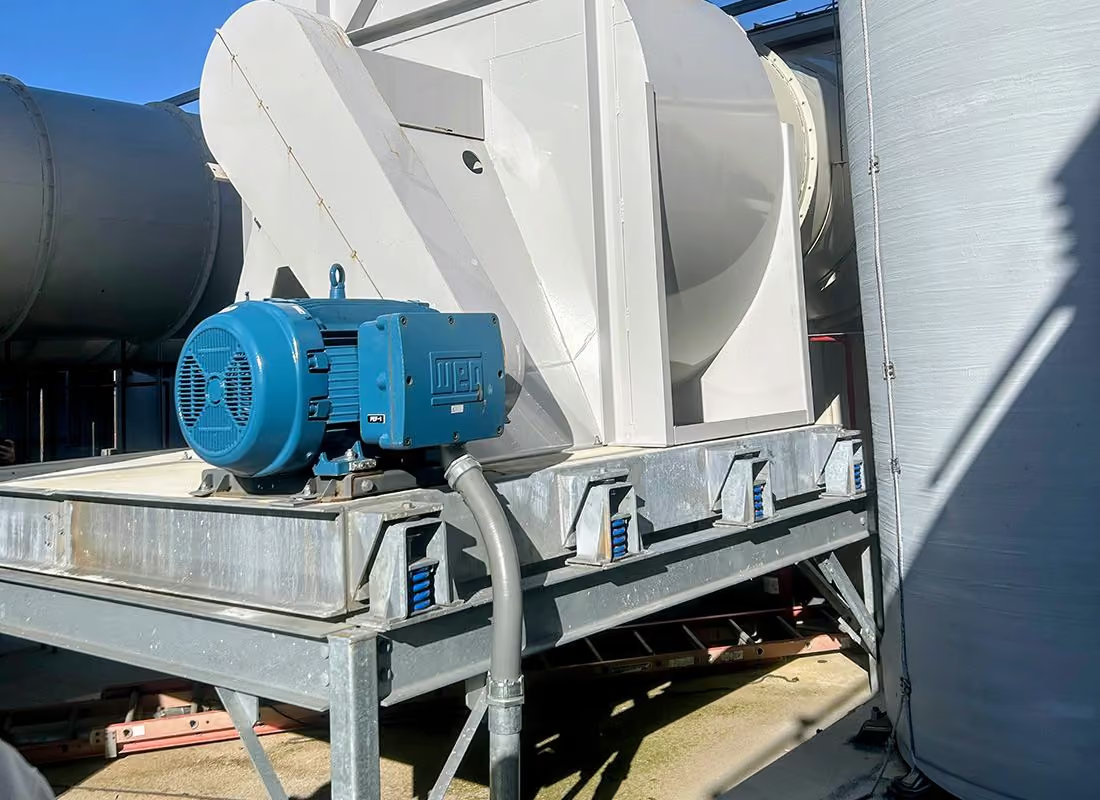
Kinetics® CIB Concrete Inertia Base Frames
CIB inertia base frames are filled with concrete on site and set on spring isolators to support mechanical equipment. The added mass lowers the center of gravity, reduces rocking and limits equipment motion during start-up and shut-down.
Performance & Design Highlights:
- Standard frame thicknesses of 6", 8", 10" and 12"
- Integral isolator support brackets, steel channel perimeter pouring frame, reinforcing rods and pre-located anchor bolts
- Delivered fully welded and ready to fill with concrete, reducing on-site labor
- Used under chillers, compressors, base-mounted pumps, centrifugal fans and engines
VIBRATION ISOLATION Mounts & PADS
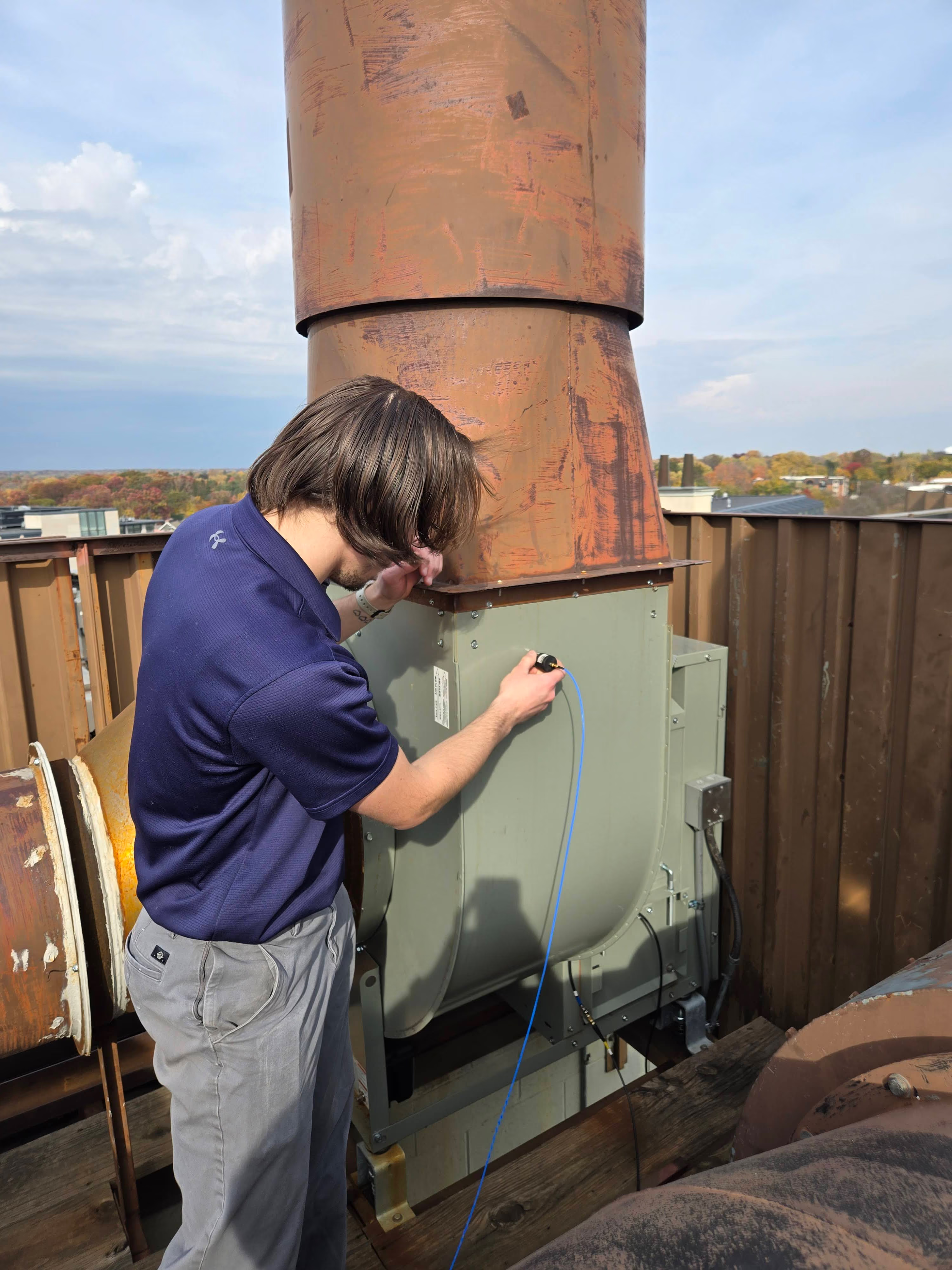
Selecting an Isolator From Measured Data
An isolator only works when its natural frequency sits well below the frequency of the vibration it has to stop. Isolation begins once the disturbing frequency is about 1.4 times the isolator's natural frequency. At three times or more, roughly 85 to 90 percent of the vibration force is kept out of the floor. Near a ratio of one, the isolator resonates and makes the problem worse, which is the most common reason a pad or mount fails in service.
That is why Memtech Acoustics measures before specifying when the application calls for it. Machine builders often ship generic feet or pads, and a grade chosen without data can lose its leveling or amplify vibration at the running speed.
Our process:
- 1. Measure. Accelerometer readings at the machine and on the floor identify the frequencies that matter. See our vibration analysis services.
- 2. Select. Pad grade, area, and thickness, or a leveling mount, machine mount, or foundation system, are matched to the load on each support point and the measured frequency.
- 3. Check the paths. Rigid connections such as pipes, conduit, and ductwork can carry vibration around an isolator, so those connections are reviewed too.
- 4. Validate. Follow-up measurements after installation confirm the result, the same way we verify equipment during machine acceptance testing.
Performance Specifications
Ratings below are for the isolation pad grades Memtech Acoustics supplies. Leveling mounts, machine mounts, and foundation systems are sized for each project.
Rated Pad Loads: 14.5 to 580 psi
Grades run from soft pads for light, sensitive equipment to hard pads for heavy static and dynamic loads. Pad area sets the total load each pad carries.
Natural Frequency: 8.7 to 111 Hz
Vertical natural frequency at rated load ranges from 8.7 Hz on the thickest, softest grades to 111 Hz on thin, hard grades. Lower-frequency sources may need spring isolators or inertia bases, sized per project.
Damping: 5% to 33% of Critical
Higher-damping grades limit motion when a machine starts, stops, and passes through resonance. Lower-damping grades give more isolation at higher frequencies.
Material Performance
Elastomeric compounds: Oil, chemical, and water resistant for industrial durability.
Metal components: Galvanized or stainless steel for corrosion resistance.
Long-term flexibility prevents cracking or shrinkage over years of service.
Metal components: Galvanized or stainless steel for corrosion resistance.
Long-term flexibility prevents cracking or shrinkage over years of service.
Temperature Ratings by Grade
Depending on the compound, pad grades are rated from -4°F to 176°F (-20°C to 80°C) or from 5°F to 212°F (-15°C to 100°C). Each grade's data sheet states its range.
Data Sheet Values
Each pad grade's data sheet reports its rated load range, natural frequency, and damping ratio at rated load, so a selection can be checked before purchase.

VIBRATION ISOLATION Mounts & PADS
Common Vibration Problems
Vibration isn’t just a nuisance, it’s a hidden cost.
- Noise Complaints & Compliance Risks
Equipment vibration creates structure-borne noise that can raise worker noise exposure, disturb neighboring spaces, or draw community complaints. - Equipment Wear & Downtime
Uncontrolled or excessive vibration accelerates bearing wear, equipment alignment, structural integrity and fatigue, leading to more frequent repairs and shorter service life. - Machined Part Quality
In machining centers, labs, and imaging facilities, vibration reduces accuracy, part tolerances, and diagnostic quality. - Building Structural Damage
Continuous vibration transfers through floors and walls, potentially causing radiated noise throughout the building and long-term structural fatigue. - Reduced Comfort & Productivity
Background vibration and low-frequency noise disrupt focus, increase fatigue, and impact morale in offices, schools, and healthcare settings.
Properly selected isolators address these problems at the source, protecting your equipment, your facility, and your people.
Documentation & Resources
FDS Spring Isolators
FDS Spring Isolator Data Sheet
SRH Isolation Hangers
SRH Isolation Hanger Data Sheet
CAD drawings included with custom orders
LEED documentation available upon request
Downloadable installation instructions and specifications
Frequently Asked Questions (FAQs)
How do you choose the right vibration isolator for a machine?
Match the isolator's natural frequency to the machine's operating frequency, then check the load. Isolation begins when the disturbing frequency is about 1.4 times the isolator's natural frequency and improves as that ratio grows. Memtech Acoustics starts with the machine weight on each support point and its running speed or stroke rate, confirms the frequencies with accelerometer measurements when the application calls for it, and then selects the pad grade, area, and thickness or the mount type. An isolator tuned near the running frequency amplifies vibration instead of reducing it.
Should I use isolation pads or spring mounts?
It depends on the frequency you need to isolate. The isolation pad grades Memtech Acoustics supplies have vertical natural frequencies from about 9 Hz to 111 Hz at rated load, which suits machine tools, presses, and most production equipment. Very low-frequency sources need a lower natural frequency than a pad provides, which is where spring isolators or inertia bases come in. Pads also install easily, take little height, and add damping, which limits motion when a machine starts and stops.
Can isolation pads be used under stamping presses?
Yes. Memtech Acoustics supplies pad grades developed for machines with high dynamic force, including presses, shearing machines, and stamping machines. Each press is reviewed for its weight on each support point, its stroke rate, its anchoring needs, and the floor around it, because a press has to stay stable while it runs. For large presses, or where sensitive equipment sits nearby, the press foundation may also need to be isolated from the surrounding slab.
Will isolation pads throw a CNC machine out of level?
Not when the grade is matched to the load. Memtech Acoustics supplies hard, high-load pad grades built for machining centers and machine tools, with a low structure height and good leveling stability, plus leveling mounts that combine height adjustment and isolation in one unit. A pad that is too soft for its load can deflect unevenly, which is why the load on each support point is checked before a grade is selected. Leveling mounts also let a machine be re-leveled or relocated without rebuilding its base.
Will isolating a machine reduce noise elsewhere in the building?
It reduces the structure-borne part of the noise. When a low-frequency hum shows up in rooms with no line of sight to the machine, the vibration is usually traveling through the building structure, and isolation keeps it out of the slab. Airborne noise that radiates from the machine itself still needs an enclosure, barrier, or absorptive treatment. Memtech Acoustics measures both paths so each gets the right treatment, and reviews rigid pipe, conduit, and duct connections that can carry vibration around an isolator.
Does Memtech Acoustics supply isolators or only design them?
Both. Memtech Acoustics measures the vibration, selects the isolators, supplies the pads and mounts, coordinates installation, and validates the result with follow-up measurements. Facilities with their own maintenance crews can order material only, with the selection and data sheets provided for their team. To quote, we need the machine type and weight, the number of support points, the operating speed or stroke rate, the floor construction, and photos of the current mounting.

Let's Get Started. Contact Us.
Talk to our experts. We’ll assess your needs and recommend a solution that works for your project.