
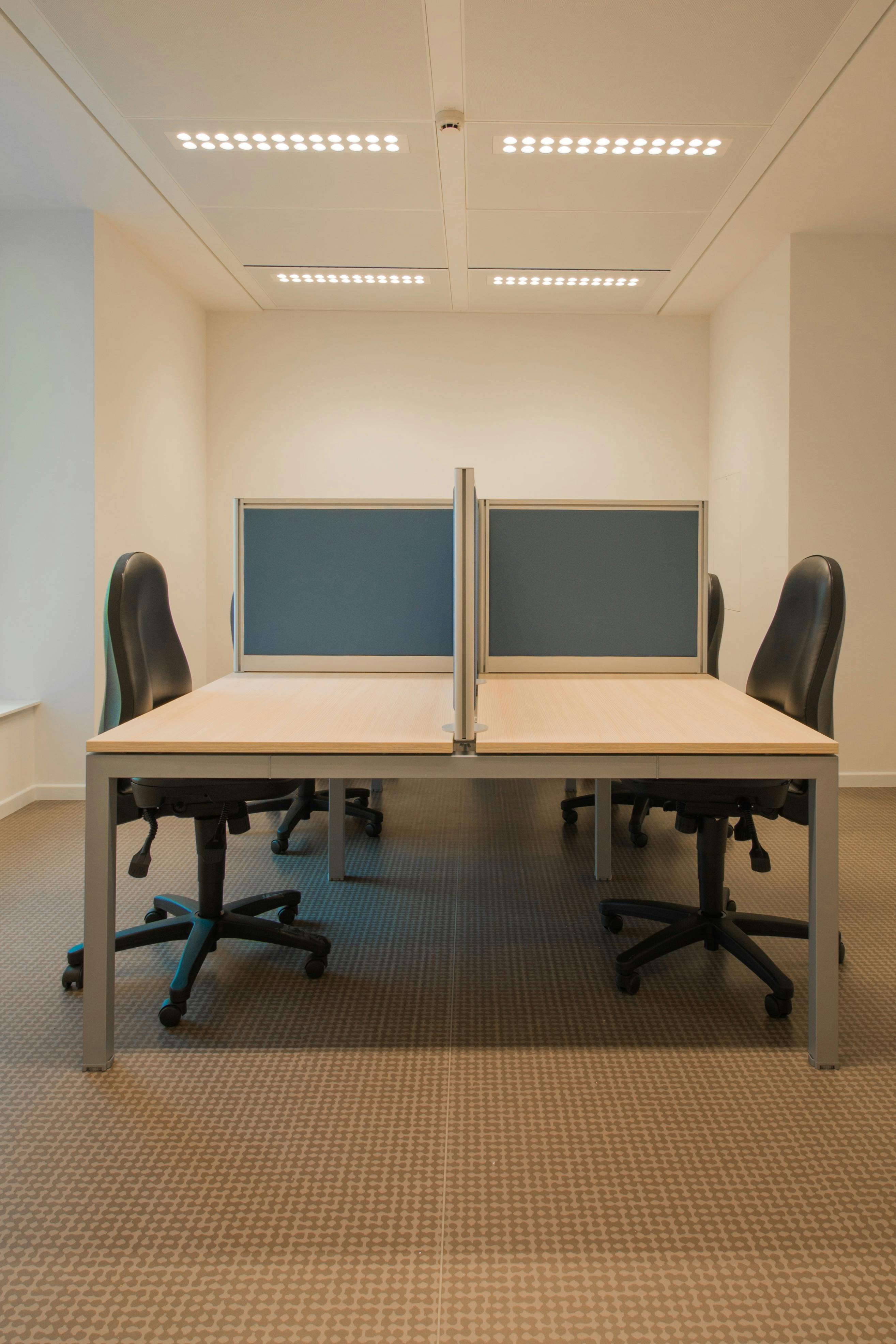
Turnkey Sound Masking Systems Designed for Compliance & Comfort
Open office layouts, shared workspaces, and sensitive conversations can become disruptive and annoying due to ambient noise levels. Without proper controls, distractions increase, productivity drops, and privacy is compromised.
Sound masking systems can resolve these concerns by introducing a frequency-optimized white noise source that blends into your space, while masking background conversations and protecting confidentiality.
Sound masking systems can resolve these concerns by introducing a frequency-optimized white noise source that blends into your space, while masking background conversations and protecting confidentiality.
The optimal sound masking system will:
- Protect Privacy – Ensure HR, legal, and healthcare conversations remain confidential and HIPAA-compliant.
- Boost Productivity – Mask surrounding office conversations and background noise that reduces focus from critical work.
- Enhance Comfort – Create a balanced acoustic environment that feels natural, not intrusive.
- Support Compliance – Mitigate risk by meeting established standards for speech privacy.
- Future-Proof Your Space – Scalable systems that adapt as your workplace, campus, or facility grows.
System Design Features

Uniform Masking Coverage
Uniform coverage delivers consistent masking without hot or dead spots.

Scalable Architecture
Add zones and expand seamlessly as your space grows or changes.

Discreet Integration
Compact emitters blend into ceilings and open environments with minimal visual impact.

Tuned for Comfort
Calibrated to match natural airflow sounds, creating a balanced and unobtrusive environment.

Simple Connectivity
Network cabling ensures quick installation with minimal disruption.

Performance by Design
Every system is engineered to meet privacy and productivity goals.
How Our Systems Work
SOUND MASKING SYSTEMS
Direct-Field Technology
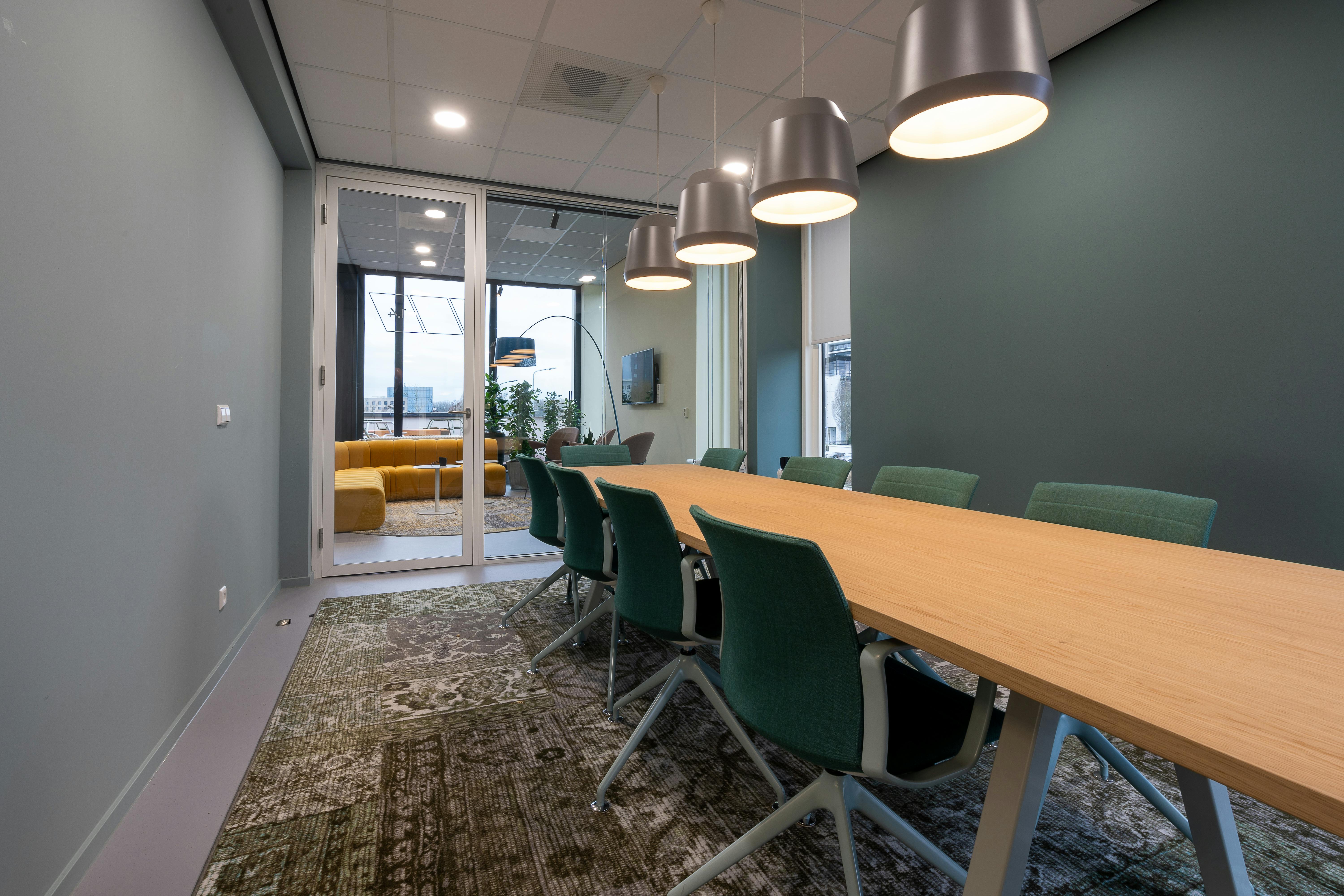
Direct-field systems distribute a calming, pre-tuned sound directly into the workspace. The result is a smooth, uniform layer of masking sound across the entire area, without “hot” or “dead” spots.
Performance & Design Highlights:
- Sound delivered directly into the occupied space for consistent ear-level coverage
- Reduced dependence on plenum conditions, ceiling height, or obstructions
- Individually addressable zones for precise tuning and future flexibility
- Digital control and commissioning for predictable, repeatable results
- Scales easily across floors, departments, and buildings
SOUND MASKING SYSTEMS
Scalable Components
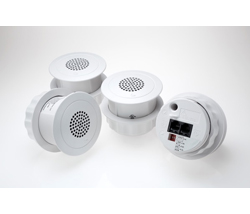
A typical system uses three core elements: compact emitters (planar-cone loudspeakers), a control module that produces the masking signal, and network cables to connect everything. The streamlined design allows quick, low-disruption installation and flexible scaling as your organization grows.
Design Highlights:
- Control Modules
Generates the band-filtered audio signal for each zone, allowing emitters to be added as needs grow - Network Cables
Standard network cabling links control modules to emitters, simplifying installation and enabling easy system expansion - Emitters (compact acoustic drivers)
Disperse the pre-tuned masking signal uniformly into the workspace for consistent coverage.

SOUND MASKING SYSTEMS
Custom Design & Integration
Every facility is different. We tailor each system to your layout and ambient noise conditions so coverage is seamless and effective. Systems can easily expand as new zones are added or layouts change.
- Seamless Integration
Emitters and cabling blend into your architecture without disrupting aesthetics. - Adjustable Sound Profiles
The optimal band-limited noise can be selected to match your needs, such as white noise, pink noise, or green noise to match the environment and occupant preferences. - Zone-Based Control
Independent adjustment of volume and spectral content across specified zones allows private offices, open work areas, and conference rooms to be tuned for best performance.
Performance Specifications
Download the full spec sheet below.
Maximum Coverage Area
Qt 100 ~12,000 ft²; Qt 300 ~36,000 ft²; Qt 600 ~72,000 ft²
Maximum Emitters Supported
120 emitters (2 cable runs of 60 emitters each)
SPL Range
Minimum ~30 dBA, Maximum ~55-57 dBA @ 1 meter for standard emitters. Custom emitters can produce masking noise up to 80 dBA in most environments
Frequency Masking Range
Standard emitters: ~200 Hz to ~6.3 kHz

SOUND MASKING SYSTEMS
The Benefits You’ll Notice
- Privacy: Background conversations become less intelligible, protecting sensitive information.
- Productivity: Fewer distractions allow employees to stay focused and efficient.
- Comfort: The ambient sound feels natural and blends with HVAC airflow.
- Compliance: Helps meet HIPAA and other speech privacy standards.
The outcome: a more secure, focused, and comfortable environment engineered specifically for your space.

Support Beyond the Product
Installation assistance available for Michigan and Great Lakes region clients
Engineering consultation to ensure proper material selection
Custom sizing and integration with other Memtech acoustic systems
Replacement panels and parts available for future reconfiguration
Documentation & Resources
CAD drawings included with custom orders
LEED documentation available upon request
Downloadable installation instructions and specifications
Frequently Asked Questions (FAQs)
What is sound masking and how does it work for office privacy?
Sound masking is a controlled background sound technology that reduces speech intelligibility in offices and healthcare spaces without raising overall noise levels noticeably. Unlike simple white noise, sound masking systems generate non-correlated masking sounds that blend with ambient noise, making conversations harder to hear at a distance.
What's the difference between sound masking and white noise for office privacy?
White noise is random, broad-spectrum sound (like static or fan noise) that can be fatiguing over long periods. Sound masking, by contrast, uses engineered non-correlated signals tuned to speech frequencies creating an intelligible background that feels natural and doesn't cause listener fatigue. Over 8+ hours daily, users notice the difference: true sound masking is less distracting and more effective than white noise alternatives.
How much does a sound masking system cost to install in an office?
Sound masking system costs vary widely based on building size, zone requirements, and installation complexity. Entry-level systems like the Cambridge Qt 100 (covering ~12,000 ft²) start lower, while mid-sized systems like the Qt X 300 (range for 36,000 ft²) and enterprise solutions like QtX 600 (range for 72,000 ft²) reflect greater zone capacity and control.
Memtech Acoustics provides custom quotes accounting for your building layout, existing infrastructure, and privacy goals. Contact Memtech Acoustics for a detailed assessment and transparent quote tailored to your space.
Memtech Acoustics provides custom quotes accounting for your building layout, existing infrastructure, and privacy goals. Contact Memtech Acoustics for a detailed assessment and transparent quote tailored to your space.
Is sound masking HIPAA compliant for protecting patient privacy?
Yes, sound masking is a recognized and HIPAA-compliant acoustic privacy control when properly implemented. Sound masking reduces the intelligibility of Protected Health Information (PHI) conversations without recording or transmitting data, aligning with HIPAA privacy rule requirements. Paired with architectural barriers and administrative controls, sound masking creates layered acoustic privacy.
How many speakers do I need for sound masking and what area will they cover?
Coverage depends on ceiling height, room acoustics, and desired privacy level. The Cambridge Qt 100 covers approximately 12,000 ft² with up to 120 Qt Standard Emitters (arranged in 2 cable runs of 60), ideal for smaller offices or individual floors. The Qt X 300 covers ~36,000 ft² (3 zones), while the Qt X 600 extends to ~72,000 ft² (6 zones). Emitter spacing is typically 8–12 feet in an orthogonal grid for uniform coverage. Memtech Acoustics conducts site surveys to calculate exact emitter counts based on your ceiling type, height, and partition layout.
What's the difference between direct-field and plenum-based sound masking installation?
Direct-field sound masking uses speakers mounted openly in visible ceiling grids, distributing masking sound directly into occupied spaces. This approach is easier to retrofit into existing buildings and allows volume adjustments per zone.
Plenum-based installation routes masking speakers into the ceiling plenum (the space above drop ceilings), where the entire plenum becomes a distributed sound source. Plenum systems are less visible, provide more uniform coverage in large open areas, and work well in new construction.
Plenum-based installation routes masking speakers into the ceiling plenum (the space above drop ceilings), where the entire plenum becomes a distributed sound source. Plenum systems are less visible, provide more uniform coverage in large open areas, and work well in new construction.
Does Memtech Acoustics provide professional sound masking installation services?
Yes, Memtech Acoustics provides complete installation services for Cambridge sound masking systems, from design through installation. Our team conducts site surveys, calculates coverage requirements, manages equipment procurement, oversees installation, and performs system tuning and testing. Memtech Acoustics' certified technicians ensure your system meets privacy objectives, building codes, and performance standards.
How long does sound masking system installation take?
Installation timeline depends on system size and building complexity. A small single-zone Cambridge Qt 100 retrofit on one floor typically takes 1–2 days. Mid-sized systems (Qt X 300, covering 1–2 floors) usually require 3–5 days. Large multi-zone deployments (Qt X 600 or Qt X 800 series across entire buildings) may take 1–2 weeks.
Memtech Acoustics can schedule installations during off-hours to minimize workplace disruption and coordinates with your facilities team. Timeline includes equipment delivery, emitter installation, control module setup, cabling, fire alarm integration, system testing, and staff training. Most installations are non-invasive (no ceiling demolition for drops ceilings) and do not disrupt HVAC or electrical systems. Contact Memtech Acoustics to review your project timeline and schedule.
Memtech Acoustics can schedule installations during off-hours to minimize workplace disruption and coordinates with your facilities team. Timeline includes equipment delivery, emitter installation, control module setup, cabling, fire alarm integration, system testing, and staff training. Most installations are non-invasive (no ceiling demolition for drops ceilings) and do not disrupt HVAC or electrical systems. Contact Memtech Acoustics to review your project timeline and schedule.
Let’s Engineer the Right Solution, Together.

Let's Get Started. Contact Us.
Talk to our experts. We’ll assess your needs and recommend a solution that works for your project.