Modern office space with long white desks, blue and white ergonomic chairs, large windows with natural light, and a clean, minimalist design.

Sound Demos.

Experience the difference noise control makes by listening to real-world acoustic transformations with our tested solutions, so you can hear the impact before you invest.
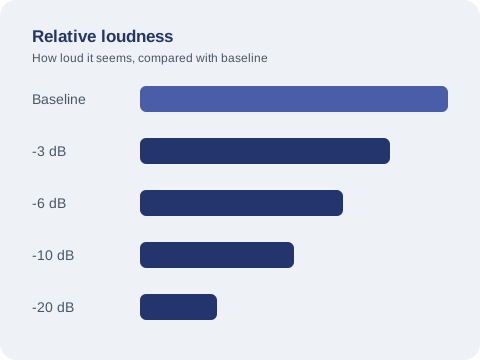
Relative loudness at each noise reduction demo level, from baseline to minus twenty decibels
Sound Demo

Hear the Difference of Noise Control

The following clips demonstrate the relative differences in sound levels and characteristics to assist in understanding the subjective effects of soundproofing and reverberation control. Use high-quality headphones for the most accurate sound comparison.
Baseline Audio
This playback file serves as a reference level for comparison.
-3 dB Reduction
A modest reduction demonstrating a very subtle but noticeable change in sound level, representing a 50% reduction in sound power as compared to the reference level.
-6 dB Reduction
This represents another 50% reduction in sound pressure from the reference level, resulting in a significant but not dramatic subjective reduction in noise.
-10 dB Reduction
This represents what most listeners consider to be "half the subjective volume" as compared to the reference level.
-20 dB Reduction
Approximately ¼ the subjective volume of the reference level.
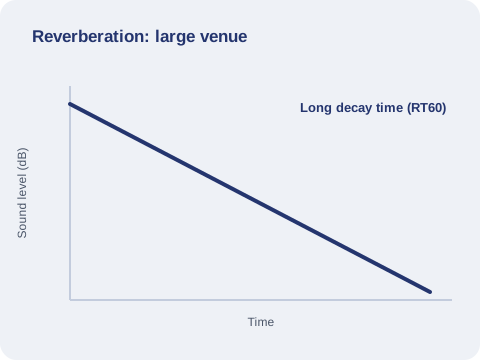
Long reverberation decay curve for a large venue
Sound Demo

Reverberation Time: Large Venues

Reverberation time (RT60) measures how long sound takes to decay by 60 decibels after the source stops. In a large venue the decay is long, which reduces speech clarity. Compare the clips to hear how reverberation time shapes a room. Use high-quality headphones for the most accurate comparison.
Baseline Audio
This playback file serves as a reference level for comparison.
Arena – 5000 ms (5 Seconds)
Large arenas often have very long reverberation times, creating echo and reduced speech clarity.
Worship Space – 3500 ms (3.5 Seconds)
Many worship spaces are designed with moderate reverberation for music, but excessive reflections can make sermons harder to understand.
Community Event Space – 2000 ms (2 Seconds)
A shorter reverberation time supports clearer speech, ideal for multi-purpose worship spaces or community venues.
Lecture Hall – 1500 ms (1.5 Seconds)
Once reverberation extends beyond 1 second, spoken words can overlap, leading to listening fatigue.
Casual Dining – 1000 ms (1 Second)
Slightly longer decay can still work for small lecture halls, though clarity begins to diminish. Good for bars and casual dining.
Fine Dining – 500 ms (0.5 Seconds)
A short reverberation time supports clear speech intelligibility, ideal for intimate restaurant environments.
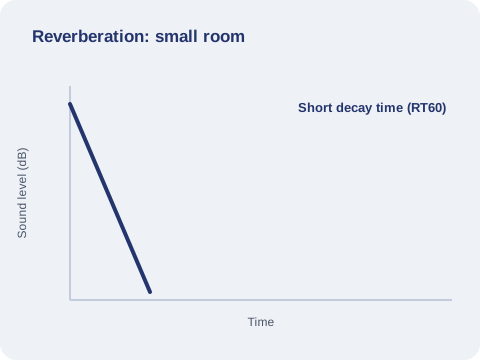
Short reverberation decay curve for a small treated room
Sound Demo

Reverberation Time: Small Room

Smaller spaces with acoustic treatment have shorter reverberation times, which produces clearer speech and improved intelligibility. Compare the same environments in a small treated room. Use high-quality headphones for the most accurate comparison.
Arena – 5000 ms (5 Seconds)
Large arenas often have very long reverberation times, creating echo and reduced speech clarity.
Worship Space – 3500 ms (3.5 Seconds)
Many worship spaces are designed with moderate reverberation for music, but excessive reflections can make sermons harder to understand.
Community Event Space – 2000 ms (2 Seconds)
A shorter reverberation time supports clearer speech, ideal for multi-purpose worship spaces or community venues.
Lecture Hall – 1500 ms (1.5 Seconds)
Once reverberation extends beyond 1 second, spoken words can overlap, leading to listening fatigue.
Casual Dining – 1000 ms (1 Second)
Slightly longer decay can still work for small lecture halls, though clarity begins to diminish. Good for bars and casual dining.
Fine Dining – 500 ms (0.5 Seconds)
A short reverberation time supports clear speech intelligibility, ideal for intimate restaurant environments.
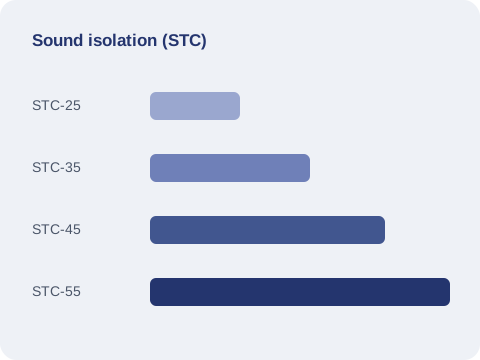
Sound isolation increasing with STC rating from STC 25 to STC 55
Sound Demo

Sound Isolation Demo: Understanding STC

Sound isolation is measured using Sound Transmission Class (STC), a rating for how effectively a wall, door, or partition reduces airborne sound between spaces. As the STC rating rises, less sound passes through the barrier. Use high-quality headphones for the most accurate comparison.


Baseline Audio
This playback file serves as a reference level for comparison.
STC-25
Provides a modest reduction in airborne sound transmission compared to baseline conditions. Loud speech and general conversation may still be audible, but with reduced clarity.
STC-35
Provides moderate sound isolation relative to baseline conditions. Normal speech becomes less intelligible, though louder voices and activity may still be heard.
STC-45
Provides high sound isolation compared to baseline conditions. Loud speech is significantly reduced and difficult to understand; most typical noise is effectively controlled.
STC-55
Provides very high sound isolation relative to baseline conditions. Speech and most airborne noise are effectively inaudible, supporting environments requiring strong privacy and minimal sound transmission.
Modern open office with blue acoustic ceiling baffles designed to absorb sound and reduce workplace noise.

Let's Get Started. Contact Us.

Talk to our experts. We’ll assess your needs and recommend a solution that works for your project.