Why you need to take them seriously
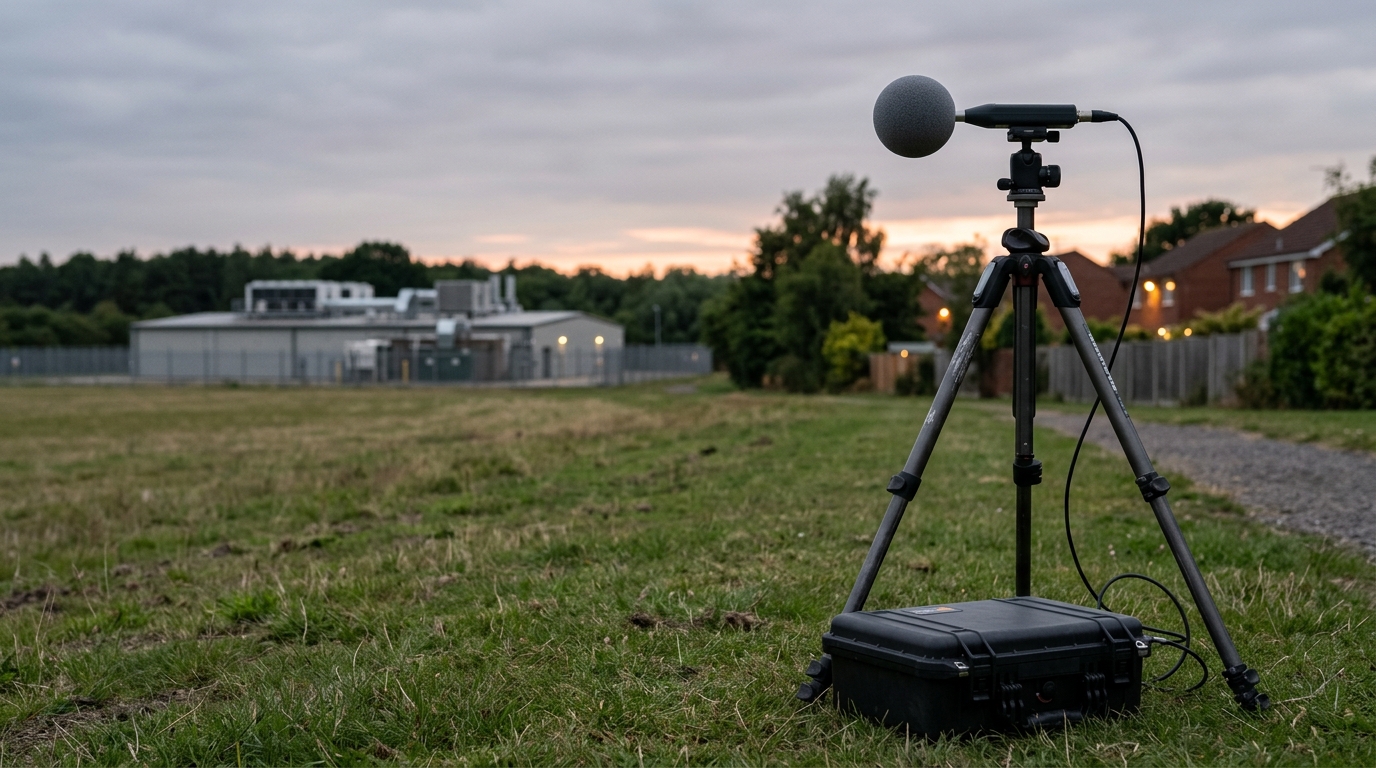
Industrial noise is often viewed by businesses as little more than a regrettable nuisance, an unavoidable byproduct of production processes. In truth, however, it’s much more than that, with industrial area noise restrictions shining a spotlight on the public health and economic issues that come with it.
These issues can be so profound that failure to properly mitigate sound can result in everything from civil fines and litigation to reputational damage and the loss of a company's license to operate. In this article, we’ll examine the risks associated with unmitigated industrial noise, take a look at the real-world consequences of non-compliance, and discuss how companies like Memtech Acoustics can help businesses stay on the right side of the noise equation.
Key takeaways:
Understanding the public health and economic fallout of noise
The dangers of industrial noise extend far beyond a simple ringing in the ears, with chronic exposure to loud noise resulting in a range of non-auditory health problems. While Noise-Induced Hearing Loss (NIHL) is the most common hazard (affecting an estimated 26 million adults in the U.S.), scientific studies demonstrate a clear link between chronic noise and stress-related illnesses such as cardiovascular disease, metabolic disturbances, and the exacerbation of anxiety and depression.
One study found that individuals exposed to high noise levels face a greater risk of heart attacks than those in quieter environments, with a direct association between noise above 65 decibels and 5% of heart attack hospitalizations.
What’s more, the physical damage caused by excessive noise is often irreversible, killing nerve endings in the inner ear that don’t regenerate and permanently limiting the ability to hear high-frequency sounds.
This public health crisis carries a profound economic cost. Annual medical costs for treating hearing loss in the United States are estimated to be as high as $12.8 billion. A study on noise-related hypertension suggested that lowering environmental noise by just 5 dB could result in an estimated $3.9 billion in annual medical cost savings.
The economic impact also hits communities by affecting the value of the surrounding real estate. A study on the construction of noise barriers found that properties within 100 meters of a newly constructed barrier saw an immediate and permanent 6.8% increase in prices, indicating that buyers are willing to pay a substantial premium for each decibel of noise reduction.
Beyond the basic monetary impact, unmitigated noise is also a social issue, as the economic burden is disproportionately borne by lower-income households who are often overrepresented in areas exposed to industrial noise. This creates significant potential for civil litigation, adding another major layer of risk for companies.
A fragmented arena of regulations
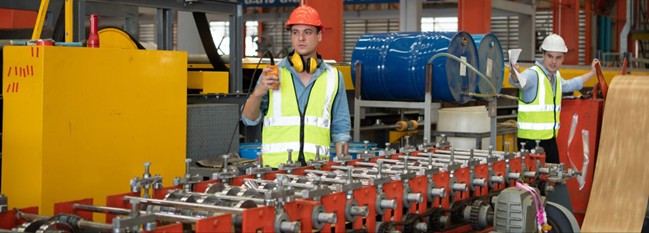
The situation isn’t helped by the fact that the regulatory environment for industrial noise is a complex and often confusing patchwork of federal, state, and local standards.
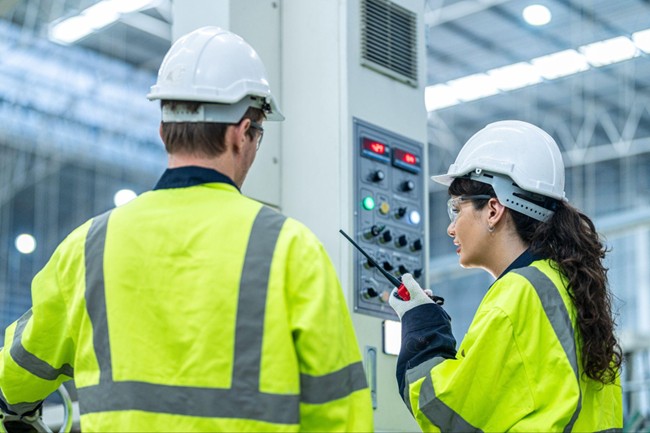
At the federal level, the Occupational Safety and Health Administration (OSHA) sets clear standards for workplace noise exposure to protect employee health. The central standard is a Permissible Exposure Limit (PEL) of 90 dBA over an 8-hour time-weighted average (TWA). When employee noise exposure equals or exceeds an 8-hour TWA of 85 dBA, known as the "action level," employers must implement a comprehensive and continuing hearing conservation program.
This program includes mandatory elements such as noise monitoring, providing free annual audiograms, offering hearing protection, and providing annual training to employees.
While OSHA handles occupational noise, the federal government’s role in controlling noise that affects the general public is far more limited and decentralized. Although the Noise Control Act of 1972 allowed the Environmental Protection Agency (EPA) to set national standards, its funding for noise control was phased out in 1982, with responsibility effectively transferred to state and local governments.
This has created a fragmented, decentralized system where local ordinances are the primary enforcers of industrial area noise restrictions. That said, the shift in many jurisdictions from subjective definitions of noise to objective, decibel-based limits has made it easier for citizens to report violations with measurable data.
The financial and legal repercussions of non-compliance
The failure to comply with noise regulations exposes companies to a high level of risk, including major fines, legal liabilities, and reputational damage. You don’t have to look too hard to find a whole slew of recent that illustrate this point.
The Materion "Hum" Case: Residents in North Buffalo, New York, have complained for years about an "anxiety-inducing" low-frequency hum allegedly coming from a Materion facility. Residents documented the noise with smartphone apps and argued it violated the city’s noise ordinance. While Materion denied being the source, the case highlights how persistent community complaints, even without immediate city-led enforcement, can become a serious legal and reputational challenge for a company.
Lawsuit Against a Bitcoin Mining Plant (Granbury, TX, 2025): In October 2024, a community group in Granbury, Texas, filed a lawsuit against MARA Holdings, Inc., a cryptocurrency mining company, alleging that the plant creates a private nuisance with "excessive noise pollution" that harms local residents. The lawsuit, which is still ongoing as of September 2025, claims the constant roar of fans used to cool tens of thousands of computers running 24/7 has caused residents to suffer from a lack of sleep, migraines, and ringing in the ears. The community group, represented by Earthjustice, is seeking a permanent injunction to force the company to implement measures to significantly reduce the noise and vibrations. A Texas state court recently denied the company's motion to dismiss, allowing the lawsuit to proceed.
Chemical Plant Air Pollution Case (Baytown, TX, 2024): While this case primarily focused on air pollution, it is an interesting example of a citizen-initiated lawsuit against a major industrial facility, where noise was also a cited concern. In December 2024, the Fifth Circuit Court of Appeals upheld a lower court ruling against ExxonMobil, fining the company $14.25 million for more than 16,000 violations of its air permits at a refinery. The case, the largest citizen-initiated lawsuit to enforce the Clean Air Act, was brought by residents who also complained of noise and "occasional explosions" from the plant. The ruling, which resulted in the penalty money going to the EPA, set a powerful precedent that residents can successfully challenge large industries.
Getting proactive about noise control
The best way for companies to manage industrial noise is to get ahead of the problem. Cost-benefit analyses repeatedly show that correcting noise problems after they arise can be twice as expensive and only half as effective as implementing proper acoustical treatments during the design phase.
The most effective approach follows a "hierarchy of noise controls". This begins with eliminating or substituting noisy equipment with quieter alternatives. If that’s not possible, the next step is engineering controls, such as installing sound barriers or acoustic enclosures around loud machinery, or using noise control materials like Mass Loaded Vinyl or acoustic foams.
The expertise of an acoustical engineer is vital in this process. Specialists, like those at Memtech Acoustics, can conduct noise diagnostics, using advanced modeling software to predict noise propagation. Taking a structured approach, companies can move beyond reactive compliance and implement solutions that are both practical and effective.
How Memtech Acoustics can help

At Memtech Acoustics, we have extensive experience across a variety of industrial facilities, providing economical, practical, and proven solutions for both internal employee exposure and external community impact. Using advanced computer simulations, we design effective barriers and enclosures, implementing a data-driven approach that’s structured, cost-effective, and avoids expensive trial-and-error.
Our key services are designed to address the full spectrum of noise challenges, from OSHA/NIOSH compliance and hearing loss prevention to sound isolation enclosures and solutions for community noise ordinances. Offering specialist services such as manufacturing vibration control, machinery certifications, and low-noise design support, we’ll keep your facility quiet—and keep any litigious law firms quiet too.
Get in touch with the Memtech Acoustics team and find out how we can help your business manage industrial noise more effectively.