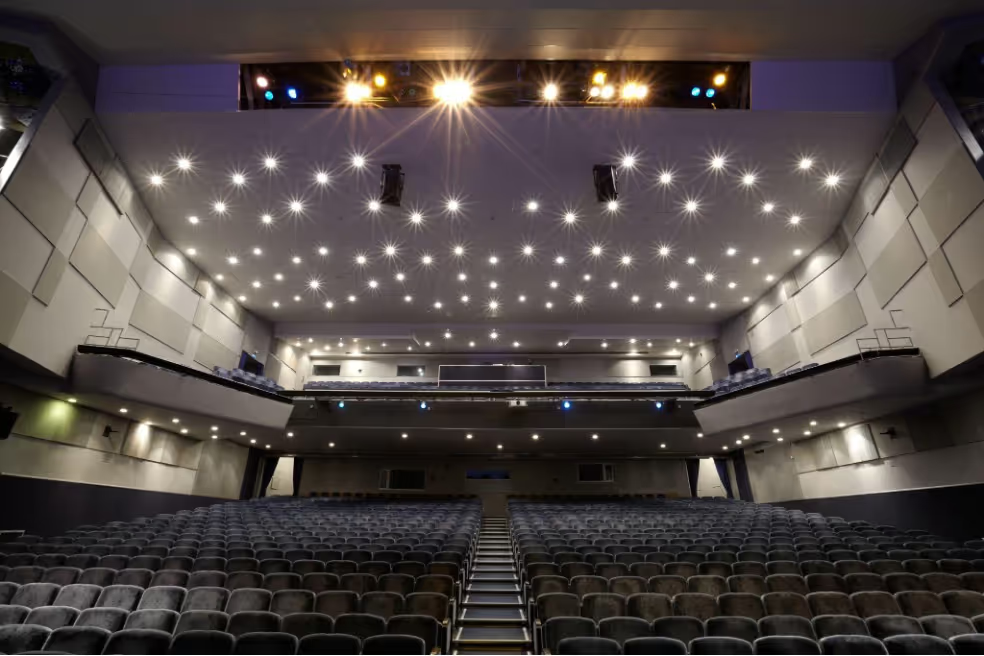
When you think of modern architecture, you probably picture minimalist design with lots of sleek surfaces like concrete, glass, and hardwood floors. While this may appear to be elegant, these hard reflective surfaces create a major acoustic problem. When sound waves are emitted in such a space, they reflect repeatedly, generating a chaotic auditory environment where sounds overlap and "smear" together, reducing speech intelligibility and making the entire space uncomfortable to be in.
Sound-absorbing panels, also known as acoustic panels, are specifically designed to address these issues by controlling the behavior of sound. Unlike soundproofing (which blocks sound from traveling into or out of a room), acoustic panels manage and improve the sound quality within a space by reducing echoes, reverberation, and in some cases, ambient noise. In the article, we’ll take a look at how effective sound-absorbing panels are, best practices when it comes to using them, and how Memtech Acoustics can help create far more harmonious spaces.
Key takeaways:
- Acoustic panels improve sound clarity by reducing echoes and reverberation – unlike soundproofing, they manage sound within a room for clearer, more comfortable acoustics.
- Performance of these acoustic panels depends on design and material – porous cores like fiberglass or mineral wool convert sound energy into heat, while thickness and density determine how well panels handle different frequencies.
- Proper placement is crucial – panels work best when positioned at central reflection points, when spaced evenly, and installed with air gaps between the panel and the wall for better low-frequency absorption.
- Panels deliver benefits beyond sound quality – they enhance comfort, productivity, and privacy in offices, classrooms, restaurants, homes, and studios, while also serving as stylish, safe design elements.
How do acoustic panels work?
To understand the effectiveness of acoustic panels, the physical principle of acoustic absorption must be understood. When a sound wave encounters a hard surface, the majority of the energy is reflected back into the room.
When an absorptive panel is used, the sound energy strikes the panel, causing the material's particles to vibrate, which generates friction and converts the sound energy into a negligible amount of heat. This results in less acoustic energy being bounced back into the room. This process is often likened to a sponge soaking up water, and the more porous the material, the more effective it is at this energy conversion.
A standard acoustic panel is a precisely engineered device built around this principle. Its construction typically involves a wooden frame filled with a sound-absorbent core and wrapped in a breathable fabric. The core material, such as fiberglass, mineral wool, or open-cell foam, is the primary element of the panel's performance, not the aesthetic fabric wrap.
While acoustic panels may be powerful tools when it comes to sound management, they’re just one component in a broader acoustic treatment strategy. Other tools in the sound management equation include:
- Bass traps: These are specialized, thicker absorbers specifically engineered to target and reduce low-frequency sound waves that tend to increase in the corners of a room, creating an uneven and often "muddy" sound.
- Diffusers: Unlike absorbers, diffusers scatter sound reflections. When a sound wave hits a diffuser, it is broken up and dispersed in multiple directions. This is beneficial for creating a more natural, spacious, and "live" sound, and it is a popular treatment in recording studios and home theaters to avoid an over-dampened or "dead" acoustic environment.
How to reduce echo in a room – the metrics that matter
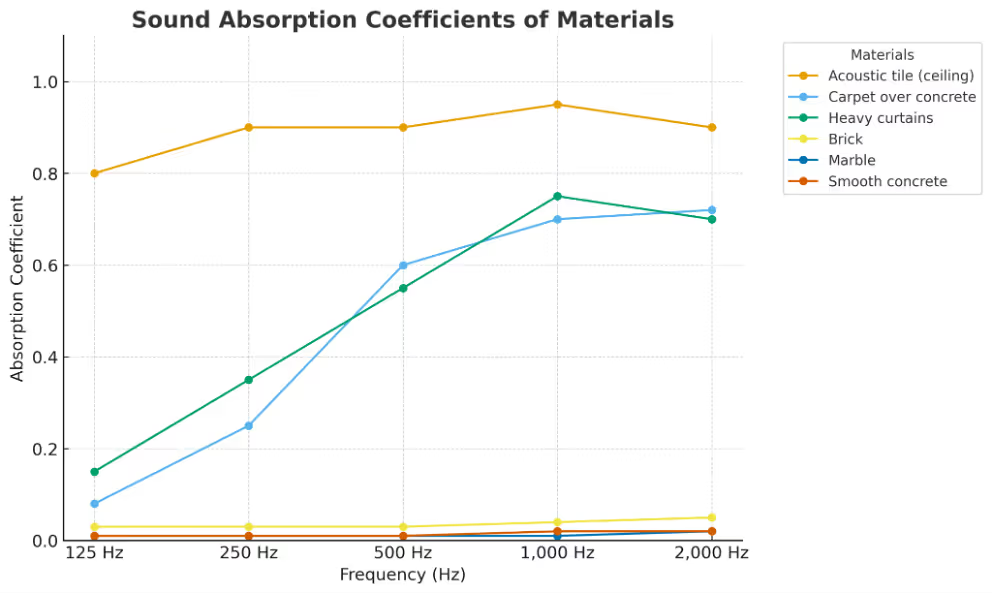
The effectiveness of a sound-absorbing panel is a measurable, quantifiable property. Two primary metrics are used in the industry to rate the sound absorption performance of materials: the Noise Reduction Coefficient (NRC) and the Sound Absorption Average (SAA).
The Noise Reduction Coefficient (NRC) is a single-number rating that provides a simplified measure of a material's average sound absorption, ranging from 0.0 to 1.0. An NRC of 0.85 means the material absorbs approximately 85% of the sound energy that strikes it. The NRC is calculated by averaging the material's sound absorption coefficients at four specific octave frequency bands: 250 Hz, 500 Hz, 1,000 Hz, and 2,000 Hz.
The Sound Absorption Average (SAA) is a newer, more precise standard and is considered a better indicator of performance. Similar to NRC, SAA is a single-number value, but it is calculated by averaging absorption coefficients from a wider range of twelve 1/3 octave frequency bands, spanning from 200 Hz to 2,500 Hz. This broader dataset and finer granularity provide a more accurate representation of a material’s performance, particularly for low-frequency sound absorption.
A material's absorption performance is ultimately dependent on the frequency of the sound wave. For example, a 1-inch-thick panel might be highly effective at absorbing high-frequency sounds but have almost no impact on low-frequency bass notes. As a general rule, thicker, denser panels are more effective at absorbing lower frequencies because these waves have longer wavelengths and require more mass to convert their energy into heat.
A range of benefits for every environment

The benefits of a well-treated space extend beyond mere sound quality. A quieter, more acoustically balanced environment can have a major impact on comfort, productivity, and health. Noise pollution, whether from loud conversations in an office or machine clatter in a large industrial production area, can increase stress, reduce the ability to focus, and, over time, potentially contribute to hearing loss. Sound-absorbing panels reduce these risks by creating a less-objectionable atmosphere that encourages concentration and relaxation.
In commercial spaces, panels are crucial for managing noise in open-plan offices, allowing for improved concentration and less background ‘clatter’. They also optimize the customer experience in restaurants by controlling reverberant noise, and improve communication in classrooms by minimizing echoes and making it easier for speakers to be heard.
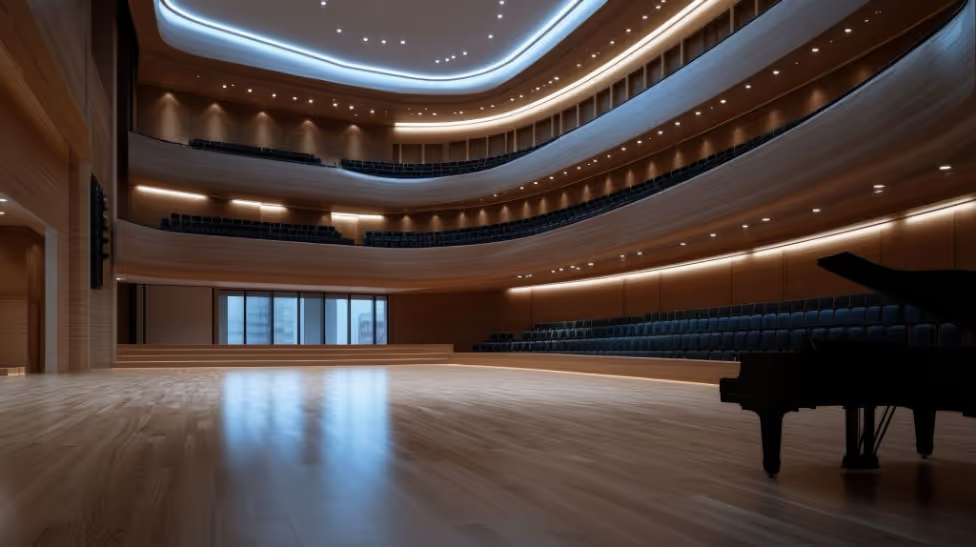
For environments like concert halls, auditoriums and recording studios, acoustic panels are vital for creating a controlled and predictable acoustic environment. This assures that the engineer hears faithful reproduction of the sound source. Without proper treatment, even expensive equipment will produce degraded sound due to echoes and frequency imbalances.
Installation best practices
The effectiveness of acoustic panels is directly related to their placement, with proper installation making a profound difference to the final acoustic result. Panels shouldn’t be placed randomly; they need to be positioned where sound waves are subject to striking large surfaces areas prone to reflection. While inexperienced installers tend to clump panels together (for aesthetic purposes), an even and targeted distribution throughout the room is far more effective in creating a balanced acoustic environment.
When it comes to physical installation, a variety of mounting methods are available, with the choice depending on the panel's weight, the wall material, and the user's desire for a permanent or temporary installation. A quick guide to the methods is as follows:
Choosing the best acoustic panel for your project
Selecting the right acoustic panel involves a mix of acoustic performance, material properties, and aesthetic design. The core material is the most important factor in a panel's effectiveness, but its physical properties also dictate its suitability for different applications.
Fiberglass: As a compressed board, fiberglass is rigid, lightweight, and holds its shape well. It has a very high NRC rating, often exceeding that of mineral wool panels. Its rigidity and light weight make it easy to hang and ensures it won’t sag over time.
Mineral wool: Denser and heavier than fiberglass, mineral wool comes as a loose material that must be packed into a frame to create a panel. While its higher density can give it a higher STC rating (sound blocking ability), its performance as an absorber can be compromised by the frame, which reflects sound. Mineral wool panels are also more cumbersome to install due to their weight.
Acoustic foam: A popular choice for its low cost and ease of installation, acoustic foam is typically made from open-celled polyurethane. It is effective at absorbing mid- and high-frequency sound waves but is generally not dense enough to be an effective absorber for lower frequencies, nor can it serve as an effective bass trap.
Modern acoustic panels are more than just utilitarian objects, they’ve become functional elements of interior design. Available in a wide range of colors, patterns, textures, and custom shapes that allow them to blend smoothly with any décor. Beyond aesthetics, safety plays a key role in their application, especially in commercial and public spaces where fire ratings are vital. The ASTM E84 Class A rating, the highest standard, signifies exceptional resistance to flame spread and minimal smoke generation, making these panels not only visually versatile but also safe for use in environments such as classrooms, offices, auditoriums, and even residential settings.
How Memtech Acoustics can help
At Memtech Acoustics, we deliver tailored noise control solutions that improve communication, comfort, and compliance across any number of industries and environments.
Our product line spans acoustic wall and ceiling panels, enclosures, noise barriers, quiet curtains, sound masking systems, and vibration control products each engineered for measurable performance, with NRC ratings up to 1.05 and Class 1 (A) fire safety compliance.
With clients typically achieving a 20–50% reduction in reverberation time, improved speech clarity, and fewer noise complaints, we provide the expertise needed to create improved workspace environments. Get in touch with Memtech Acoustics and find the answer you’re looking for.