High-Performance Foam Composites
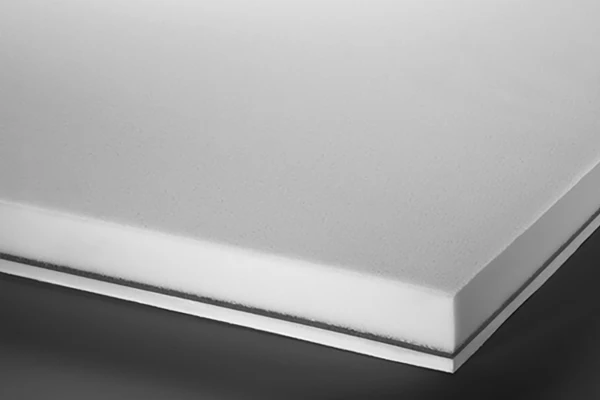
Acoustic composites are designed for environments where absorption alone is not enough. By combining absorptive materials with dense noise barriers and decoupling layers, composite systems both reduce sound energy within a space and limit noise transmission to adjacent areas.
This dual-performance approach is essential in commercial, industrial, and retrofit applications where space constraints, existing construction, or high noise levels demand more than traditional treatments.
This dual-performance approach is essential in commercial, industrial, and retrofit applications where space constraints, existing construction, or high noise levels demand more than traditional treatments.
Acoustic composites are particularly effective:
- Under machinery hoods
- Engine compartments
- To line thin enclosures around machinery, air compressors or similar noise sources
- Over substandard walls between manufacturing plant offices
Acoustic Composites Core Features & Benefits
Acoustic Composites
PROSPEC® Composite
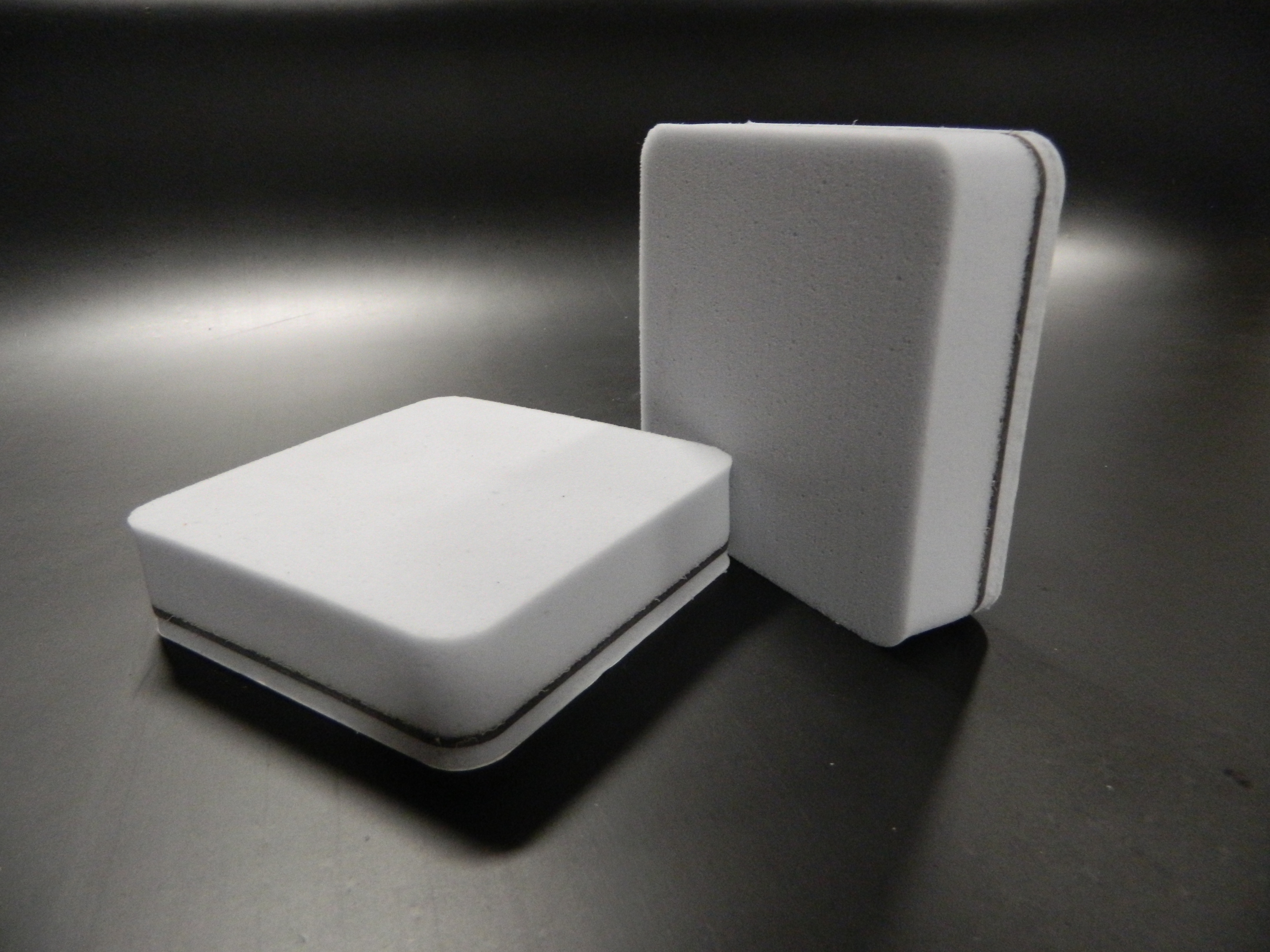
The PROSPEC® Composite is engineered for environments where containment and absorption must occur close to the source. This system combines open-cell WILLTEC™ acoustic foam, a vinyl noise barrier, and a decoupling layer that helps isolate vibration from the mounting surface.
Its surface absorbs sound energy, while the internal barrier limits transmission, making it well-suited for enclosures, machinery, and industrial applications where thinner, high-performance solutions are required.
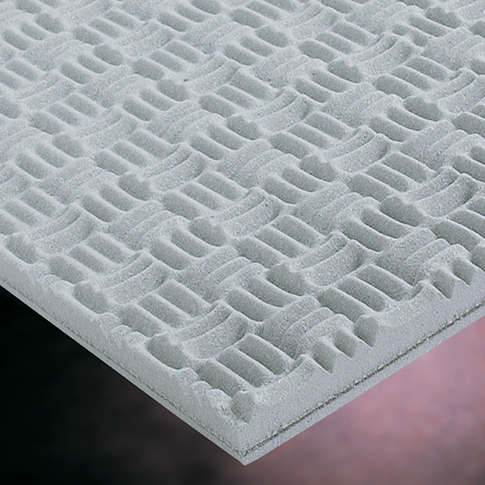
The panels come standard with a convoluted surface and gray HPC facing for easy clean-up. Rugged Tedlar® facing is available to withstand harsher chemicals and cleaning. Aluminized Mylar® is also available for special applications.
Its surface absorbs sound energy, while the internal barrier limits transmission, making it well-suited for enclosures, machinery, and industrial applications where thinner, high-performance solutions are required.
The panels come standard with a convoluted surface and gray HPC facing for easy clean-up. Rugged Tedlar® facing is available to withstand harsher chemicals and cleaning. Aluminized Mylar® is also available for special applications.
Performance & Design Highlights:
- NRC performance up to ~0.85 (mounting dependent)
- Decoupling layer reduces vibration transfer
- Thin profile for space-constrained installations
- Class A fire performance (ASTM E84)
- Easily cut and field-fit for custom installations
Acoustic Composites
Industrial Noise Control Applications
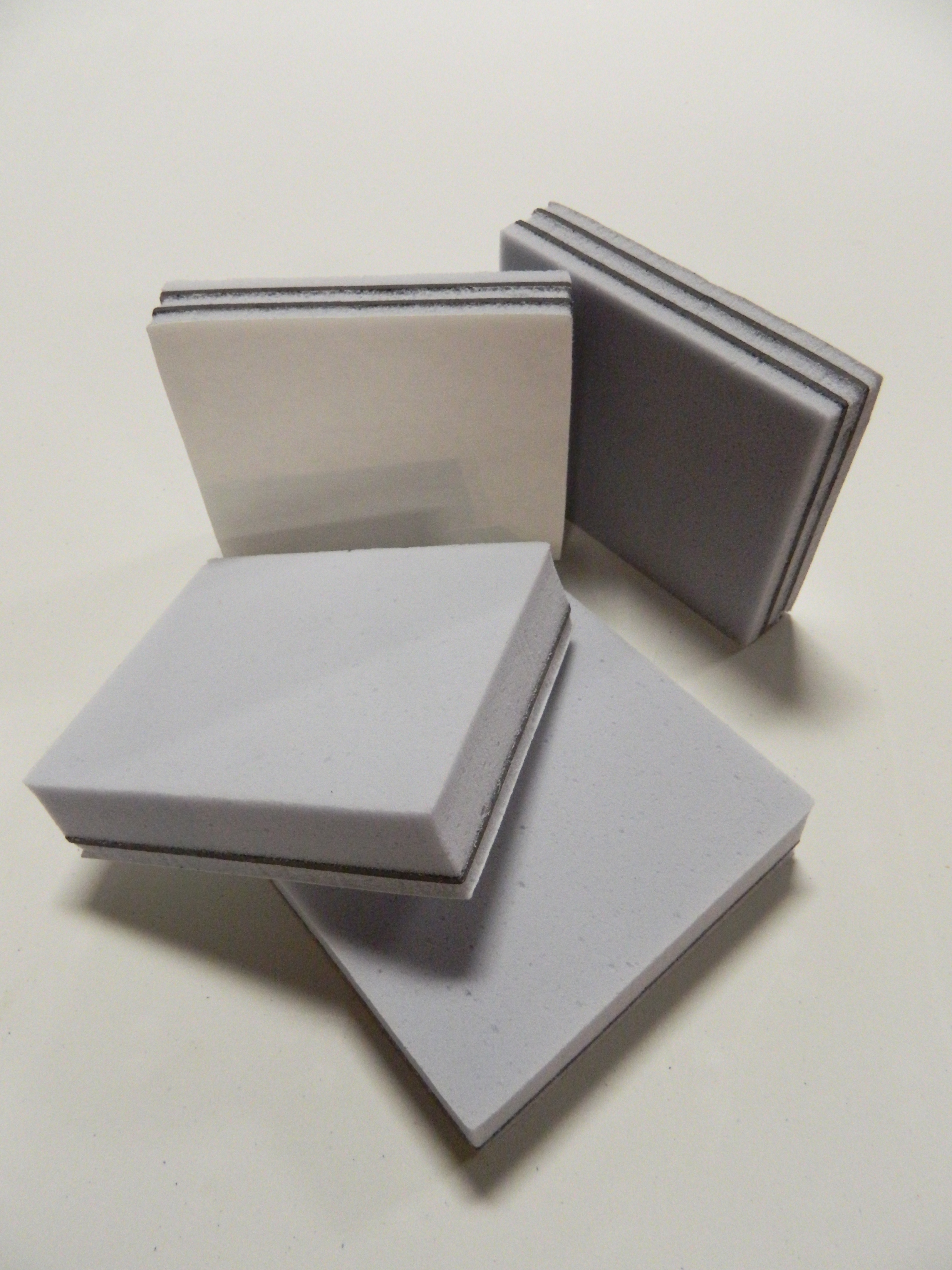
PROSPEC® Composite industrial acoustic panels are engineered to address sound absorption and sound blocking in a single panel system. The composite construction integrates an open-cell acoustic foam layer for sound absorption with a dense vinyl noise barrier to reduce sound transmission.
A decoupler layer provides an air space between the barrier and the mounting surface, helping isolate the barrier from structural vibrations and improving noise containment performance.
Because of their lightweight construction and thin profile, PROSPEC Composite panels are ideal for machine enclosures, equipment housings, and factory noise control applications where thicker acoustic treatments may not fit.
A decoupler layer provides an air space between the barrier and the mounting surface, helping isolate the barrier from structural vibrations and improving noise containment performance.
Because of their lightweight construction and thin profile, PROSPEC Composite panels are ideal for machine enclosures, equipment housings, and factory noise control applications where thicker acoustic treatments may not fit.
Common Industrial Applications:
- Machine enclosure soundproofing
- Air compressor noise control
- Engine compartment acoustic lining
- Machinery hood acoustic insulation
- Factory wall noise control between plant floors and offices
Acoustic Composites
Custom Engineered Acoustic Composites
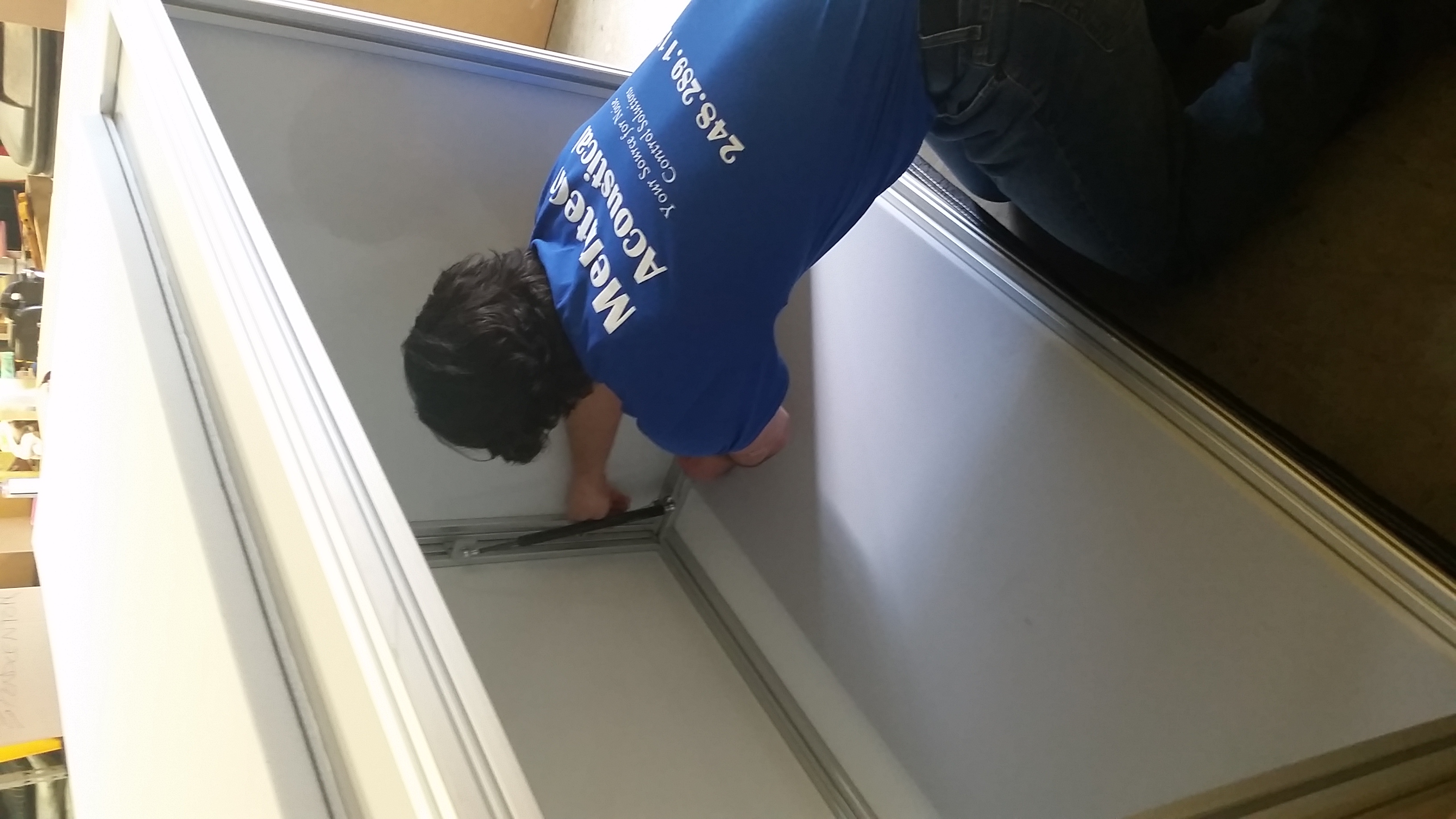
Industrial noise problems rarely have a one-size-fits-all solution. Machinery, enclosure geometry, airflow requirements, and installation constraints often require custom acoustic composite designs tailored to the specific equipment and environment.
Memtech Acoustics can engineer custom composite acoustic panels that combine sound absorption, sound blocking, and vibration isolation layers to address challenging industrial noise conditions.
By adjusting material layers, thicknesses, and densities, composite systems can be optimized to control low-frequency machinery noise, broadband industrial noise, and sound transmission through walls, enclosures, and equipment housings.
Memtech Acoustics can engineer custom composite acoustic panels that combine sound absorption, sound blocking, and vibration isolation layers to address challenging industrial noise conditions.
By adjusting material layers, thicknesses, and densities, composite systems can be optimized to control low-frequency machinery noise, broadband industrial noise, and sound transmission through walls, enclosures, and equipment housings.
Common customization options include:
- Barrier weight and density for increased sound transmission loss
- Acoustic foam thickness to improve sound absorption performance
- Multi-layer acoustic composites for machine enclosures and equipment housings
- Decoupling layers to reduce vibration transmission
- High-temperature or chemical-resistant materials for harsh environments
- Pre-fabricated panels sized for machinery enclosures or wall systems
Acoustic Composites
Ceiling Tile Noise Barrier Composite
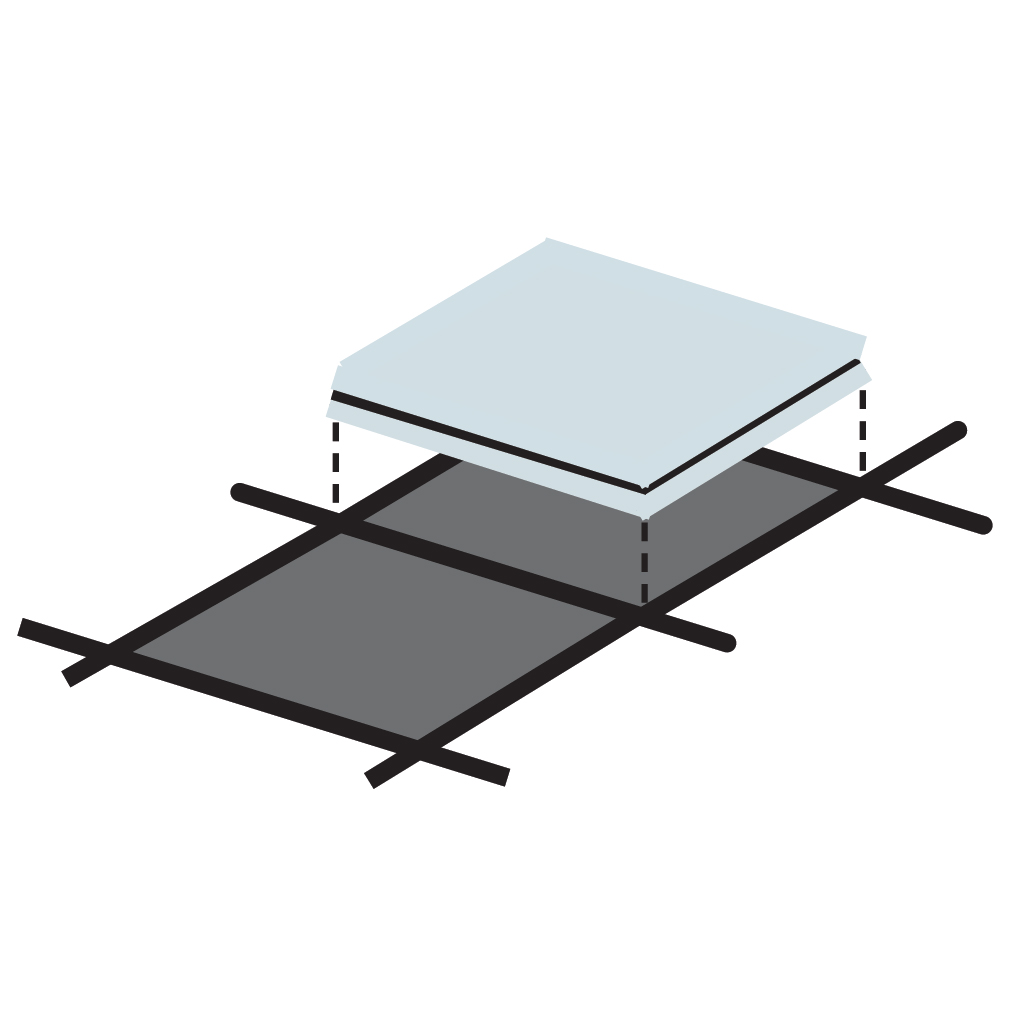
For commercial applications, the Ceiling Tile Noise Barrier Composite improves the sound transmission loss of existing acoustic ceiling tiles without replacement or demolition. The composite consists of a mass-loaded vinyl noise barrier laminated between layers of open-cell melamine foam, balancing absorption and containment in a lightweight panel.These panels are installed above existing lay-in ceiling tiles, making them ideal for occupied spaces where downtime must be minimized.
Key Performance Attributes:
- Improves sound isolation through substandard ceiling assemblies
- Lightweight, drop-in installation
- Class A fire performance (ASTM E84 / CAN ULC-S102)
- STC contribution from integrated vinyl barrier
- Ideal for privacy and noise control in retrofit scenarios
The Memtech Advantage.
At Memtech, we don’t just supply materials, we deliver measurable results. Our team works alongside your facilities, safety, architectural, and construction teams to ensure every composite system is properly designed, installed, and verified for performance.

Data-Driven Design
Our recommendations are based on measured acoustic data, not generic assumptions.

System Integration Expertise
We ensure lagging assemblies interface seamlessly without restricting access or maintenance.

Long-Term Reliability
Materials selected for durability under temperature, humidity, and vibration stress.

Material Procurement
Direct access to a full range of barrier composites, adhesives, and mounting hardware for simplified purchasing.

Local Turnkey Implementation
Clear installation detailing and on-site guidance to ensure correct overlap, seam sealing, and mechanical fastening.

Performance Verification
Optional field measurement and tuning post-installation.
Technical Highlights
High-performance barrier and absorber composites for industrial and commercial applications.
Barrier Material
Flexible loaded vinyl (1 lb/ft² or 2 lb/ft² mass options)
Absorber Material
Melamine Foam, typically 1″–2″ thick
Surface Finish
Convoluted or flat surface with gray HPC facing for easy clean-up
Fire Rating
Class A per ASTM E84
Temperature Performance
-20°F to 180°F continuous use (varies by product)
Acoustic Performance (STC/NRC)
STC 25–33 (depending on configuration and thickness)
NRC 0.65–0.95 (for absorber layer)
NRC 0.65–0.95 (for absorber layer)
Attachment Methods
With or without PSA (pressure sensitive adhesive)
Technical Data &
Product Literature
Can't find what you need?
Contact Us or call us at (248) 289-1123 during our normal business hours (Mon-Fri, 8:00AM to 5:00PM ET) to speak directly with a noise control expert.
Foam Composite Sheets
PROSPEC® Composite Product Data Sheet
Support Beyond the Product
Installation assistance available for Michigan and Great Lakes region clients
Engineering consultation to ensure proper material selection
Custom sizing and integration with other Memtech acoustic systems
Replacement panels and parts available for future reconfiguration
Frequently Asked Questions (FAQs)
What are acoustic composites and how do they work?
Acoustic composites are engineered multi-layer systems that combine sound absorption with noise barriers in one integrated product. Unlike single-function treatments, composites use layered construction, typically melamine foam paired with flexible vinyl noise barriers, to both absorb sound within a space (reducing reverberation) and block sound transmission to adjacent areas. Some systems include decoupling layers for enhanced isolation.
Memtech Acoustics designs acoustic composites to deliver dual acoustic performance: they work as absorbers (lowering NRC ratings up to 0.95) and as barriers (STC ratings 25–33).
Memtech Acoustics designs acoustic composites to deliver dual acoustic performance: they work as absorbers (lowering NRC ratings up to 0.95) and as barriers (STC ratings 25–33).
Can acoustic composites be installed in existing buildings without full renovation?
Yes. Acoustic composites from Memtech Acoustics are specifically designed for retrofit installations in occupied buildings. The ceiling tile noise barrier composite installs directly above existing lay-in ceiling grids (no tile replacement needed) making it ideal for offices, schools, or facilities that cannot tolerate extended downtime. Panel composites can be cut and fitted on-site to work around existing infrastructure, HVAC ducts, and utilities. Many systems feature adhesive backing for quick installation. This retrofit-friendly approach means businesses can upgrade acoustic performance in days, not weeks, while maintaining normal operations.
What are the best applications and spaces for acoustic composites?
Acoustic composites excel in specific situations where dual noise control is needed. Use them when noise must be isolated between adjacent spaces, existing walls or ceilings have poor sound performance, retrofit constraints prevent full reconstruction, mechanical or industrial equipment generates noise affecting nearby offices or occupants, or physical space limits thickness.
Common applications include: machinery enclosures, mechanical rooms, HVAC equipment housings, office partitions near open plans, industrial plant areas, and ceilings above noisy floors. Memtech's acoustic composites are engineered for quick installation, often via adhesive backing or cut-and-fit assembly. They're ideal when you need to address both reverberation (absorption) and sound transmission (barrier performance) in a single product, with minimal disruption.
Common applications include: machinery enclosures, mechanical rooms, HVAC equipment housings, office partitions near open plans, industrial plant areas, and ceilings above noisy floors. Memtech's acoustic composites are engineered for quick installation, often via adhesive backing or cut-and-fit assembly. They're ideal when you need to address both reverberation (absorption) and sound transmission (barrier performance) in a single product, with minimal disruption.
Can acoustic composites handle harsh industrial conditions and high noise?
Yes. Acoustic composites are purpose-built for industrial noise control. Memtech's industrial-grade systems are installed in machinery enclosures, mechanical rooms, plant floors, and equipment housings where airborne noise and vibration must be reduced. The layered construction combines dense vinyl noise barriers (1–2 lb/ft²) with melamine foam absorbers to tackle both direct noise and reflected sound. Systems withstand continuous operation at –20°F to 180°F, making them suitable for cold storage, steam rooms, and high-temperature equipment areas. Class A fire rating (ASTM E84) ensures compliance in occupied industrial spaces.
What fire ratings do acoustic composites meet for building codes?
Yes. Memtech Acoustics acoustic composites are tested to meet Class A fire performance under ASTM E84 (Steiner Tunnel Test) and CAN ULC-S102 (Canada). Fire ratings vary by material configuration as specific melamine foam and vinyl barrier combinations determine the rating. During system design, Memtech verifies fire compliance based on your building code requirements (commercial, industrial, healthcare, etc.). Class A ensures the product won't propagate flames or contribute excessive smoke, making it suitable for occupied commercial and institutional buildings. Always specify fire rating upfront to ensure the composite meets local or project-specific fire code requirements.
Can acoustic composites be cut to fit around corners, ducts, and obstacles?
Yes. Most Memtech acoustic composites can be cut and fitted on-site to accommodate irregular geometries, HVAC ducts, electrical conduits, pipes, and equipment. This field-adaptability is one of the key benefits for retrofit installations. Use a sharp utility knife or fine-tooth saw for clean cuts.
Important: Proper sealing of cut edges and penetrations is critical to maintain both acoustic performance and fire rating. Edge-seal cut surfaces with acoustic sealant or tape to prevent sound bypass around barriers. For precision cuts around complex penetrations, Memtech recommends pre-planning with a detailed site layout to minimize on-site modifications and maintain system performance.
Important: Proper sealing of cut edges and penetrations is critical to maintain both acoustic performance and fire rating. Edge-seal cut surfaces with acoustic sealant or tape to prevent sound bypass around barriers. For precision cuts around complex penetrations, Memtech recommends pre-planning with a detailed site layout to minimize on-site modifications and maintain system performance.
What do NRC and STC ratings mean, and how do I choose the right values?
NRC (Noise Reduction Coefficient) and STC (Sound Transmission Class) measure different acoustic properties. NRC rates sound absorption: values range 0–1, with higher scores indicating greater absorption within a space (Memtech composites achieve NRC 0.65–0.95). Use NRC when you need to reduce reverberation, echo, or noise bouncing inside a room.
STC measures sound transmission loss: higher scores mean more sound blocked between spaces (Memtech composites achieve STC 25–33, with higher barriers performing better). Choose STC when sound isolation between adjacent spaces is critical, such as offices near mechanical rooms, apartments, or industrial equipment.
Acoustic composites excel because they address both: absorption (NRC) and isolation (STC) in one system. For example, PROSPEC® composite with 2" melamine foam and 2 lb/ft² vinyl barrier achieves high absorption and mid-range isolation, balancing cost and performance. Memtech engineers specify the right combination based on your room's noise source and audience.
STC measures sound transmission loss: higher scores mean more sound blocked between spaces (Memtech composites achieve STC 25–33, with higher barriers performing better). Choose STC when sound isolation between adjacent spaces is critical, such as offices near mechanical rooms, apartments, or industrial equipment.
Acoustic composites excel because they address both: absorption (NRC) and isolation (STC) in one system. For example, PROSPEC® composite with 2" melamine foam and 2 lb/ft² vinyl barrier achieves high absorption and mid-range isolation, balancing cost and performance. Memtech engineers specify the right combination based on your room's noise source and audience.
Why are acoustic composites better than just foam or just a noise barrier?
Acoustic composites outperform single-layer treatments because they address two noise problems simultaneously. Single-layer foam (like melamine alone) absorbs sound well within a room but provides minimal isolation to adjacent spaces which makes it ideal for reverberation control but not for blocking noise transmission.
Single-layer barriers (like mass-loaded vinyl alone) block some sound transmission but do little to reduce interior reverberation. You get isolation without absorption, leaving the space acoustically "hard."
Memtech's acoustic composites combine both: the foam absorbs interior reflections while the vinyl barrier blocks transmission, plus optional decoupling layers enhance isolation further. For example, PROSPEC® composite pairs 1–2" melamine foam with 1–2 lb/ft² vinyl barrier, delivering NRC 0.65–0.95 AND STC 25–33 in one product. This dual performance reduces material costs, installation labor (one system vs. two), and installation time (often 40–50% faster than layering separate foam and barriers). For maximum performance, composites are the engineering solution.
Single-layer barriers (like mass-loaded vinyl alone) block some sound transmission but do little to reduce interior reverberation. You get isolation without absorption, leaving the space acoustically "hard."
Memtech's acoustic composites combine both: the foam absorbs interior reflections while the vinyl barrier blocks transmission, plus optional decoupling layers enhance isolation further. For example, PROSPEC® composite pairs 1–2" melamine foam with 1–2 lb/ft² vinyl barrier, delivering NRC 0.65–0.95 AND STC 25–33 in one product. This dual performance reduces material costs, installation labor (one system vs. two), and installation time (often 40–50% faster than layering separate foam and barriers). For maximum performance, composites are the engineering solution.
How quickly can I get acoustic composites for my project?
Standard foam composite sheets from Memtech Acoustics ship immediately from inventory, making them ideal for urgent projects or quick-turnaround retrofits. Custom-engineered composites featuring specific barrier weights, foam thicknesses, or multi-layer configurations typically ship in 4–6 weeks. Timeline depends on material availability and engineering verification. Ask us about lead times for your project by calling (248) 289-1123 or emailing us at sales@memtechacoustics.com
Let’s Engineer the Right Solution, Together.

Let's Get Started. Contact Us.
Talk to our experts. We’ll assess your needs and recommend a solution that works for your project.