Types, features, and how to choose the right one
Like most people, you probably have a decent understanding of day-to-day metrics like temperature, distance, or weight. When the weather report says it’s going to 85°F tomorrow, you know it’s T-shirt weather. When it comes to sound, however, do you know what 85dB actually means or what decibel level is harmful?
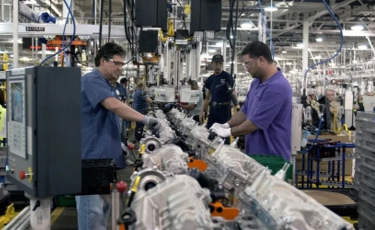
To give you some reference, 85dB is roughly equivalent to the sound of heavy road traffic, a vacuum cleaner, or a hair dryer - loud, yes, but maybe not what you’d instinctively call dangerous. Continued exposure to this level of noise, however, can be damaging to your hearing. More than just a random number, 85dB is the level at which the Occupational Safety and Health Administration (OSHA) demands intervention, with businesses facing steep fines for non-compliance.
To keep employees and businesses safe, acoustic enclosures are the go-to solution for work environments that continually produce this level of noise. In this article, we’re going to take a look at what acoustic enclosures are, how they work, and how companies like Memtech Acoustics can keep your business a comfortable and compliant place in which to work.
Key takeaways
- Controlling noise at the source is the most effective form of mitigation.
- A true acoustic enclosure is not just a metal box. Effective systems use mass-loading to block sound and absorptive cores to prevent internal echoes and heat buildup.
- The 1% Leak Rule: Even a small 1%gap in an enclosure (such as a poorly sealed door or unsilenced vent) can allow up to 50% of the sound energy to escape, making the enclosure largely ineffective.
- There’s a key difference between "performance" enclosures (like subwoofer boxes designed to tune sound) and "industrial" enclosures (designed to isolate and contain harmful decibels).
- Modern enclosures must balance silence with operational needs. Features like silenced ventilation, maintenance access panels, and high-visibility windows ensure safety doesn't come at the cost of productivity.
The acoustic enclosure – more than just a box
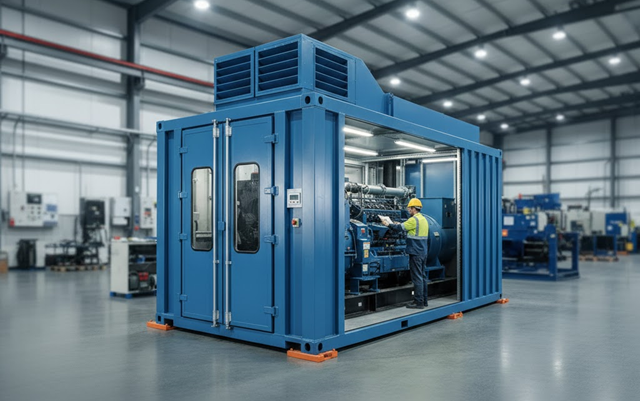
At first glance, an acoustic enclosure might look like a simple metal shed or a heavy-duty cabinet. On closer inspection, however, they reveal themselves to be complex, multi-layered systems designed to manage energy.
At its core, an acoustic enclosure is a structure engineered to isolate a sound source from its surroundings. This isolation works in two directions: containing noise generated by heavy machinery (like a generator or a hydraulic press) to protect a facility, or shielding a sensitive environment (like a laboratory or a control room) from external ambient noise.
The versatility of these structures is vast. They can range from small, portable "hoods" that fit over a single vacuum pump to massive, building-sized structures that house entire turbine halls. The materials used in their construction are selected based on the specific "noise signature" of the equipment they house.
Factors such as chemical exposure, moisture, temperature extremes, and the need for frequent maintenance access all dictate the enclosure's design. Whether it’s a modular system made of flexible quilted blankets or a rigid structure of galvanized steel, an acoustic enclosure is a tailored piece of industrial equipment designed to convert chaotic sound energy into manageable thermal energy.
How acoustic enclosures work
Understanding acoustic enclosures requires a brief look at the physics of sound. Sound is energy created by mechanical vibrations that move through a medium, most commonly air or solid structures. When a machine operates, it sends ripples of pressure through the air (airborne noise) and vibrations through its base into the floor (structure-borne noise). An enclosure acts as a series of hurdles that this energy must cross, losing strength at every stage.
The first principle at play is mass. Dense materials like steel or mass-loaded vinyl have high "transmission loss," meaning they’re physically difficult for sound waves to move through.
The second principle is absorption. When sound waves strike the porous internal lining of an enclosure, such as mineral wool, the air molecules are forced to move through tiny paths. This friction converts the kinetic energy of the sound wave into low-grade heat.
The third factor is decoupling. This is the process of breaking the physical path of vibration. If an enclosure is bolted directly to a vibrating machine, it becomes a giant speaker. Using vibration isolators and specialized mounts keeps the enclosure acoustically "floated."
Finally, damping treatments are applied to prevent the metal panels of the enclosure from vibrating sympathetically, making sure the enclosure itself doesn’t become a secondary noise source.
The anatomy of a high-performance enclosure
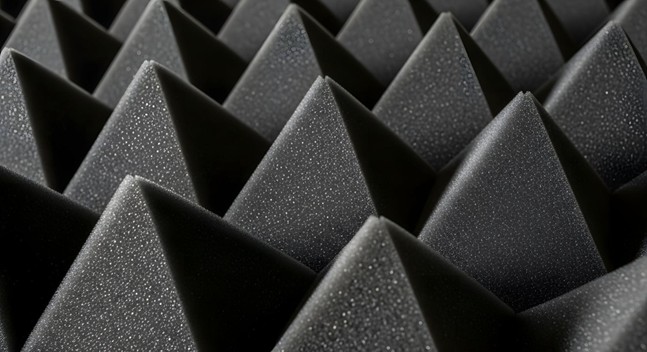
A high-performance acoustic enclosure is a multi-layered device designed to neutralize sound while maintaining machine functionality.
The outer skin: Constructed from heavy-gauge galvanized steel or aluminum, this layer provides the necessary structural mass to block low-frequency sound waves.
The acoustic core: Positioned behind the skin, high-density mineral wool or specialized open-cell foam acts as the "heart" of the system, trapping and dissipating sound energy.
Protective liners: A thin, acoustically transparent film or perforated metal liner protects the core from industrial contaminants like oil and dust without hindering sound absorption.
Silenced ventilation: Custom intake and exhaust silencers, or "sound traps," use absorbent baffles to allow heat to escape while preventing noise from leaking out.
Precision seals: High-compression gaskets on doors and windows ensure an airtight fit as even a 1% gap can result in a 50% loss in acoustic performance.
Types of acoustic enclosures
Industrial noise challenges vary a great deal, with solutions engineered to match the specific operational goals of your facility. By categorizing enclosures based on their primary function, businesses can strike the perfect balance between acoustic isolation, safety, and worker accessibility.
Sound Attenuation Enclosures: The workhorses of industry, these units bring equipment like blowers and pumps down to safe levels while maintaining airflow.
Machine Enclosures: Integrated directly into production lines, these feature safety interlocks and multi-layered acoustic glass viewing ports for safe monitoring of high-speed CNC or stamping processes.
Soundproofing & Isolation Enclosures: Engineered for environments requiring near-total silence, such as R&D test cells or medical audiology booths.
Acoustic Barriers: One- or two-sided walls designed to interrupt the "line of sight" between a noise source and a receiver, common in outdoor utility and substation locations.
Personnel Enclosures (Quiet Zones): These flip the traditional model by enclosing the worker rather than the machine, providing a climate-controlled sanctuary for clear communication on a loud factory floor.
Common industrial & commercial applications
The use of acoustic enclosures spans almost every sector of the economy, serving as an essential component of a facility’s operational infrastructure.
Energy and Utilities: Vital for diesel generators and gas turbines, especially in noise-sensitive locations near hospitals, data centers, or residential zones.
HVAC and Mechanical: Custom enclosures for rooftop chillers and air handling units eliminate the low-frequency "drone" that can resonate through a building’s structural steel.
Manufacturing and Metal Fabrication: Engineered for extreme noise sources like 400-ton presses (exceeding 110 dB), these units use heavy-duty sliding doors to balance maintenance access with acoustic integrity.
Water and Wastewater: High-durability enclosures protect and silence high-pressure blowers and pumps that must operate 24/7 in demanding conditions.
Food and Beverage: Specialized stainless steel enclosures provide acoustic control while meeting strict sanitary standards, capable of withstanding high-pressure chemical washdowns.
What enclosure is best for a subwoofer?
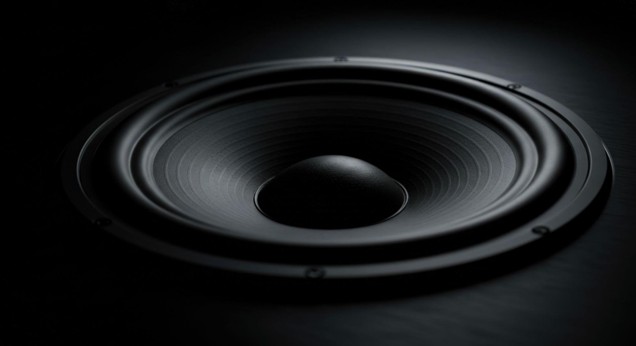
Along with industrial noise containment, enclosures are also used to “tune sound,” an important part of the equation when it comes to low-frequency audio equipment such as subwoofers.
A sealed box is often best for those seeking tight, accurate bass. In this setup, the air trapped inside the box acts like a cushion that pushes back against the speaker cone (the moving part that creates the sound). This air pressure helps pull the cone back into place quickly after every vibration, giving you more control over the sound and preventing it from becoming "muddy" or distorted. Conversely, a ported (vented) enclosure is better for maximum volume and efficiency at specific low frequencies.
However, if your goal is to prevent a subwoofer's vibrations from disturbing neighbors or adjacent offices, you’re looking for an Isolation Enclosure. In this context, the "best" enclosure is one that uses high-mass dampening and mechanical decoupling. Floating the subwoofer on vibration isolation pads and enclosing it in a high-STC (Sound Transmission Class) structure allows you to experience bass-heavy performance inside a room while eliminating the structure-borne "thump" that typically travels through floorboards and joists.
How to choose your enclosure
Choosing the right enclosure is about balancing physics with logistics. The first step in the decision process is an octave-band analysis, as not all loudness is equal. Low-frequency noise (like the rumble of an engine) requires high-mass materials to stop, while high-frequency noise (like a steam hiss) requires high-surface-area absorption. A one-size-fits-all approach usually results in an enclosure that’s either ineffective or unnecessarily expensive.
Next, you need to evaluate operational access. How often does the machine need to be serviced? If it's daily, a rigid enclosure with heavy doors might be cumbersome, and a modular curtain system with "hook-and-loop" or zippered access might be better.
Environmental conditions are the next hurdle. If the enclosure is outdoors, it must be rated for wind loads and snow loads. If it’s in a chemical plant, the coatings will also need to be resistant to corrosion.
Finally, you need to consider scalability and budget. A modular system allows you to expand as your facility grows, whereas a custom-built permanent structure offers the highest possible decibel reduction. Working with an established acoustic engineering partner like Memtech Acoustics ensures that you don't over-engineer for a simple problem or under-engineer for a complex one.
Why the investment pays off
The return on investment for an acoustic enclosure is realized in three main ways: compliance, productivity, and asset protection.
From a compliance standpoint, the cost of an enclosure is a fraction of the cost of a single OSHA fine or a worker’s compensation claim for hearing loss. By creating a workplace that meets or exceeds safety standards, you protect your company's legal and financial standing.
From a productivity perspective, the benefits are equally profound, with numerous studies showing that workers in quieter environments have lower error rates and higher levels of engagement.
Lastly, we have asset protection. Many enclosures also shield equipment from dust, debris, and temperature fluctuations, effectively extending the lifespan of the machinery they house. What’s more, enclosures that incorporate vibration isolation protect the building’s foundation and sensitive electronic instruments nearby from "micro-shocks" that cause premature wear. In short, an acoustic enclosure transforms a hostile industrial environment into a managed, professional workspace.
How Memtech Acoustics Can Help

At Memtech Acoustics, we specialize in delivering data-driven, engineering-led silence. Our approach begins with a comprehensive diagnosis, using advanced testing equipment and acoustic modeling to understand exactly how noise is behaving in your specific environment. Serve a vast array of clients, from automotive manufacturing giants to local utility providers, we make sure every solution is effective, cost-conscious, and built for long-term durability.
From rigid acoustic enclosures to modular curtain enclosures, we deliver tailored, expert solutions that keep your workspace environment compliant, harmonious, and healthy. Contact the Memtech Acoustics team and get an expert opinion on how to solve your noise issues cost-effectively.