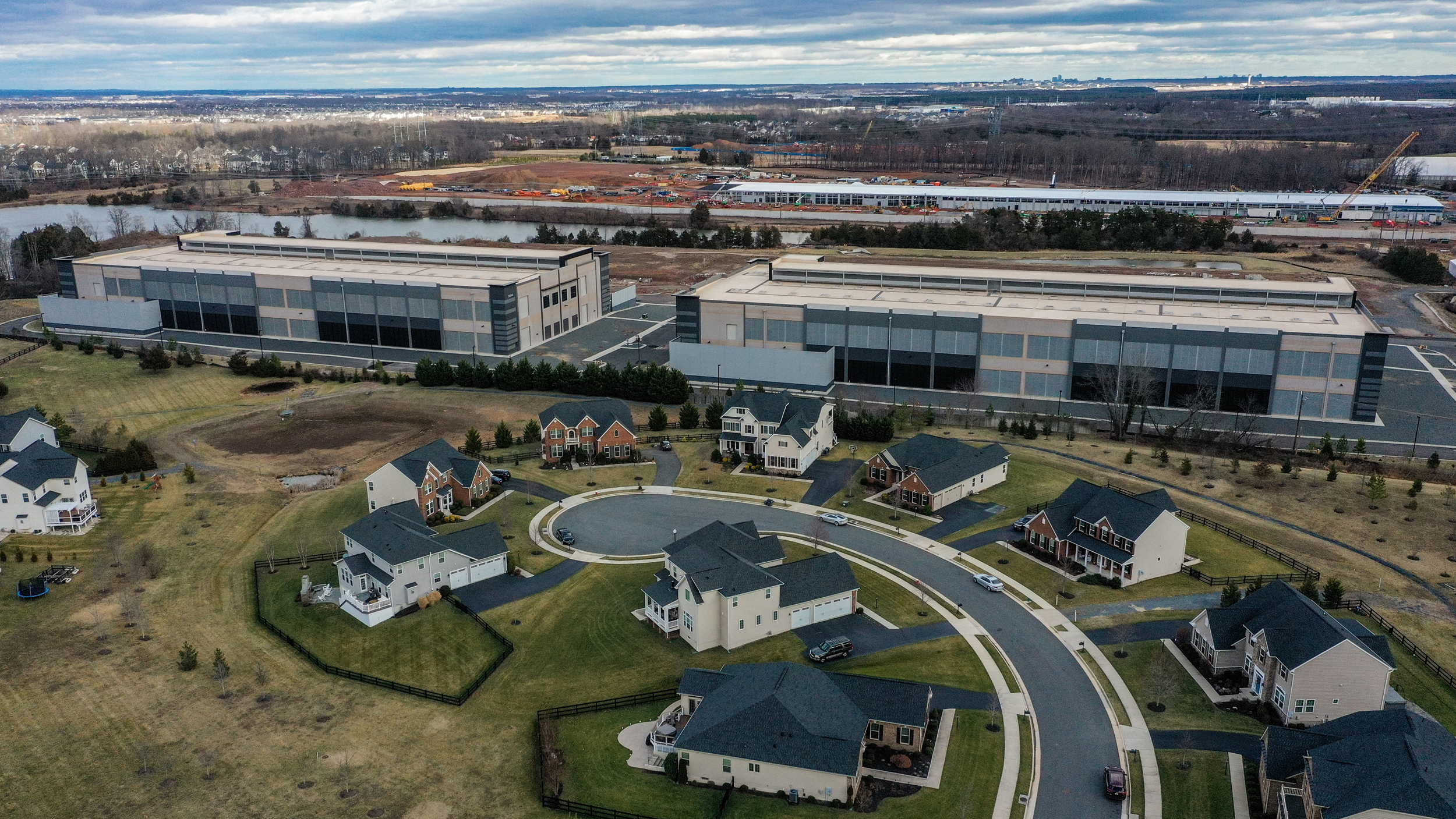
Environmental Noise Assessments
for Permitting and Compliance
Whether you’re planning a new facility, expanding operations, or undergoing permitting, we can help ensure that your project meets regulatory limits and minimizes disruption to nearby communities.
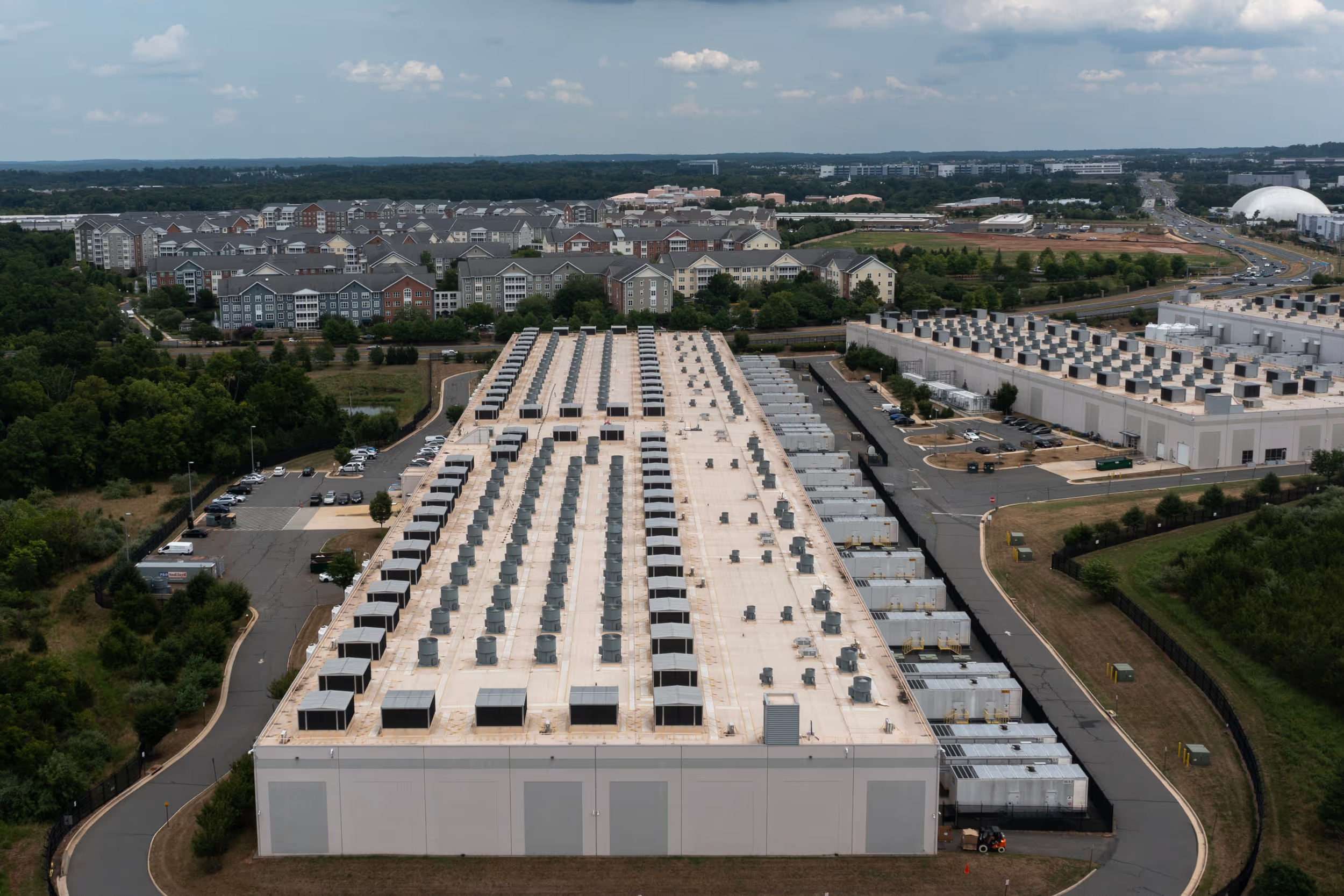
Why a Noise Impact Assessment Matters
As someone evaluating or managing a high-stakes project, whether a data center, campus, or transit hub, you know the Environmental Impact Study (EIS) process is the most critical environmental safeguard.
Under the National Environmental Policy Act (NEPA) (or state equivalents), your project must assess noise and vibration impacts, explore alternatives (including no-action), and propose mitigation before approval.
Our noise impact assessments provide site-specific analyses that predicts and mitigates potential community concerns, technical risks, and operational challenges before they become obstacles.
Under the National Environmental Policy Act (NEPA) (or state equivalents), your project must assess noise and vibration impacts, explore alternatives (including no-action), and propose mitigation before approval.
Our noise impact assessments provide site-specific analyses that predicts and mitigates potential community concerns, technical risks, and operational challenges before they become obstacles.
We can help you:
- Avoid costly delays due to noise-related objections
- Comply with local, state, and federal permitting requirements
- Understand and mitigate community sound impact
- Communicate effectively with municipalities, residents and other stakeholders
Common Challenges We Solve.

Construction Noise Compliance
Managing temporary or long-term noise concerns due to site preparations and construction.

Transportation & Logistics Operations
Noise due to truck idling, loading dock impacts, or inventory transport sounds exceeding allowable limits.

Industrial Machinery Retrofits
Diagnosing and correcting equipment-generated vibration or noise issues impacting workers or communities.

Community Noise Complaints
Persistent neighbor or municipal noise problems requiring data, subjective correlation, and engineered mitigation.

Permitting & Zoning Approvals
Projects delayed due to noise ordinance issues or resident objections.

Expansion Planning
Quantifying added noise from new equipment or facility growth before construction begins.
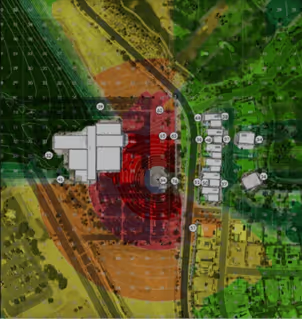
ENVIRONMENTAL NOISE IMPACT ASSESSMENT
Our Approach & Capabilities
We specialize in noise impact assessments across business sectors such as data processing infrastructure, transportation, energy, inventory management, manufacturing and crypto mining.
We deliver site-specific baseline studies, detailed analysis, predictive modeling, and impact forecasts to produce defensible reports and comprehensive mitigation plans.
We deliver site-specific baseline studies, detailed analysis, predictive modeling, and impact forecasts to produce defensible reports and comprehensive mitigation plans.
Our approach:
- Define Scope
Determine study boundaries, regulatory requirements, and sensitive receptors. - Measure Baseline
Conduct on-site noise surveys using state-of-the-art environmental noise loggers, recorders and analyzers. - Model Impacts
Utilize 3D predictive modeling to simulate sound and vibration propagation under multiple scenarios. - Design Mitigation
Engineer noise barriers, enclosures, damping systems, or isolation strategies tailored to the site and in compliance with legal requirements. - Deliver Documentation
Provide compliance-ready reports that satisfy NEPA, state, and local review authorities. - Support Stakeholders
Present findings at public hearings and agency reviews with clear, defensible evidence.
What’s included in an Acoustic
Environmental Impact Study?
Our EIS services are tailored to your site, local ordinances, and project scope. We combine on-site measurement, modeling, and ordinance interpretation to deliver detailed, accurate assessments.
Baseline Ambient Sound Measurement
Field testing to capture existing background noise levels at and surrounding the proposed site.
Property Line Boundary Survey
Sound-level measurement at the legal property line, where most municipal noise ordinances set and enforce their limits.
Predictive Acoustic Modeling
Computer simulations showing the projected sound impact of your facility using source power calculations, surrounding topography, local structures, and environmental considerations.
Subjective Annoyance Predictions
If necessary, a comprehensive ‘annoyance probability’ projection can be provided based on source noise levels, surrounding topography, and statistical estimates of large-polulation day/night noise objectionability.
Compliance Benchmarking
Comparison of current or predicted noise levels against local sound ordinance requirements, including property line boundary surveys that measure sound at the legal boundary where the ordinance applies.
Mitigation Recommendations
We can provide effective environmental noise-control solutions such as barrier walls, enclosure design, or orientation changes.
Reporting and Documentation
Comprehensive reports will including maps, tables, and summaries, along with all raw and analyzed data will be provided, as appropriate for any legal requirements or for review by all stakeholders.
Who Needs an Acoustic Environmental Impact Study?
- Developers preparing zoning, rezoning, or site plan approval packages
- Municipal agencies evaluating noise in public space design
- Architects and engineers planning projects near noisy noise sources
- Businesses expanding operations near residential or sensitive zones
- Energy or industrial operators in noise-sensitive areas
Credentials, Standards, and Regulatory Expertise
Developers and municipal agencies validate environmental noise consultants against credentials, standards compliance, and regulatory expertise.
Engineering Credentials
In-house acoustic engineering for defensible acoustic analysis, formal reports, and expert testimony.
50+ years combined engineering experience
25+ years of practice (founded 2001)
2,000+ projects nationwide
MBE Certified. CAGE Code 1ART8. UEI CMBVSSJNN7U5.
Environmental Noise Standards
ISO and federal standards for environmental noise measurement, modeling, and compliance benchmarking.
ISO 1996 (Environmental Noise)
ISO 9613 (Sound Attenuation Outdoors)
FHWA Noise Abatement Criteria (NAC)
FTA Transit Noise and Vibration Guidelines
Professional Memberships
Recognized by industry and regulatory bodies for acoustic engineering expertise and professional standards.
Acoustical Society of America (ASA)
Institute of Noise Control Engineering (INCE-USA)
AIA Michigan
Construction Association of Michigan (CAM)

The Memtech Difference
At Memtech, noise is our business. Our engineers oversee every step, ensuring that each project is properly delivered, on-time and within budget. This integrated approach delivers predictable results and protects your investment.

Certified Acoustic Professionals
Testing conducted by certified engineers and acoustic specialists, not general contractors or “safety consultants.”

National Standards Alignment
We follow OSHA 1910.95, NIOSH criteria, and ANSI S12.19-1996 methods for noise exposure assessment. Measurements are conducted via ISO procedures or per academically accepted methods.

Engineering Expertise
Noise measurements, analysis, modeling and installation support are overseen by professionals who understand acoustic theory, as well as the implementation of practical solutions.
High Responsiveness, Proven Reliability
We are your trusted local partner providing on-demand support and dependable project execution. Michigan-based with regional reach and national* shipping capabilities.

Confidential & Detailed Reporting
We don’t just submit a report. You are provided with complete documentation, delivered in easy-to-understand language with accurate data and comprehensive drawings.
*Shipping available across the continental USA, and international; installations are offered in select regions.
NOTE: We do not stock custom products in our U.S. warehouse. Ask us about lead times for your project.
NOTE: We do not stock custom products in our U.S. warehouse. Ask us about lead times for your project.
Frequently Asked Questions (FAQs)
What is an Environmental Impact Study (EIS) and how does noise fit into it?
An EIS is a detailed report required under the National Environmental Policy Act (NEPA) that identifies a project's potential environmental impacts and evaluates alternatives, including a no-action scenario. Noise and vibration are critical components of the EIS. Memtech Acoustics provides the specialized acoustic analysis, predictive modeling, and mitigation recommendations that satisfy the noise section of NEPA and state-equivalent submissions.
What is an environmental noise impact assessment?
An environmental noise impact assessment is a technical evaluation that quantifies how existing or proposed activities will affect the surrounding acoustic environment. Memtech Acoustics conducts baseline ambient measurement, predictive acoustic modeling, compliance benchmarking against local noise ordinances, and mitigation design. The assessment supports permitting, zoning approvals, and regulatory compliance for industrial, commercial, energy, and infrastructure projects.
What is the difference between a noise impact assessment and an Environmental Impact Study?
An EIS covers all environmental factors (air, water, ecology, traffic, noise) while a noise impact assessment focuses specifically on acoustic and vibration impacts. Memtech Acoustics provides the specialized noise and vibration expertise required for EIS submissions, including baseline measurement, predictive modeling per ISO 1996 and ISO 9613, and defensible mitigation recommendations.
What goes into the noise analysis section of an EIS?
The noise analysis section typically includes baseline ambient sound conditions, impact modeling for each proposed design alternative, human and wildlife exposure analysis, and mitigation strategies with costs and implementation plans. Memtech Acoustics delivers this analysis using 3D predictive modeling, on-site environmental noise loggers, and compliance benchmarking against NEPA, state, and local requirements.
When is an environmental noise impact assessment required?
An assessment is typically required during site development, permitting, rezoning, or facility additions where regulations or community guidelines establish maximum noise limits. Many local ordinances, state environmental agencies, and federal programs (NEPA, FHWA NAC, FTA) require a noise impact assessment as part of project approval. Memtech Acoustics helps identify whether your project triggers these requirements.
How does Memtech Acoustics address cumulative noise impacts?
Memtech Acoustics layers predictive modeling results for adjacent developments, existing infrastructure, and future planned activities to account for additive or synergistic noise effects. Cumulative analysis ensures the assessment reflects real-world conditions rather than evaluating the project in isolation.
Can Memtech Acoustics recommend or install noise mitigation solutions?
Yes. Memtech Acoustics provides engineered mitigation recommendations as part of every noise impact assessment, including barrier wall design, equipment enclosures, orientation changes, and vibration isolation. For projects that need implementation, Memtech Acoustics coordinates procurement and installation of noise control systems through qualified subcontractors for a turnkey solution.
How long does an environmental noise impact assessment take?
Timeline depends on site complexity, the number of noise sources, and regulatory requirements. A baseline ambient survey by Memtech Acoustics typically completes within 1-2 weeks. The full assessment, including predictive modeling, compliance benchmarking, and report delivery, ranges from 4-6 weeks depending on scope and agency review timelines.
What standards does Memtech Acoustics follow for environmental noise assessments?
Memtech Acoustics follows ISO 1996 (Environmental Noise), ISO 9613 (Sound Attenuation During Propagation Outdoors), FHWA Noise Abatement Criteria (NAC) for highway projects, FTA Transit Noise and Vibration Impact Assessment Guidelines for transit projects, and applicable state and local noise ordinances. All measurements are conducted using calibrated environmental noise loggers and analyzers.
Do you measure noise at the property line for ordinance compliance?
Yes. Most municipal noise ordinances set their limits at the property line, so we conduct property line boundary surveys that measure sound at the legal boundary with calibrated environmental noise loggers. The results are benchmarked against the applicable ordinance and documented for permitting, planning boards, and public hearings.
Let’s Engineer the Right Solution, Together.

Let's Get Started. Contact Us.
Talk to our experts. We’ll assess your needs and recommend a solution that works for your project.