Challenge
Archaea Energy planned a major expansion of its renewable natural gas (RNG) plant in Canton Township, Michigan. The Canton Charter Township Noise Ordinance limit that applies at the plant's property line is 70 dBA, and residential neighborhoods sit roughly 1,500 feet north and 2,000 feet east of the plant.
Memtech Acoustics first measured the site in November 2021, when no reading along the property boundary exceeded 60 dBA. After Archaea revised its equipment layout in 2022, Memtech's model predicted that the new compressors and process equipment would exceed the 70 dBA limit along portions of the north and west property lines, and that plant noise would be clearly noticeable in nearby neighborhoods during evening hours, when traffic noise drops.
Solution
Memtech built a predictive noise model from the plant geometry, the surrounding terrain, and equipment sound data supplied by Archaea and the equipment manufacturers, and checked it against the November 2021 field readings. The model assumed every source running at full output at the same time, a worst case. Memtech then compared four barrier wall options, from a basic compliance layout with 12 ft walls to 20 ft walls with angled tops aimed at reducing noise in the neighborhoods. Each option came with predicted property-line and neighborhood levels so Archaea could weigh performance against cost.
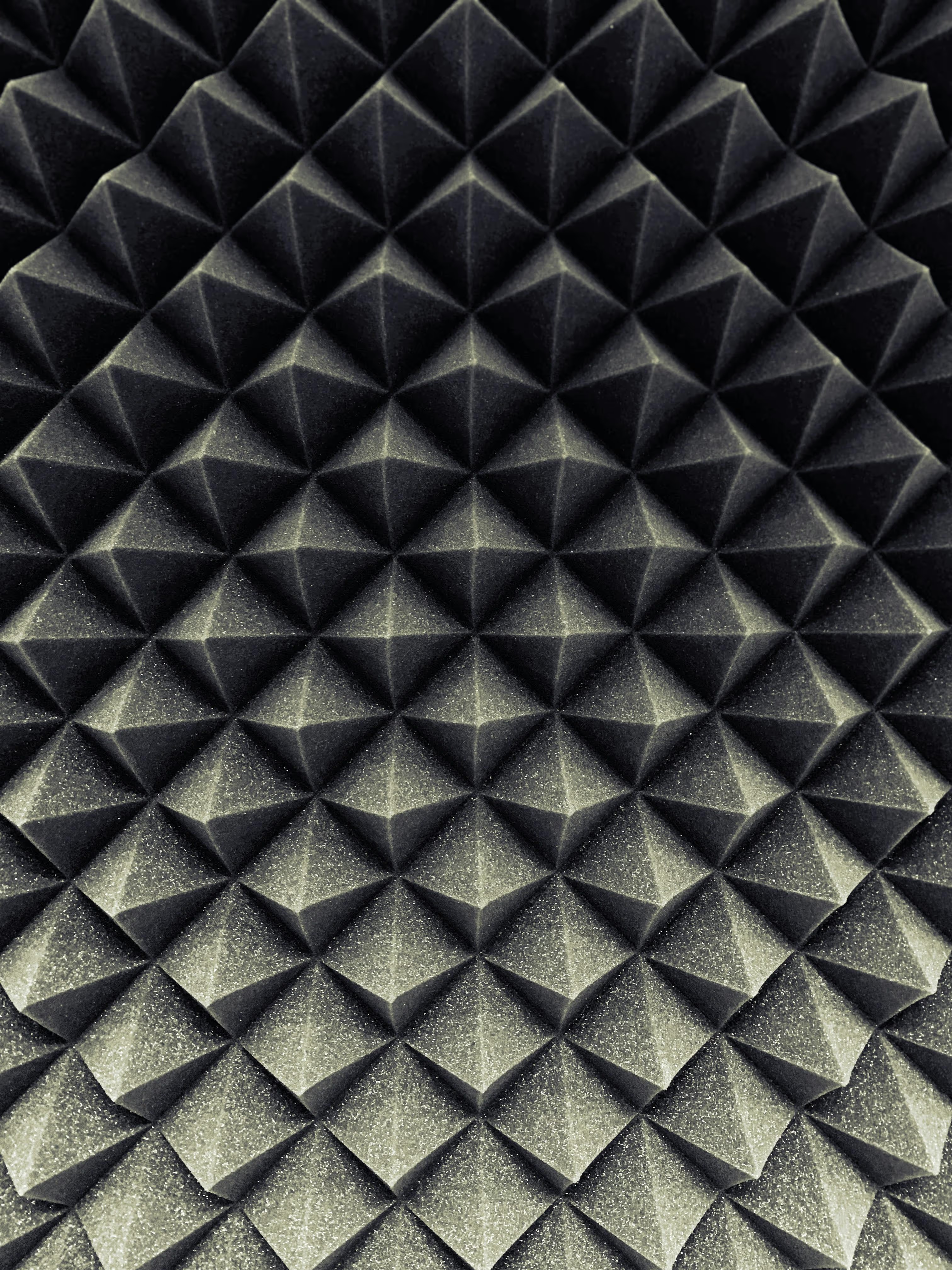
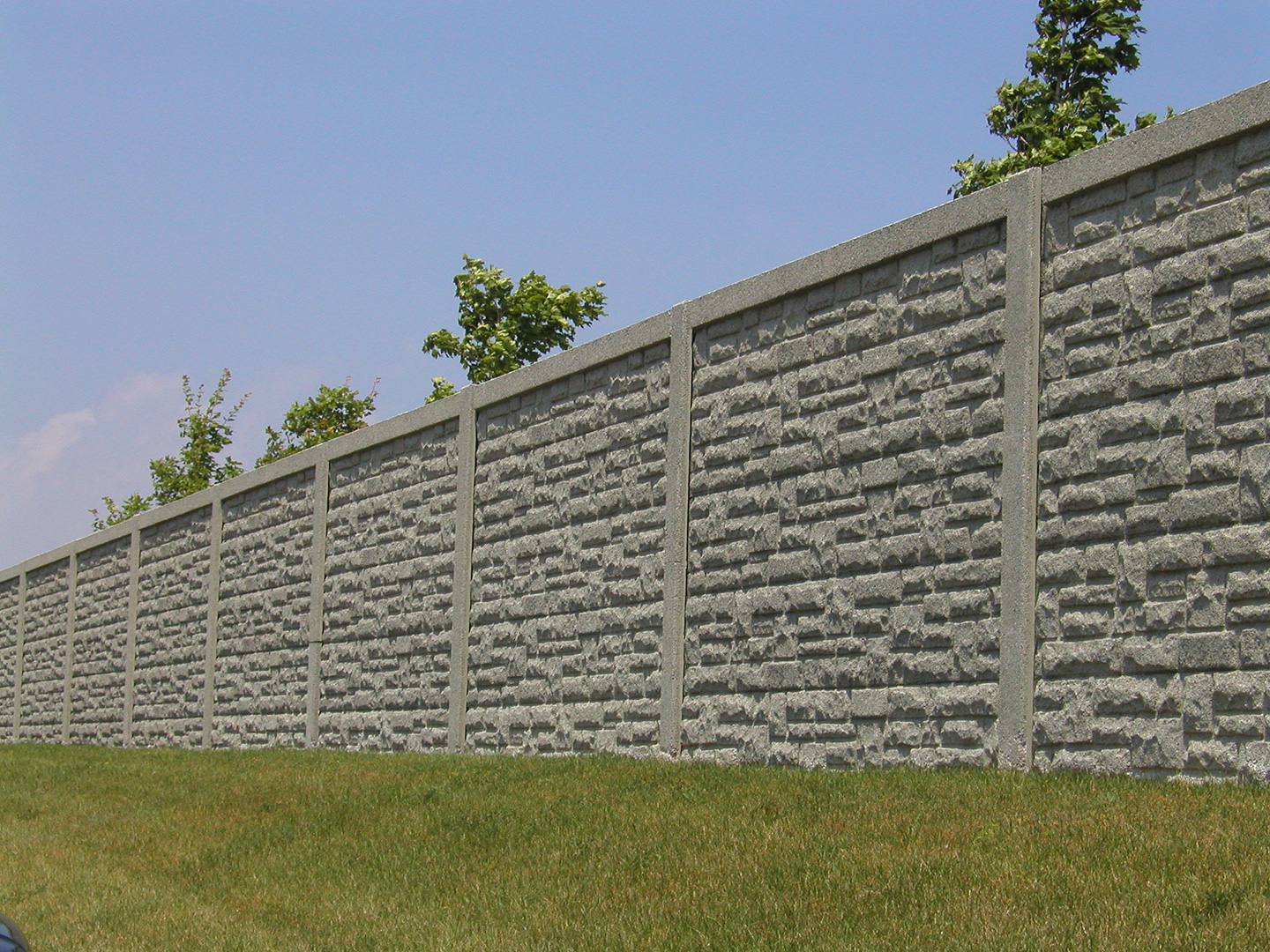
In June 2022 Archaea selected a two-wall design: a 16 ft north wall and a 12 ft west wall built from precast absorptive concrete panels rated STC 46 and NRC 0.7 to 0.9, with the absorptive face toward the plant to limit reflections. The model predicted levels below 70 dBA at all property line locations. Memtech contracted a geotechnical investigation to confirm the post and footing locations.
As the site design changed, Memtech re-ran the model. In fall 2022 the original west wall layout was found not viable and was redesigned as a cupped wall around the equipment south of the plant building. In May 2023 concerns about underground utilities led to a request to relocate the north wall. At the requested location, a 16 ft wall exceeded the limit and a 20 ft wall still predicted roughly 73 to 74 dBA at the north lot line, so Memtech developed a right-angled wall with a splayed top and an absorptive curtain lining, which the model predicted would meet 70 dBA at the north lot line within its 75 percent confidence band.
In July 2023 Memtech evaluated a shorter version of that wall and two locations for a new rinse compressor. The shorter wall remained marginally compliant in the model, and the analysis showed that a compressor west of the building would need its own enclosure, while a location inside the cupped wall would not.
Memtech coordinated the work through construction: panel and steel post fabrication, drilled footings, and panel installation by subcontractors, plus site surveying for wall staking and layout. The north wall layout was revised again in February 2024.
Results
Archaea weighed the June 2022 wall selection, and the 2022 and 2023 layout changes driven by site constraints, underground utilities, and new equipment, against predicted property-line levels. The modeling steered the north wall geometry where added height alone fell short, and it identified a compressor location that would have required an enclosure. Installation of the north and south barrier walls was complete in May 2024.