Challenge
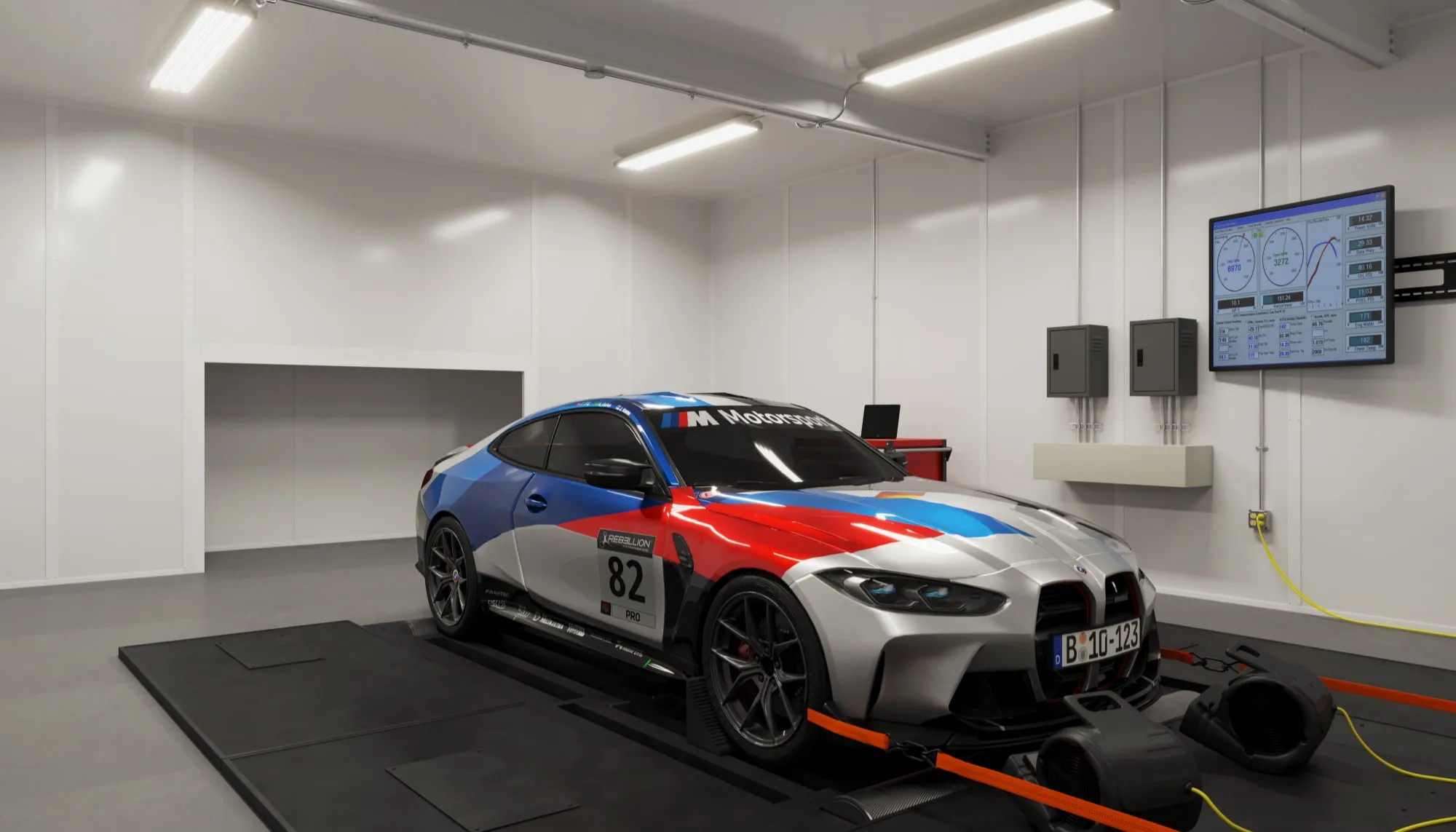
Michigan Automotive Compressor Inc. (MACI) operates a high-volume automotive compressor manufacturing facility where a critical NVH (noise, vibration, and harshness) test chamber had developed a persistent background noise problem. The chamber is used for end-of-line quality testing of compressors, and background noise contamination was interfering with the accuracy and repeatability of test results.
Memtech Acoustics was engaged to identify the root causes and engineer a solution that would restore the chamber to its required ambient noise floor. The investigation revealed four distinct noise sources contributing to the problem: drive system mechanical noise transmitted through the test fixture structure, aerodynamic noise from the chamber's ventilation system, vibration transmission through the chamber's structural connections to the building, and residual ambient noise infiltration from the surrounding manufacturing floor.
The drive-on ambient noise level measured 38.2 dBA, which was above the threshold required for reliable compressor NVH characterization. Each of the four root causes required a different engineering approach, and partial treatment would not solve the problem. All four had to be addressed as a coordinated system.
Solution
Memtech Acoustics developed a four-part engineering solution targeting each identified root cause:
Drive System Re-engineering: The existing test fixture drive mechanism was generating mechanical noise that coupled into the chamber structure. Memtech specified modifications to the drive system mounting and coupling to reduce transmitted vibration at the source, including isolation mounts and revised mechanical linkages.
Ventilation Noise Control: The chamber ventilation system was redesigned with inline duct silencers and low-turbulence diffusers to reduce aerodynamic noise while maintaining the required airflow for thermal management during compressor testing.
Structural Vibration Isolation: Vibration transmission paths between the manufacturing floor and the test chamber were identified through spectral analysis. Structural welding and bonding modifications were specified to decouple the chamber from building-borne vibration, eliminating flanking paths that bypassed the chamber's acoustic envelope.
Ambient Noise Reduction: Additional mass and sealing treatments were applied to the chamber enclosure to increase transmission loss from the surrounding manufacturing environment, targeting the frequency bands where floor noise was most problematic.
Results
The coordinated four-part solution reduced the drive-on ambient noise floor to levels suitable for reliable compressor NVH testing. Post-modification measurements confirmed that all four root causes were effectively controlled, and the chamber met MACI's performance requirements for end-of-line quality characterization. The systematic approach, treating the problem as four interacting sources rather than a single noise issue, was critical to the outcome. Addressing any single source in isolation would not have achieved the required ambient noise floor.