What RT60 and C50 Tell You
RT60 and C50 are two of the core measurements used to characterize reverberation in a room. RT60 (reverberation time) is the time it takes sound to decay by 60 dB after the source stops. C50 (clarity) compares the sound energy arriving in the first 50 milliseconds with the energy that arrives later and blurs speech. Together they describe a room's acoustic character and show how reverberation affects speech intelligibility and musical performance.
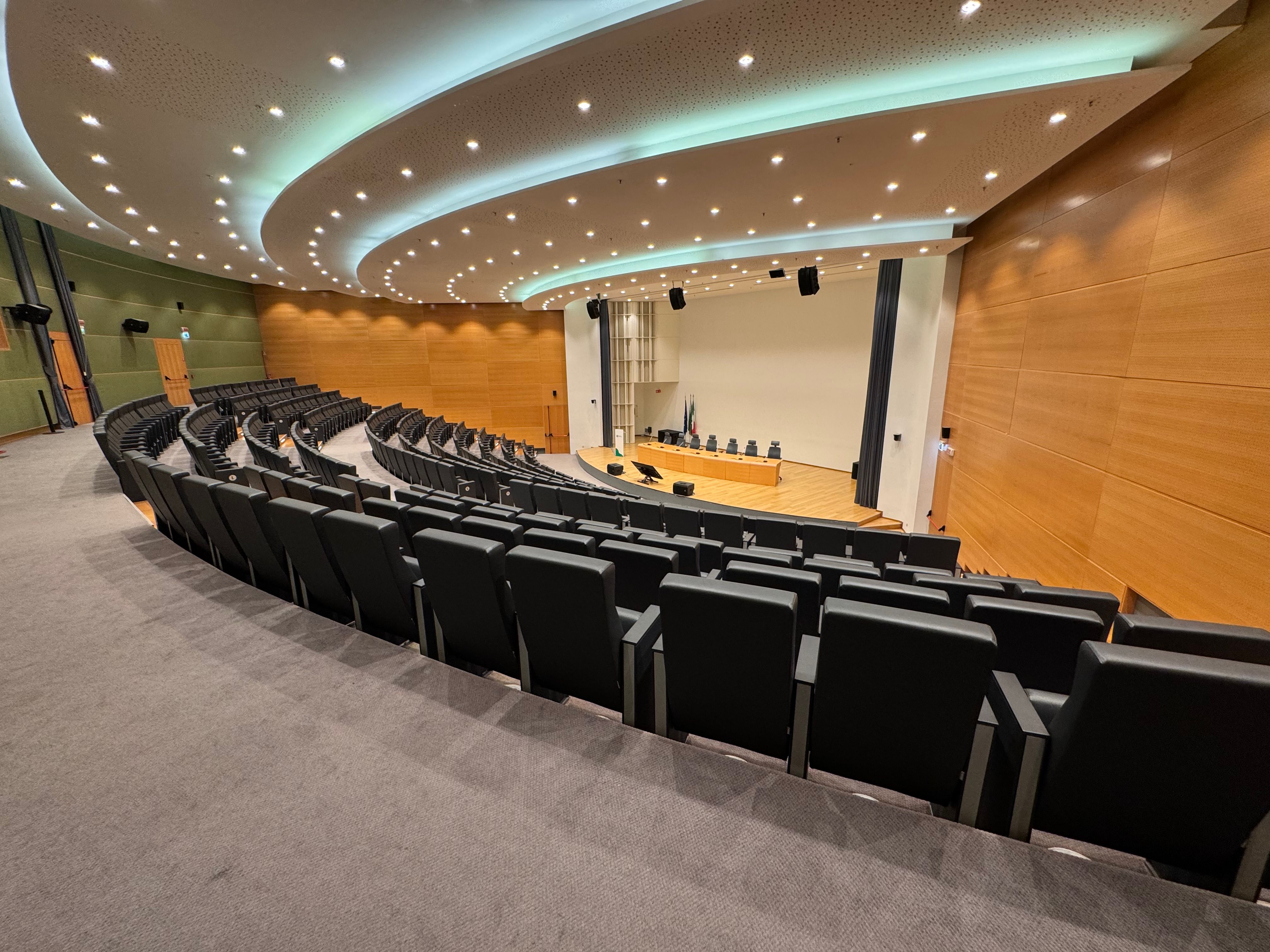
ANSI/ASA S12.60 sets a maximum reverberation time for unoccupied, furnished classrooms of 0.6 seconds for rooms up to 10,000 cubic feet and 0.7 seconds for rooms up to 20,000 cubic feet. Rooms used for music, such as worship spaces, are commonly designed with longer reverberation to provide presence. Every room is different, and Memtech Acoustics sets reverberation targets based on how the room is used and what the customer needs.
Along with reverberation time, background noise is a critical factor in room design. Excessive noise from other sources distracts listeners and makes speech harder to understand, so we measure it at the same time.
ANSI/ASA S12.60 sets a maximum reverberation time for unoccupied, furnished classrooms of 0.6 seconds for rooms up to 10,000 cubic feet and 0.7 seconds for rooms up to 20,000 cubic feet. Rooms used for music, such as worship spaces, are commonly designed with longer reverberation to provide presence. Every room is different, and Memtech Acoustics sets reverberation targets based on how the room is used and what the customer needs.
Along with reverberation time, background noise is a critical factor in room design. Excessive noise from other sources distracts listeners and makes speech harder to understand, so we measure it at the same time.
A room with poor acoustic characteristics can cause:
- Speech that is hard to follow
Reflections blur the words, so listeners strain, mishear, and tune out speakers. - Listener fatigue
A live room wears people down over a long class, meeting, or service. - A PA that fights the room
Turning up a sound system in a reverberant room raises the reverberant level along with the speech, so clarity does not improve. - Muddled music
Some instruments can't be heard clearly. - Spaces that miss their criteria
Classrooms have maximum reverberation times under ANSI/ASA S12.60, and many other rooms have design criteria set by the owner or the project.
Measuring RT60, C50, and other metrics gives you the data to place the right treatment in the right locations, instead of guessing.

How We Measure It.
In the Field.
Memtech Acoustics measures RT60, C50, and other metrics from the room's impulse response, following the ISO 3382 series (Part 2 for ordinary rooms).
Impulse Response Capture
We excite the room with an omnidirectional broadband source and record the full decay. That recording is the basis for the analysis.
Reverberation Metrics
Reverberation time is evaluated from the measured decay (T20 or T30) in each octave band and reported as RT60. Gathering data by frequency is critical so the proper treatment can be applied, which eliminates guesswork and money wasted on installation overkill. The same impulse response yields C50 and the Speech Transmission Index (STI, defined in IEC 60268-16) where a single speech intelligibility value is required.
Multiple Positions
We measure from several source and listener positions across the room, because reverberation and clarity vary with the room's geometry.
Background Noise
Background noise is measured at several locations with the room unoccupied and building systems running normally, to determine its level and sources. This shows whether noise control treatment is needed and where to apply it.
Comparing to Target Values
Results are reported per octave band against the design targets for the space, showing how much treatment is required and where it should go.
Our Process
STEP 1
Discovery & Qualification
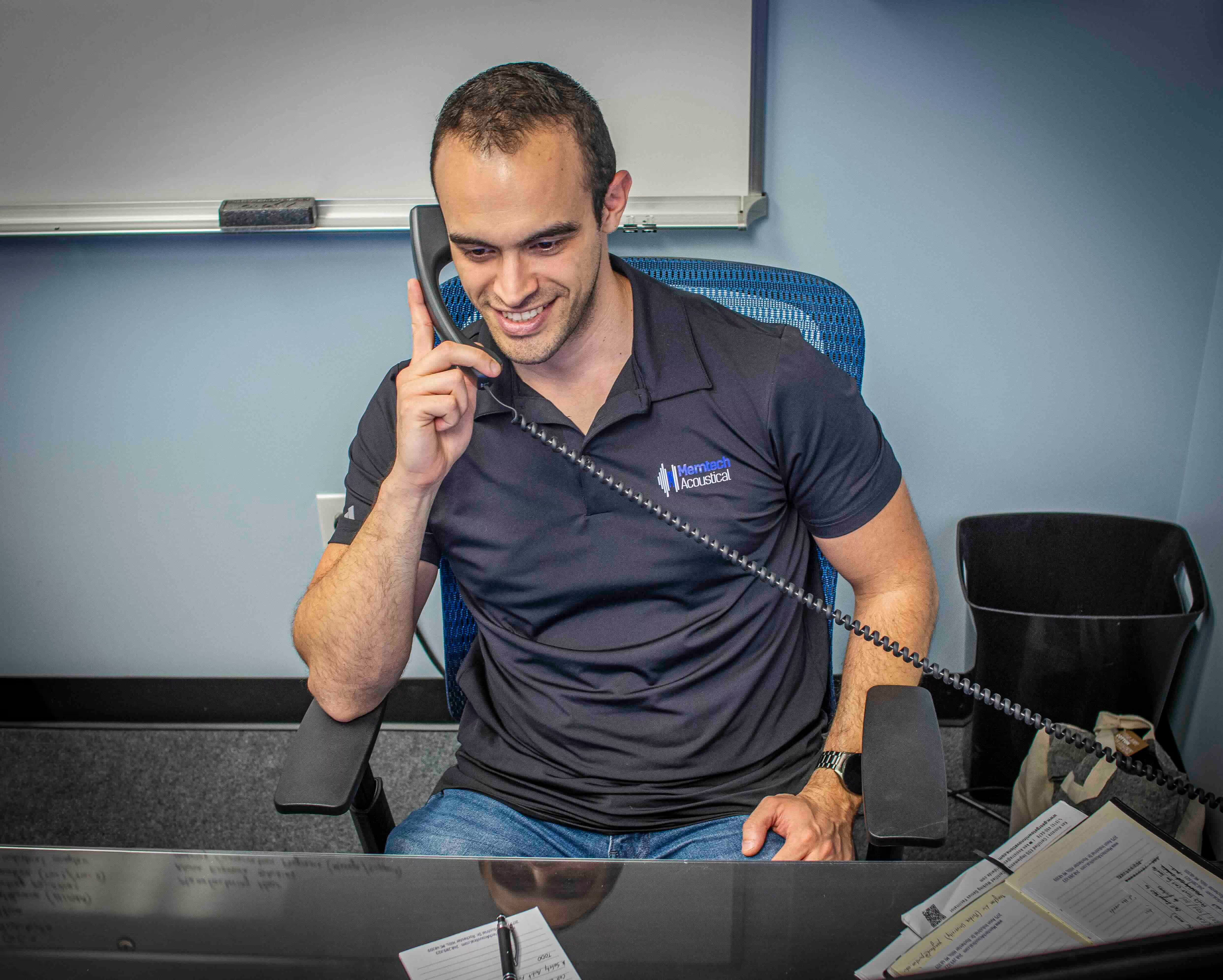
Memtech Acoustics starts with a collaborative process to understand the room, how it is used, and what people are experiencing, to determine whether the problem is excessive reverberation, poor speech clarity, or noise from other sources.
We confirm the target RT60 and C50 for the room's purpose, identify the surfaces driving the problem, and align with the customer on the overall project goals.
We confirm the target RT60 and C50 for the room's purpose, identify the surfaces driving the problem, and align with the customer on the overall project goals.
Here are the types of questions we typically ask:
How is the room used, and what are the primary complaints (for example, too much “echo,” speakers who are hard to understand, muddled music, or excessive unwanted noise)?
What are the room's dimensions, and what are the surfaces made of (drywall, concrete, carpet, and so on)?
How many people use the space at once, and is a public address system used?
Has any acoustic treatment been tried before, and what was the result?
How will the results be used: meeting a new project design target, LEED or WELL credit documentation, or resolving a complaint about an existing space?
.jpeg)
STEP 2
On-Site Measurements
Memtech Acoustics works from data. We measure and evaluate the room as it performs, rather than guessing from drawings.
All necessary metrics are evaluated with calibrated instruments, including Class 1 sound level meters (IEC 61672-1), precision noise sources, and other equipment as needed, with a field calibration check before and after the session.
Readings are taken at multiple source and receiver positions to cover all critical locations in the room.
Background noise is measured in octave bands and rated against NC or RC curves (ANSI/ASA S12.2) to determine its level and frequency content.
Source identification methods are used to find the root cause of noise problems.
All necessary metrics are evaluated with calibrated instruments, including Class 1 sound level meters (IEC 61672-1), precision noise sources, and other equipment as needed, with a field calibration check before and after the session.
Readings are taken at multiple source and receiver positions to cover all critical locations in the room.
Background noise is measured in octave bands and rated against NC or RC curves (ANSI/ASA S12.2) to determine its level and frequency content.
Source identification methods are used to find the root cause of noise problems.
STEP 3
Analysis & Reporting
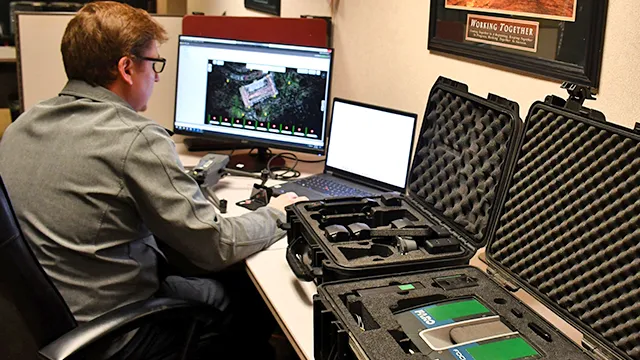
From the raw data, RT60, C50, and other metrics are calculated and compared against the targets set for the room's use. From this, the appropriate acoustic treatment is defined and designed to meet the customer's requirements.
We deliver a concise report that documents the measured performance against the target.
Treatments are clearly specified, with detailed design suggestions and recommended products, and the design can be modified to meet aesthetic requirements while still reaching the target performance.
We deliver a concise report that documents the measured performance against the target.
Treatments are clearly specified, with detailed design suggestions and recommended products, and the design can be modified to meet aesthetic requirements while still reaching the target performance.
Each report includes:
- Measured RT60 by octave band at each position
- C50 and STI values, with background noise rated against NC or RC curves
- Comparison against the target for the room's use
- A modeled treatment plan and product placement when Memtech handles the full package
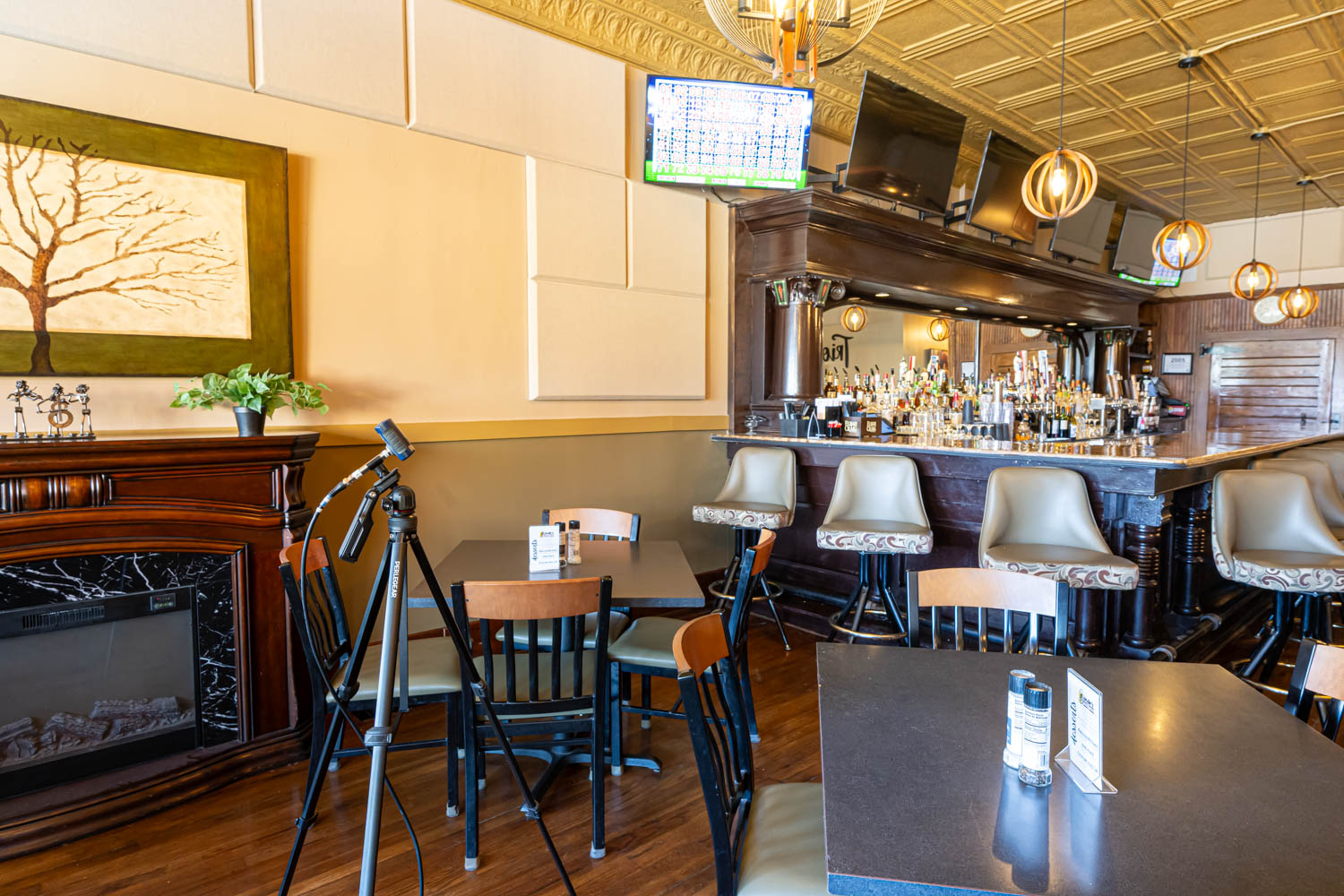
STEP 4
Validation Testing (Optional)
After the treatment installation is complete, Memtech Acoustics can return to measure the room and confirm the targets have been met.
When Memtech controls the engineering, materials, and installation as a turnkey package, the results are backed by a written performance guarantee.
When Memtech controls the engineering, materials, and installation as a turnkey package, the results are backed by a written performance guarantee.
We provide:
- Post-treatment re-testing to confirm RT60 and C50 reached target
- Documentation for LEED, WELL, or owner sign-off
- Performance guarantee on full engineered packages, under Memtech's written guarantee terms

The Memtech Difference
At Memtech, noise is our business. Our engineers oversee every step, ensuring that each project is properly delivered, on-time and within budget. This integrated approach delivers predictable results and protects your investment.

Certified Acoustic Professionals
Testing conducted by certified engineers and acoustic specialists, not general contractors or “safety consultants.”

National Standards Alignment
We follow OSHA 1910.95, NIOSH criteria, and ANSI S12.19-1996 methods for noise exposure assessment. Measurements are conducted via ISO procedures or per academically accepted methods.

Engineering Expertise
Noise measurements, analysis, modeling and installation support are overseen by professionals who understand acoustic theory, as well as the implementation of practical solutions.
High Responsiveness, Proven Reliability
We are your trusted local partner providing on-demand support and dependable project execution. Michigan-based with regional reach and national* shipping capabilities.

Confidential & Detailed Reporting
We don’t just submit a report. You are provided with complete documentation, delivered in easy-to-understand language with accurate data and comprehensive drawings.
*Shipping available across the continental USA, and international; installations are offered in select regions.
NOTE: We do not stock custom products in our U.S. warehouse. Ask us about lead times for your project.
NOTE: We do not stock custom products in our U.S. warehouse. Ask us about lead times for your project.
Frequently Asked Questions (FAQs)
What is RT60, and what does it measure?
RT60 is reverberation time: the time it takes for sound to decay by 60 decibels after the source stops. It is one of the most widely used measurements in room acoustics. A high RT60 means a room is live and reverberant, likely resulting in poor speech clarity; a very low RT60 can make a room feel dead. RT60 is measured by octave band so treatment can be targeted to the frequencies that need it.
What is C50, and how is it different from RT60?
C50 is the clarity index: the ratio of early sound energy (the direct sound plus reflections in the first 50 milliseconds) to the energy that arrives after it, expressed in decibels. Higher C50 usually indicates better speech intelligibility. In basic terms, RT60 indicates how long sound lingers; C50 indicates how clearly speech can be heard. Both are derived from the same impulse-response measurement, and Memtech Acoustics reports them together with other key metrics, such as the Speech Transmission Index (STI).
What is a good RT60 for my space?
There is no universal target; it depends on how the room is used. ANSI/ASA S12.60 sets a maximum of 0.6 seconds for unoccupied, furnished classrooms up to 10,000 cubic feet and 0.7 seconds up to 20,000 cubic feet. Conference rooms, open offices, and worship spaces have no single code value, so the target comes from the room's use; spaces used for music are commonly designed with longer reverberation times. Memtech Acoustics sets the target based on a number of established criteria and assessment methods.
How does Memtech Acoustics measure RT60 and C50 in the field?
Memtech Acoustics captures the room's impulse response with an omnidirectional source and a Class 1 sound level meter, with a field calibration check before and after the session, following the ISO 3382 series. Measurements are taken across octave bands from 125 Hz to 8 kHz at multiple source and receiver positions. RT60, C50, STI, and other metrics are calculated from those measurements. Background noise is also measured in octave bands and rated against NC or RC curves, because background level affects speech intelligibility.
What spaces need RT60 and C50 testing most?
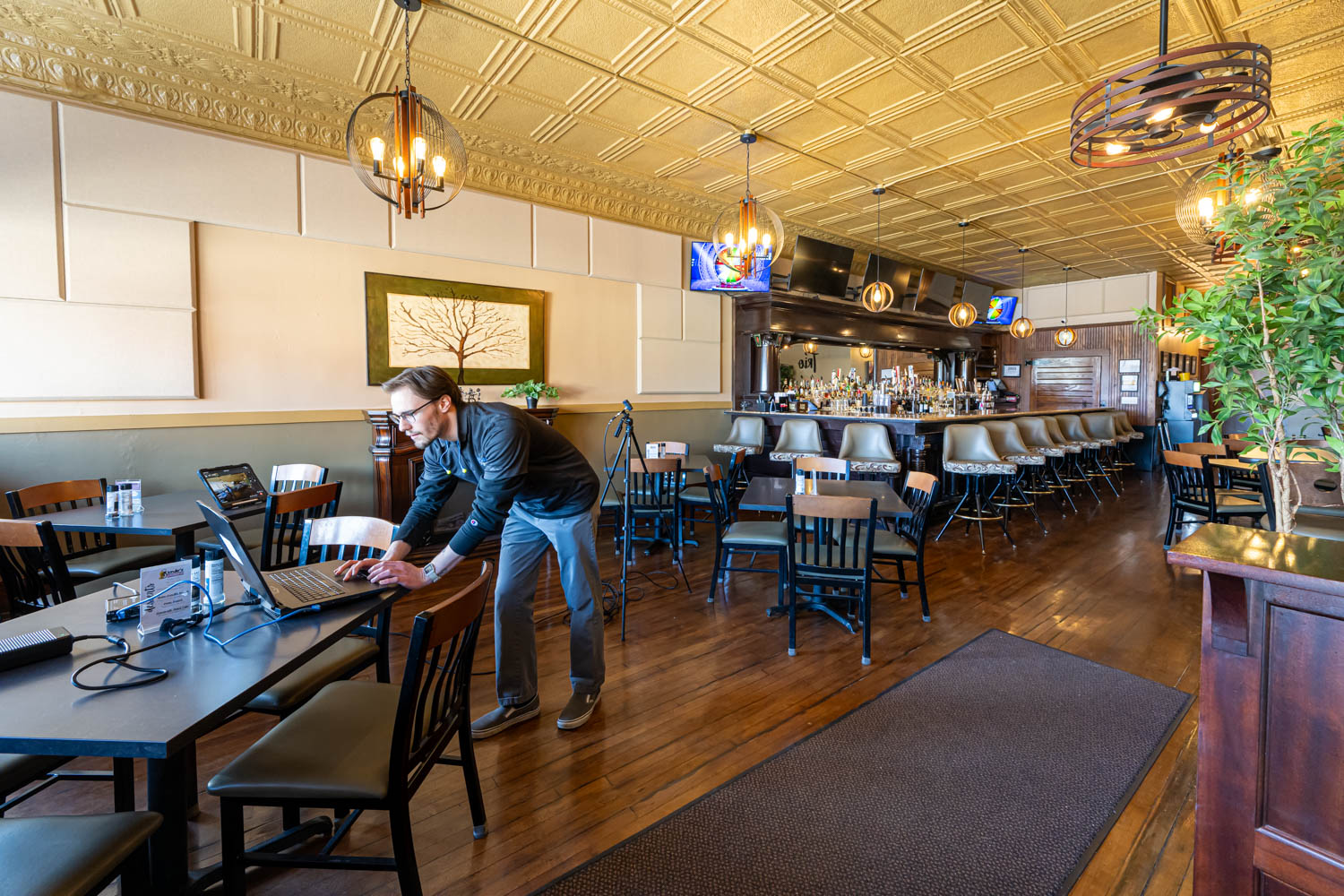
Classrooms, lecture halls, conference and training rooms, restaurants, worship spaces, gyms and multipurpose rooms, and open offices: any room where speech is hard to understand or the space feels loud and reverberant.
Will acoustic treatment make my room sound dead?
Not when the room is designed to meet a well-considered target. Over-treating a room drives RT60 too low and makes it feel lifeless. Memtech Acoustics models the absorption needed to reach the target for the room's use, then specifies engineered noise control to achieve that goal.
What do I get in an RT60 and C50 report?
A comprehensive report with RT60 values by octave band at each position, plus C50, STI, and other metrics, background noise levels, and a comparison against the target for the space. When Memtech Acoustics also handles the treatment, the report includes a modeled treatment plan and product placement. Assessment reports are typically delivered within approximately 15 business days following the completion of data acquisition.
Let’s Engineer the Right Solution, Together.

Let's Get Started. Contact Us.
Talk to our experts. We’ll assess your needs and recommend a solution that works for your project.