HOME > WHO WE SERVE > Site Planners
A Defensible Noise Study for
Site Planners
A measured and modeled noise impact assessment shows the review board and neighbors how loud the project will be at nearby homes, how that compares with the ordinance, and what mitigation will do. We measure again after the project is built.
Community Noise and Site Approval
Noise is a real impact on the people who live near a site, and review boards treat it that way. When a neighbor describes a loading dock or rooftop units running overnight, the board needs to know how loud the project will be at that home and whether it meets the ordinance.
Without a noise study, there is nothing on the record to answer that question. Approval may come with conditions, or the application may be held while staff asks for an assessment.
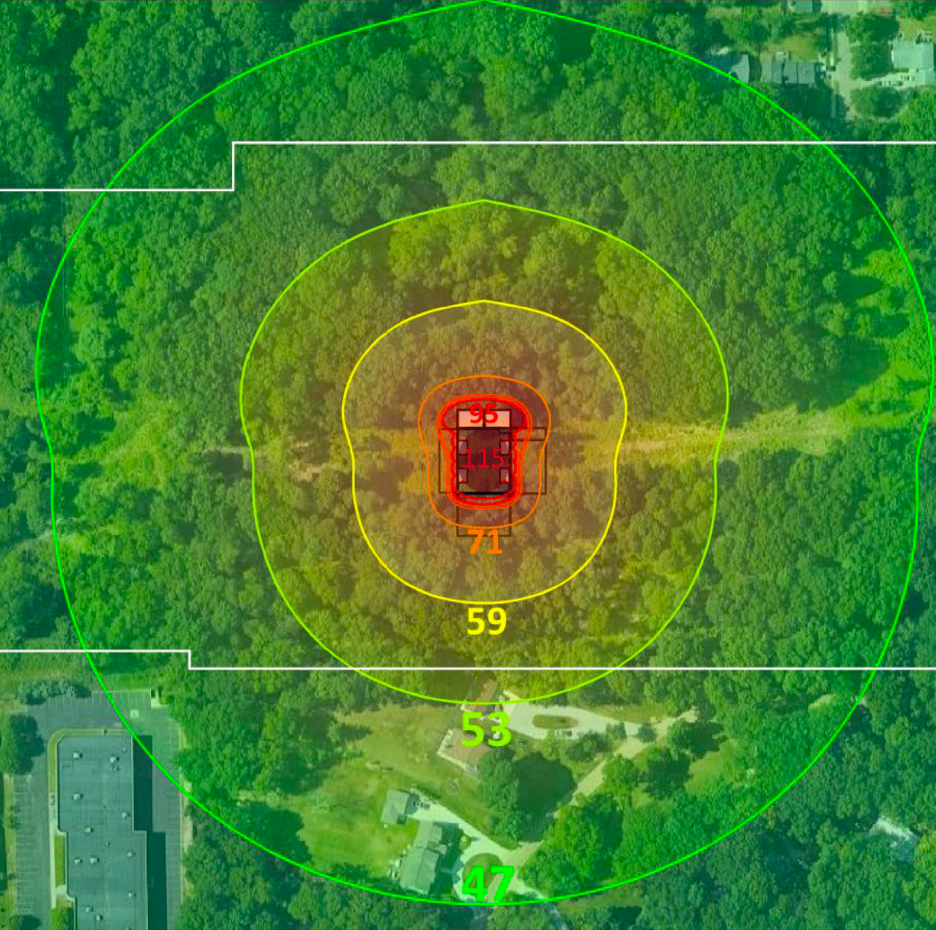
A noise study starts with measured existing sound levels, then predicts project levels at the property line and the nearest homes and compares them with the ordinance. The board and the neighbors can see the numbers.
Where the model predicts an exceedance, it also shows what mitigation will do. We size barriers, enclosures, setbacks, or operating limits to the ordinance and document how the limit is met.
After the project is built, we measure again to confirm the predictions and the ordinance limits. That record gives the agency, the neighbors, and the owner the same data if a complaint comes up later.
Without a noise study, there is nothing on the record to answer that question. Approval may come with conditions, or the application may be held while staff asks for an assessment.
A noise study starts with measured existing sound levels, then predicts project levels at the property line and the nearest homes and compares them with the ordinance. The board and the neighbors can see the numbers.
Where the model predicts an exceedance, it also shows what mitigation will do. We size barriers, enclosures, setbacks, or operating limits to the ordinance and document how the limit is met.
After the project is built, we measure again to confirm the predictions and the ordinance limits. That record gives the agency, the neighbors, and the owner the same data if a complaint comes up later.
Common Challenges We Solve.

A neighbor raises noise at the hearing and there is no data on the record.

The ordinance sets a limit but no one has modeled your site against it.

Approval arrives with noise conditions that reopen a design you thought was set.

A missing or weak noise study invites appeals and pushes the timeline another cycle.

Rooftop units, loading docks, and traffic all reach the property line unmeasured.

Community concerns go unanswered because no one has measured or modeled the impact.
Community Concerns Need Measured Answers
Site Planners
Modeling Noise Impact
Memtech Acoustics measures existing conditions, models project noise at nearby homes, designs mitigation to the ordinance, and verifies the result after construction.
Our capabilities include:
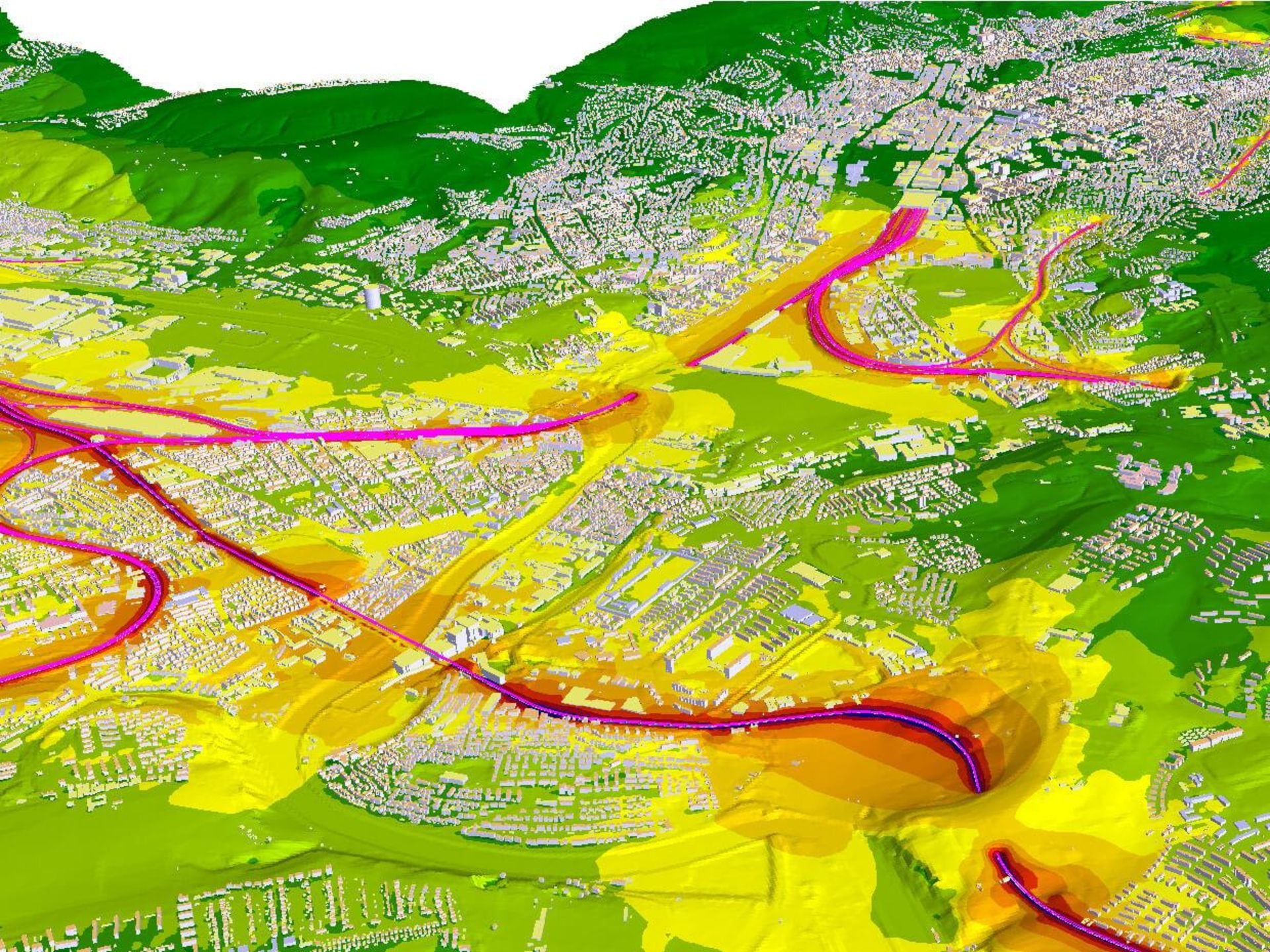
- Predictive noise modeling and community noise mapping to project levels at the property line
- Mitigation design using noise barrier walls sized to the required insertion loss
- Equipment enclosures and mechanical screening for exposed noise sources
- Groundborne vibration analysis for construction, rail, and heavy equipment
- Site-layout and setback guidance that separates the source from the nearest receptor
- Installation coordination and post-build verification measurement
Site Planners
Where Noise Affects Development Approval
We support developments where the project's noise could affect neighbors and a local ordinance applies, including:
- Mixed-use and residential-over-retail, where homes sit above active commercial noise
- Industrial parks and logistics or distribution centers near residential edges
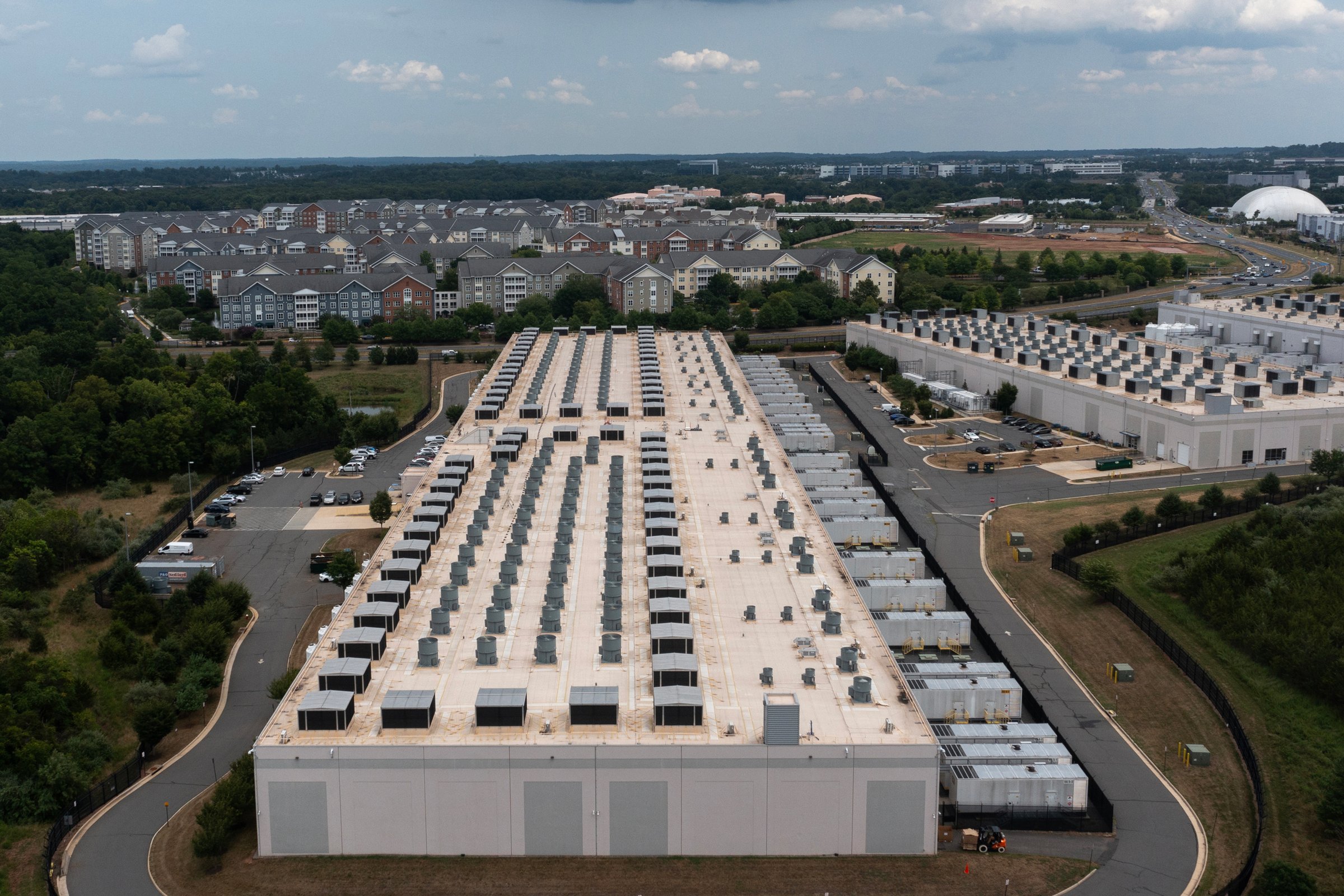
- Data centers, where continuous cooling equipment runs day and night
- Manufacturing plants with process, exhaust, and material-handling noise sources
- Quarries and aggregate sites facing crushing, hauling, and blasting concerns
- Entertainment and sports venues with crowd, amplified sound, and traffic
- Roadway and rail-adjacent sites where transportation noise reaches new homes
- Energy and utility sites with substations, generators, and turbine noise
- Multifamily near industry, where existing operations set the baseline
- Drive-throughs and loading operations with order boards and backup alarms
- Rooftop and ground mechanical yards packed with condensers and fans
Site Planners
Assessments Built for Agency Review
An assessment is useful to a board only if the reviewer can follow it. We write each one so the method, inputs, and results can be checked.
Every assessment references the governing ordinance directly. We measure the existing sound level with NIST-traceable Class 1 instrumentation, then compare predicted levels with the specific limits, receptor locations, and time-of-day rules the local code sets.
Each report shows the measurement method, the modeling inputs, the assumptions, and the results in a form an agency can hand to its own consultant.
If a project is appealed, our engineers present the findings and answer questions on the record. A study filed early gives everyone the same data from the start.
Every assessment references the governing ordinance directly. We measure the existing sound level with NIST-traceable Class 1 instrumentation, then compare predicted levels with the specific limits, receptor locations, and time-of-day rules the local code sets.
Each report shows the measurement method, the modeling inputs, the assumptions, and the results in a form an agency can hand to its own consultant.
If a project is appealed, our engineers present the findings and answer questions on the record. A study filed early gives everyone the same data from the start.


Site Planners
Ordinance-Based Mitigation and Validation
We size mitigation to the insertion loss needed to meet the ordinance limit at the nearest affected homes, so barrier heights, setbacks, and equipment treatment are proportionate to the actual impact.
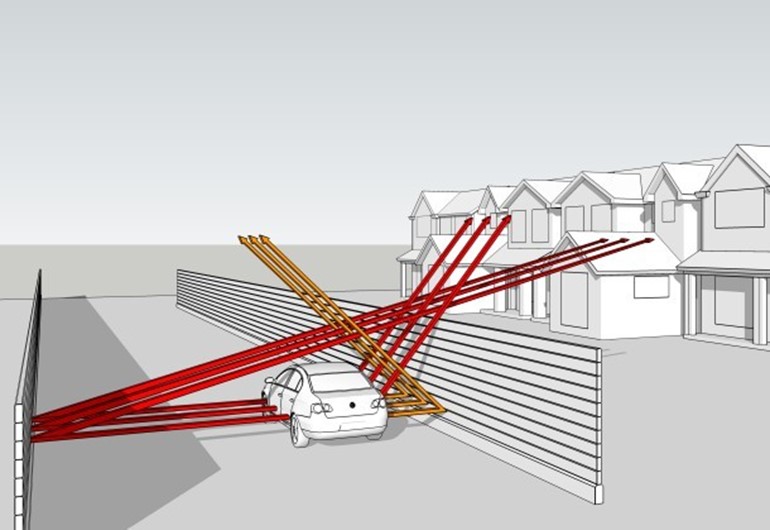
The model compares options before you commit, such as a barrier wall against an earth berm, or a setback change against equipment screening, and shows the predicted attenuation of each. In most cases a barrier's performance is limited by sound diffracting over the top, so once the wall is solid and sealed, its height and position relative to the source and the homes usually matter more than added mass. You choose the approach that fits the site plan and the budget.
Recommendations arrive in a form the permit set can use. We specify the height, length, mass, and placement each control needs to meet the modeled target, so your civil and design teams build to a defined requirement.
After construction, we measure again against the limit. Post-build verification gives the agency documentation that the condition is met and gives the developer and neighbors the same data if a complaint comes up.
The model compares options before you commit, such as a barrier wall against an earth berm, or a setback change against equipment screening, and shows the predicted attenuation of each. In most cases a barrier's performance is limited by sound diffracting over the top, so once the wall is solid and sealed, its height and position relative to the source and the homes usually matter more than added mass. You choose the approach that fits the site plan and the budget.
Recommendations arrive in a form the permit set can use. We specify the height, length, mass, and placement each control needs to meet the modeled target, so your civil and design teams build to a defined requirement.
After construction, we measure again against the limit. Post-build verification gives the agency documentation that the condition is met and gives the developer and neighbors the same data if a complaint comes up.
Site Planners
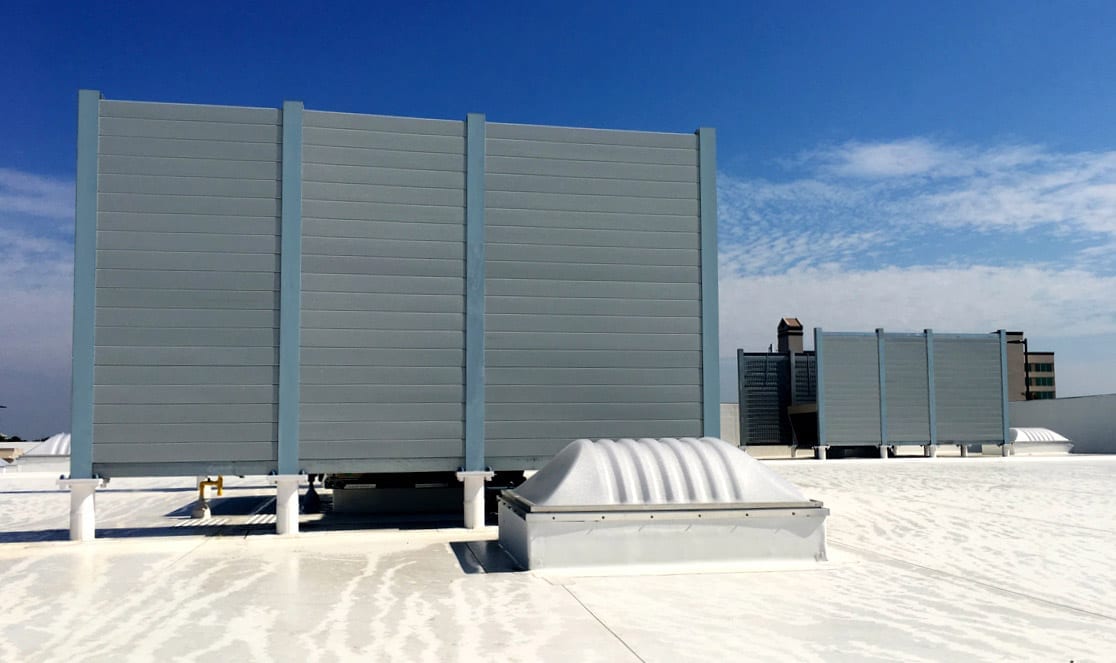
Environmental Noise Control Measures We Provide
Each site needs a different mix of controls. We match the approach to the source, the nearby homes, and the ordinance limit, and document the predicted performance of each.
- Noise barrier walls sized to the required insertion loss
- Equipment enclosures and screening for exposed noise sources
- Site-layout and setback recommendations that separate source from receptor
- Post-construction verification testing to confirm compliance
Featured Case Study
A Noise Study That Cleared Approval
A mixed-use development stalled when neighbors raised noise concerns ahead of a public hearing. We measured the site baseline, modeled projected sound levels at every property line, and sized mitigation to the local ordinance. The team went into the hearing with a documented report, and the board had measured and modeled data to review.
Highlights
- Measured baseline sound levels with NIST-traceable Class 1 instrumentation
- Modeled projected noise at every property line and mapped the results
- Sized mitigation to the exact ordinance limits, not generic guidance
- Delivered documentation the review board accepted, then validated after build
Trusted By
Planners and developers bring us in when a project's approval depends on a noise study the review board can rely on.
Memtech Acoustics supports site planners and developers on commercial, industrial, and mixed-use projects across Michigan and the Midwest, from first site plan through post-build validation.
25+ years · 2,000+ projects · NIST-traceable Class 1 instrumentation · INCE-USA and ASA members · MBE certified
25+ years · 2,000+ projects · NIST-traceable Class 1 instrumentation · INCE-USA and ASA members · MBE certified

Why Memtech Acoustics?
- Precision Over Guesswork
We begin with by acquiring comprehensive data at your location. Our designs are not based on assumptions. - Full-Service, No Shortcuts
We’re Michigan’s only full-service firm. We design it, source it, and install it. - Certified Experts, Not Salespeople
Your project is led by engineers and trained acoustical analysts. We speak the language of results and compliance. - Consultative, Not Cookie-Cutter
No two environments are the same. We tailor every solution around your space, constraints, and business goals. - Quiet With Great Aesthetics
From conference rooms to corporate headquarters, our solutions are as aesthetically refined as they are acoustically effective.
Frequently Asked Questions (FAQs)
What does a noise impact assessment include?
A noise impact assessment documents existing ambient sound levels (measured in dBA and Leq per ISO 1996), models the projected noise from the built project, compares the results with the local ordinance limits, and recommends mitigation where needed. You receive the noise mapping, the measured baseline data, and a written report prepared for agency review.
How does noise modeling help at a public hearing?
Modeling answers the question neighbors and the board are asking: how loud will the project be at nearby homes? You present predicted sound levels at the property lines, a noise map, and the comparison with the ordinance.
How do you handle our local noise ordinance?
We read the specific ordinance that governs your parcel, including its metric (for example Leq, L10, or L50 in dBA), limits by zone, and time-of-day rules. The metric matters, because the same project can pass under one and fail under another. The model and the mitigation are sized to those numbers.
When should we bring you in during entitlement?
Early. Engaging us before the first hearing lets us set the baseline, model the project, and size mitigation while the site plan can still change cheaply. A noise study produced under hearing-deadline pressure costs more and leaves you fewer options.
Do you testify or support the review board?
Yes. Our acoustic engineers present findings, answer questions from planning commissions and review boards, and respond to public comment on the record. We supply the documentation reviewers need and stand behind the methodology when the assessment is challenged.
How do you measure existing ambient and baseline sound?
We deploy NIST-traceable Class 1 instrumentation on site to capture representative baseline levels (Leq over the relevant hours, consistent with ISO 1996). That measured baseline anchors the model, so projected impact is judged against real conditions rather than assumptions.
What does mitigation look like?
Mitigation is sized to the gap between predicted levels and the ordinance limit. Options include barriers and berms, equipment placement and setbacks, enclosures, and operational limits. We recommend the measures that close the gap with the least cost and site disruption.
Do you verify results after construction?
Yes. We return once the project is operating and measure actual sound levels against the modeled predictions and the ordinance. Post-build measurement documents compliance for the agency and gives everyone the same data if a community complaint comes up later.
How is cost determined?
Cost tracks scope: parcel size, number of sources, ordinance complexity, and whether hearing support and post-build measurement are included. We scope the assessment to what your approval requires, then hold to that engineering fee.
What should we send to get started?
Send the site plan or site layout, the parcel address, the noise ordinance or jurisdiction, your hearing timeline, and a short description of the sound sources (equipment, traffic, operations). That is enough for us to scope the assessment and give you a clear next step.
Let’s Engineer the Right Solution, Together.

Let's Get Started. Contact Us.
Talk to our experts. We’ll assess your needs and recommend a solution that works for your project.