Data center noise gets settled early, or it gets argued later
Many data center proposals now arrive at planning commissions with noise already on the agenda. In our September issue, Data Center Noise: It May Not Be What You Think, we looked at why some facilities draw no complaints while others become a persistent problem. This issue covers what happens next: the two questions that decide most noise disputes, and why both have to be answered before construction starts.
You may have heard some version of these:
• "If the plant meets the dBA limit in the ordinance, there is no problem."
• "A few readings on a phone app will show whether it got louder."
• "Our existing ordinance already covers it."
Each one sounds reasonable. Each one tends to fail at the moment it matters most.
Question 1: What did the area sound like before?
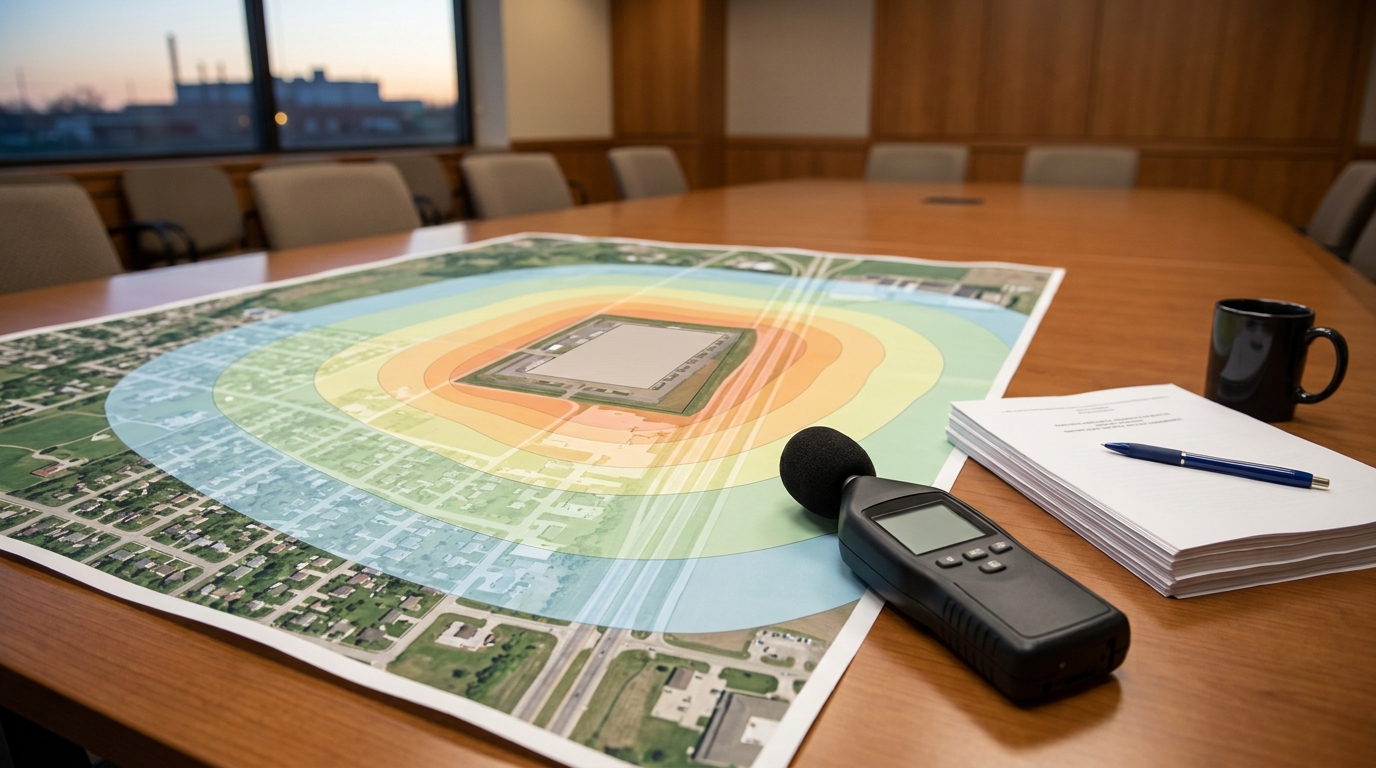
The existing sound level in a community and the contribution of a new facility are two different measurements. Only the first can be taken before the building exists, and for a facility that runs around the clock, there may be no clean second chance. Without it, a resident has no record of what changed, and an owner has no record showing that nothing did.
A baseline study is also what separates a facility's sound from everything else around it. In some communities, a nearby highway or commercial strip already puts nighttime levels above the ordinance limit. That is worth knowing before a site plan is submitted, not after a complaint is filed.
A defensible pre-construction baseline includes:
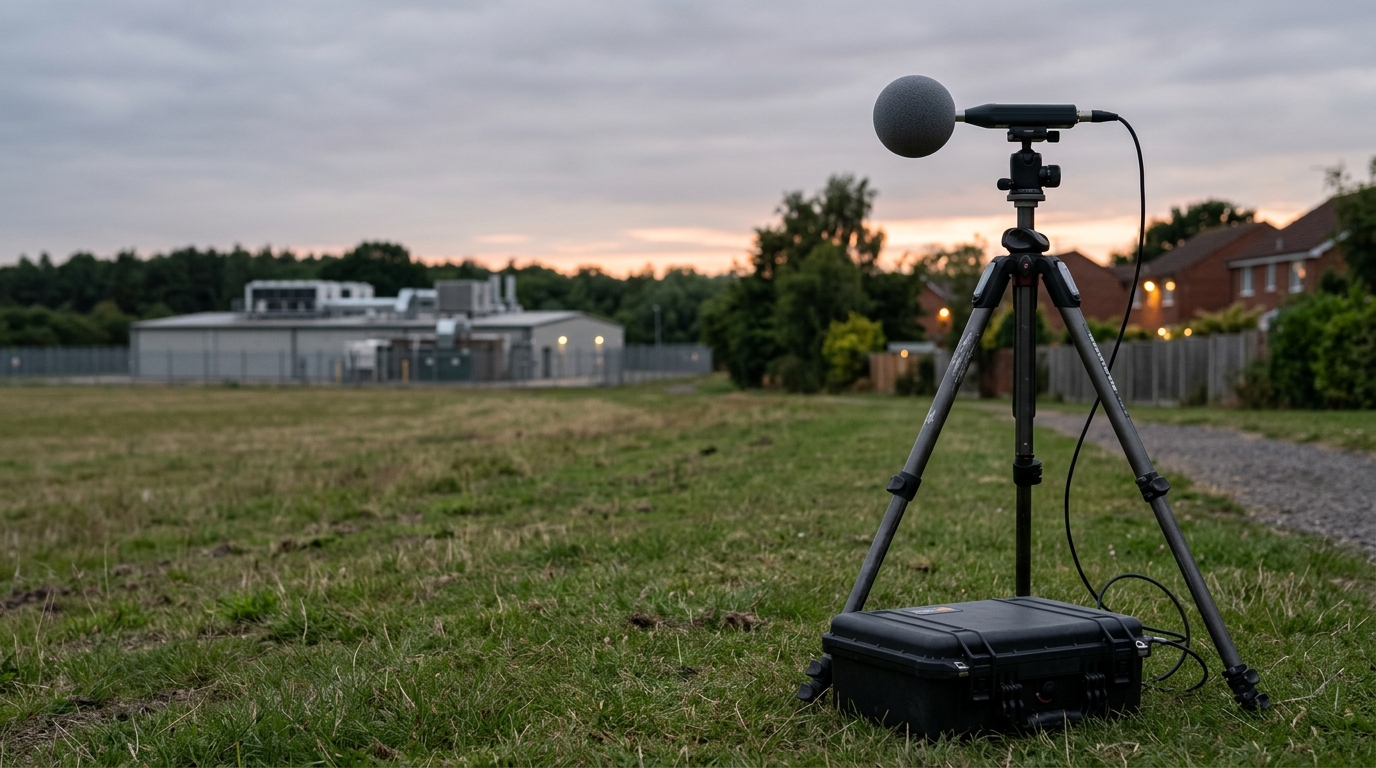
• Long-term logged measurements, day and night, at positions chosen after a preliminary walk of the area. A few minutes with a handheld meter does not capture rush hour, overnight lows, or a weekly cycle.
• More than one number. A-weighted levels alone understate low-frequency sound. C-weighted levels capture more of it, frequency spectra identify steady tones, and statistical levels show the background and how much it varies. Hum and steady tones drive many data center complaints.
• Recorded measurement conditions. Wind, rain, and windscreen use affect outdoor readings, and ANSI/ASA S12.18 addresses how outdoor measurements are made.
• Calibrated instruments. Class 1 sound level meters with traceable calibration, checked in the field before and after each session. Phone apps can give a rough idea of levels, but their readings rarely hold up when a measurement is challenged.
Read the full post: Data Center Noise: Why a Baseline Study Comes First
Question 2: What does your ordinance actually measure?
Memtech Acoustics maintains a reference database of noise ordinances from 13 U.S. cities, counties, and states.[1] Every one of the 13 sets absolute limits by zone. Far fewer address what makes data center sound hard to evaluate:
• 0 of 13 clearly define wind or weather conditions for a valid measurement.
• 3 of 13 fully codify a C-weighted measurement, the setting that gives low-frequency sound more weight than A-weighting does.
• 2 of 13 tie limits to the measured ambient level of the area.
• None fully require a noise assessment before a new facility begins operating. Three address it in part.
Other common gaps are harder to count. Ordinances that prohibit noise that is "objectionable to neighbors" leave every dispute to opinion. Ordinances copied word for word from a neighboring town carry limits set for someone else's conditions. Ordinances that never state a minimum measurement time allow a 15-second reading that can miss an intermittent sound entirely.
A workable ordinance starts with an ambient study of the community, sets limits by zone and time of day, includes provisions for tones and low-frequency sound, and turns all of it into a measurement procedure that enforcement staff can learn and repeat. Public review helps too, especially when residents can hear representative examples of compliant and non-compliant sound instead of reading decibel values.
Read the full post: Data Center Noise: Writing an Ordinance That Works
Will a new data center be audible?
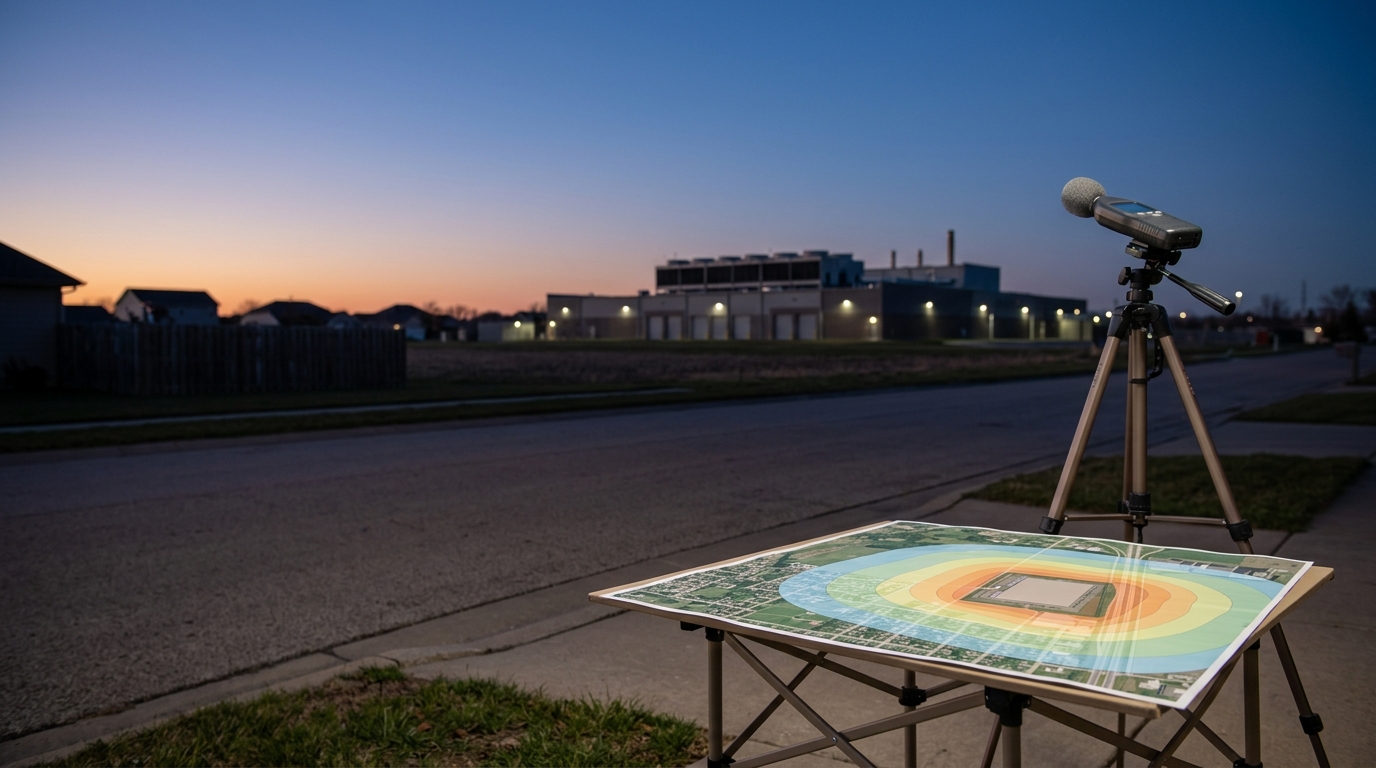
It depends on the site. Some facilities are barely noticeable at the nearest homes; others draw sustained complaints. A facility that runs cooling equipment around the clock will add some new sound to its surroundings, the same way a new road does. Whether that sound becomes a problem depends on equipment selection, site layout, distance to homes, tonal content, and whether noise was designed for from the start.
The realistic goal is not silence. It is a limit set in advance, measured the same way by everyone, against a baseline recorded before the first footing was poured. That gives developers a target they can design to and gives communities a standard they can enforce.
Planning a data center, or updating your ordinance ahead of one?
Talk to our engineering team about a pre-construction baseline study, ordinance review or drafting, or enforcement training for your staff, scoped before the site plan reaches your planning commission.