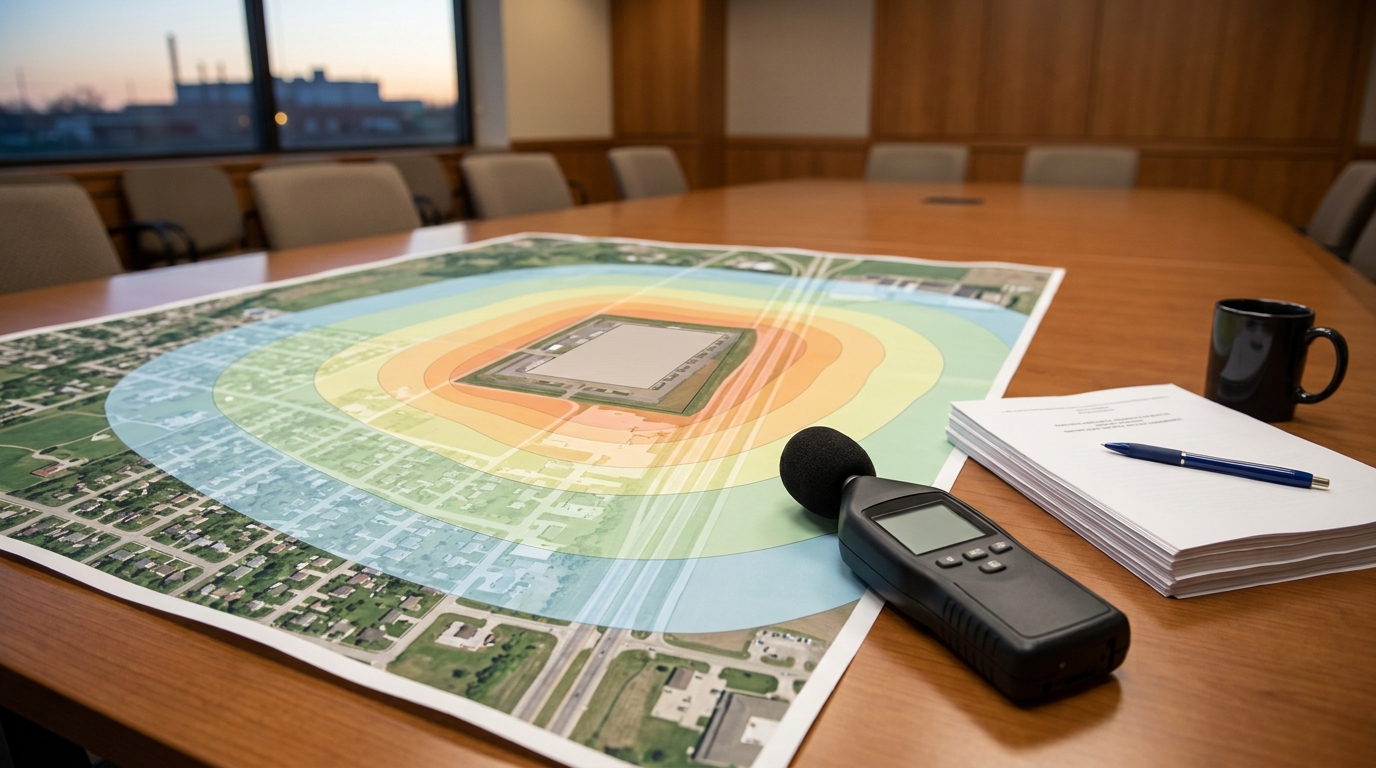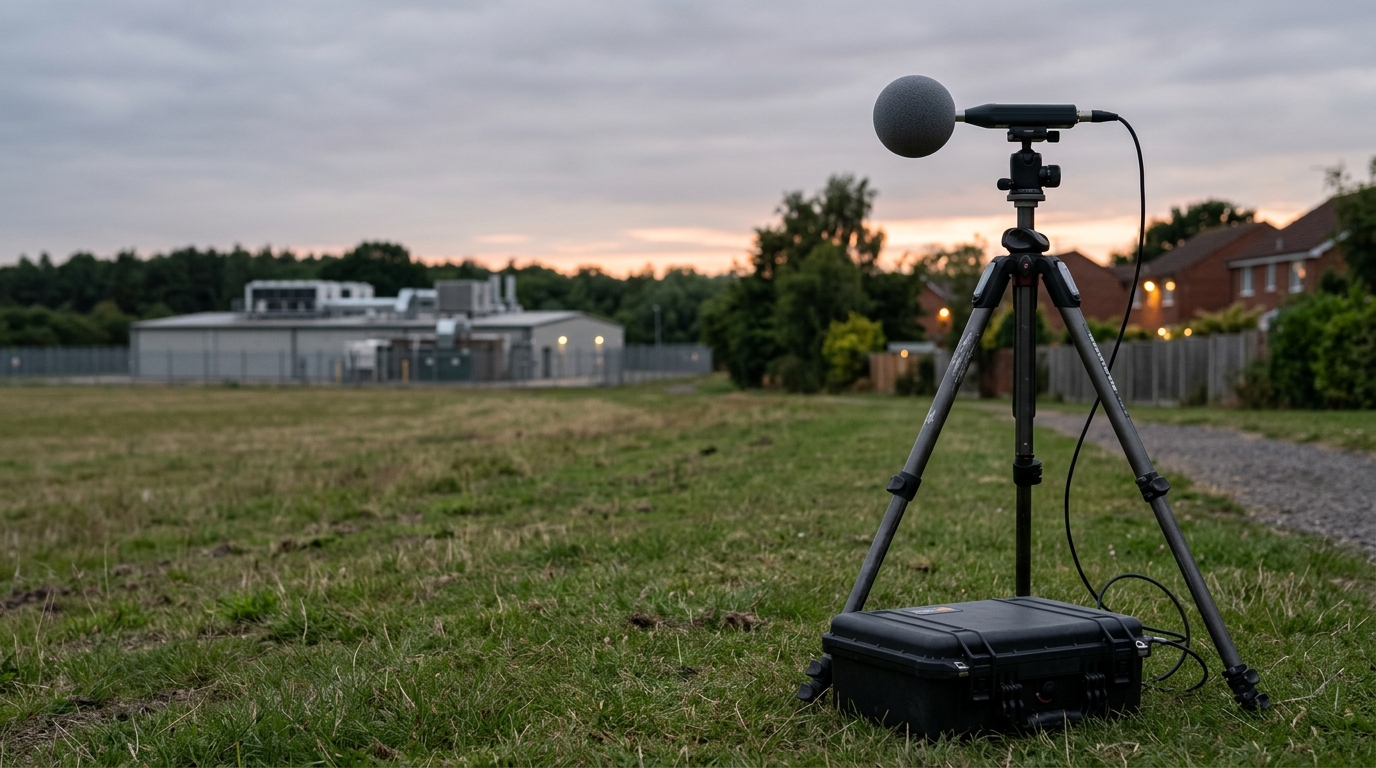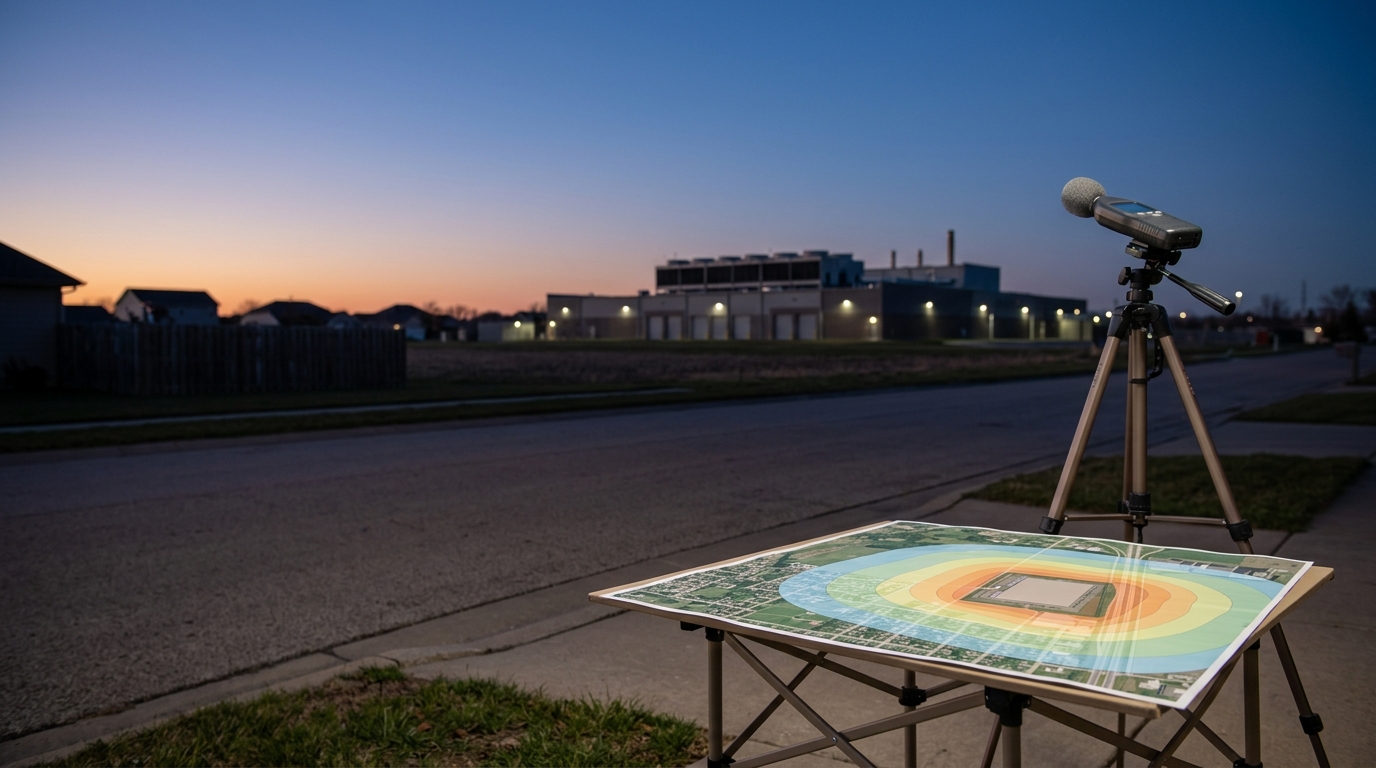
Once a new data center (or any large production facility) has been put into operation, concerns are likely to arise regarding how much noise it is producing in the surrounding area. Some nearby residents may complain about noise annoyance, and others may have trouble sleeping.
The effectiveness of local or city noise ordinances can vary immensely. Some may specify that "any noise which causes annoyance is prohibited," while others will require compliance with published metrics. Regardless of the situation, noise from new industrial or commercial developments should be measured and qualified against whatever standards prevail in the area.
How Comprehensive Is Your Current Noise Ordinance?
Unfortunately, many noise ordinances lack adequate measurable limits for comparison. For example, specifying violations in the context of "objectionability" or "annoyance" is subjective and can be very difficult to enforce. What is annoying to one person may be perfectly acceptable to another. Under severe situations, offenders can clearly be shown to be creating objectionable noise (a loud stereo blasting at 3 a.m.). A mild hum from a factory, however, may bother sensitive listeners while some neighbors are not even aware that it is present. In court, the plant owner may argue that the annoyance from the plant is minor compared to louder sounds from a nearby park or a busy road.
Ordinances with specified sound pressure limits (for example, "50 dBA at the property line") allow direct measurements to be made against the standard. However, this type of high-level ordinance often does not specify a measurement duration or a specific metric (Leq, L50, etc.). So again, the individual taking the readings has no guidance on how the data should be acquired. A 30-second measurement may not be adequate to fully characterize the noise, but it could be defended because the ordinance language did not require a sample time. This is one of many shortcomings of noise ordinances that were not well considered before being released.
Validating Noise Levels
All noise readings should be made using certified, traceable equipment, calibrated at the interval required by the manufacturer and the governing ordinance, and checked with a field calibrator before and after each measurement session. Smartphones, inexpensive "home" sound meters, and equipment that has not been formally calibrated are unlikely to hold up for legal purposes. Regardless of the stated specifications for this type of equipment, significant errors can occur, particularly at low and high frequencies. This data would likely be challenged in court or during arbitration and may be excluded.
A qualified noise engineer or technician should acquire noise data at property line locations per the specified procedure using certified instruments, either through spot-checking points throughout a day and night period, or preferably by using noise loggers to continuously capture sound data over long-term intervals. If the ordinance is specific in stating the acceptable criteria and measurement requirements, the acquisition and evaluation process is straightforward. A violation may seem easy to prove, but the analyst must first identify and document the source or sources of noise. Ordinance limits can be exceeded by other noise sources, from landscaping equipment to wildlife. A property line level 5 dB over the ordinance limit does not by itself prove that the new plant is the primary source.
Proving Compliance, or a Violation
If the noise is determined to be above the allowable limits, the results can be documented and provided to the appropriate authorities. If results are below the specified limits (even though some residents may find the noise annoying), it may be difficult to pursue further action.
Arbitrators and courts often expect certified noise readings before a case can proceed. In legal matters, expect challenging questions about measurement methods and processes from the opposing side. It must also be shown that the noise in question is coming from the plant and not from other sources. Errors or oversights can delay or undermine a case.
In some instances, even when the ordinance is not directly violated, individuals or communities may argue that the noise exceeds tolerable limits, but this is often a difficult case to prove in court. Data from noise exposure studies or from published literature may need to be referenced to show that the noise poses a health risk to nearby residents, and testimony from medical or health and safety professionals may be needed. Claiming that a noise source is causing risks to health or is measurably adding to stress requires much more than testimony from residents. See the section below on "Resolving Noise Problems."
Complaints
Residents sometimes report annoying noise from new facilities regardless of measured levels, and most private citizens do not have the qualifications or instrumentation to perform an adequate analysis of sound pressure readings. As noted above, complaints can also be caused by sources other than the nearby new plant. It is essential to understand both the characteristics and locations of sound sources, and to have good sound data to compare to ordinance limits.
Legitimate complaints can occur when the noise is well below stated ordinance limits. This is especially true if the ordinance limits are old or were poorly written. In these cases, some analysis will be required, starting with focused interviews with the complainants. What type of noise are they hearing? Is it constant or intermittent, daytime or nighttime, tonal or broadband? Is a vibration felt, or does the noise rise and fall? In complex cases, it may take several hours to clearly define what someone is hearing. For example, a low hum that appears only at certain times of day, or when local traffic stops, requires the analyst to spend the time needed to isolate it. In some cases, recorded sounds will have to be played back to help pinpoint the source of the complaint.
If an ordinance has no specified limits, it is essential to gather comprehensive data at the complainant's location so that frequency content, timing, and other characteristics can be correlated to the complaint. In some instances, it is easy to identify what is bothering someone; in others, it can be a considerable challenge. Even after the content and source of the noise have been pinpointed, proving a health risk is more difficult still. This is why ordinances should always include well-considered quantitative limits (even when they also state that "noise shall not be annoying"), rather than relying solely on subjective assessments.
We have seen instances where members of a community became very annoyed over sounds that seemed trivial or nonexistent. For example, a residential area was complaining of a constant whine from a large factory, even though the homes were located near a major freeway interchange and a large international airport. It required considerable time to determine that the residents were focused on a low-level tonal howl from a roof fan on the building, which never stopped. Noise from everything else was expected and transient; it came and went in a predictable manner. The tonal howl was present 24/7, and even though it was nearly 10 dBA below the average sound levels at their property lines, the homeowners had become highly sensitized to that tone. Resolving the matter became important to plant management.
Resolving Noise Problems
The first step (after reporting the data acquired at a complainant's location) is to meet with the facility owner and present the findings. The report from a competent acoustic consultant should make it clear to the representatives of the business that: 1) the noise is coming from their operation, 2) the noise sources (fans, pumps, etc.) have been identified through the data analysis process, and 3) a plan is required to resolve the matter. Many large companies will want to engage with neighbors, provided that the complaints are reasonable and well supported with data. It becomes more complicated when the noise is not noticed by other neighbors in the immediate area, or when the complaint describes an unsubstantiated or minor sound (for example, "we hear a soft thump once in a while"). No company wants to be seen as a bad neighbor.
If the complainant (or the local community) has sufficient noise data from the validation analysis to drill down to likely root causes, this can help solve the problem without excessive delays. For example, the noise signature from fans is different from that of generators or pumps, and these sources can often be identified through signature analysis at the property line. If the company has to hire its own noise consultants to measure the noise again and perform an adequate analysis, this will increase the time required to reach a solution.
Corrective actions can be undertaken through engineering changes (such as redesigning exhaust fans) or through mutually agreed noise controls such as barrier walls or berms. Be aware that low-frequency hum and similar sounds are not likely to be controlled by barriers; this type of sound energy diffracts over walls with minimal attenuation. Other options can reduce low-frequency sound, including treatment at the source, silencers on air paths, enclosures placed close to the equipment, and changes to equipment selection or operating speed. It is important that the solution be designed around the problem, not based on generic noise-blocking products or designs.
Going to Court
When the facility owner refuses to take action, or causes unreasonable delays in reducing noise, legal action may become necessary. Arbitration may also be used for these types of cases. In either event, complainants will need credible, traceable data and strong evidence that the noise either 1) violates ordinance criteria, or 2) gives reasonable cause for health or stress problems. Testimony from residents alone is unlikely to be adequate, so subject matter experts will likely need to be hired. Even when all the legal bases have been covered, there is still a significant chance that the court will not find in favor of the community. The cost and time involved will be significant, so these actions should be a last resort. It is much more effective to be prepared with good data and meet with company representatives as soon as a problem has been identified, allowing time to work out potential solutions.
As stated in a previous post, it is not realistic to expect that a large data center or plant will produce no audible noise. Operations of this size use a lot of equipment, and some noise output is to be expected; but it should never exceed ordinance limits, nor should it become a source of significant annoyance to nearby residents. A demand that a facility produce zero added sound is unlikely to succeed in court. Even if a parking lot or another subdivision were to replace the plant, additional noise would be generated. Reasonable levels of mild noise are not usually worth challenging in court.
The End Game
The best outcome is that the data center becomes a good neighbor, in full compliance with ordinance limits and generating minimal annoying noise. A well-crafted noise ordinance, supplied beforehand to the plant developer, will help ensure a successful outcome. If problems do arise, the more data available to support the claims, the better prepared everyone will be to work with the owners and developers to resolve the matter promptly and effectively.
Is a facility already running, and have the complaints started? Contact Memtech Acoustics to scope a compliance measurement and source identification study, so the next conversation starts with data.