Construction Administration
That Protects Design Intent
You designed the space to perform. Memtech Acoustics reviews the submittals, inspects the acoustic work, and field-tests the finished space through construction, so the acoustic details get built right and the space performs as specified.

Your Design Only Performs If It Survives Construction
Most acoustic problems on finished projects are not design failures. They are construction failures. A wall drawn at STC 55 drops into the 40s when a trade runs conduit through it and skips the acoustic sealant. The product that modeled perfectly gets swapped for a cheaper one nobody checked. By the time the space gets tested, the trades are gone and the budget is spent.
Memtech Acoustics closes that gap. We stay on the project through construction, check what gets submitted and built against the acoustic design, and verify the performance number at the end, not just a set of recommendations. Our construction administration protects your design intent, so the finished space:
Memtech Acoustics closes that gap. We stay on the project through construction, check what gets submitted and built against the acoustic design, and verify the performance number at the end, not just a set of recommendations. Our construction administration protects your design intent, so the finished space:
- Gets built to the specified STC, IIC, and NRC targets, not value-engineered below them.
- Holds its ratings at the details: penetrations, sealant, flanking paths, and isolation.
- Gets inspected before walls and ceilings close, while errors are still easy to fix.
- Uses the right products, with every substitution reviewed before it is approved.
- Gets verified by field testing against the engineered targets.
- Leaves you with a documented record of what was reviewed, inspected, and tested.
We verify the space gets built the way you designed it.
Where a Specified Design Loses Performance
Acoustic performance leaks out of a project in three predictable places during construction. Memtech Acoustics reviews and inspects all three, so the finished space measures up to the design.
Substitutions
The specified product gets swapped for a cheaper or more available one. When the substitute underperforms, the rating goes with it.
Submittal and shop-drawing review against the spec
Substitution requests checked for acoustic equivalency
Approved products tracked through delivery and installation
Installation Details
The assembly is right on paper but built wrong. Penetrations, missed sealant, and flanking paths quietly erase the rating.
Inspection of penetrations, joints, and acoustic sealant
Flanking-path and demising-wall verification
Isolation and resilient-mount installation checks
Inspection Timing
Acoustic work has to be checked at the right moment. Miss the window and it gets covered up before anyone looks.
Site visits timed to the construction schedule
Coordination with the GC, MEP, and structural trades
Pre-close inspections before walls and ceilings are sealed
Credentials, Standards, and Engineering Depth
Facility engineers and EH&S managers validate noise control partners against credentials, standards compliance, and engineering depth.
Engineering Credentials
In-house acoustic engineering for complex acoustic modeling and formal engineering reports.
50+ years combined engineering experience
25+ years of practice (founded 2001)
2,000+ projects nationwide
20+ acoustic manufacturer partners (vendor-neutral)
Professional Memberships
Minority Business Enterprise (MBE) Certified. CAGE Code 1ART8. UEI CMBVSSJNN7U5.
Acoustical Society of America (ASA)
Institute of Noise Control Engineering (INCE-USA)
AIA Michigan
Construction Association of Michigan (CAM)
Standards and Methods
Source-path-receiver analysis with predictive acoustic modeling, vibro-acoustic engineering, and field validation.
OSHA 29 CFR 1910.95 and NIOSH REL
ANSI S12.19-1996, ASTM E336, E90, E1007, C423, E84
ASTM E84 Class A fire rating on all materials
Modal testing, octave band analysis, noise mapping

What Construction Administration Covers
Memtech Acoustics administers the acoustic scope from approved design to verified performance. We do not install. The general contractor and its installers build the work, and we review, inspect, and test it against the spec.
Field Testing & Verification
Field testing the finished work against the engineered targets, with compliance-ready documentation.
Closeout & Documentation
Closeout documentation review and a final report written in plain language.
Every phase is checked against the approved design, so the performance you specified is the performance you get.

What You Receive
Memtech Acoustics documents every stage of the acoustic scope, so the owner, the architect and the contractor share one record of what was approved, what was found on site and what the finished space measured.
Each document is written against the acoustic specification and the project's targets. Where something falls short, the document says why and what corrects it.
Each document is written against the acoustic specification and the project's targets. Where something falls short, the document says why and what corrects it.
Construction administration deliverables:
- Submittal and substitution reviews: comments on each acoustic submittal, shop drawing and substitution request against the specification, issued before approval.
- Pre-close inspection notes: photos of the conditions that carry the rating, such as wall heads, plenum closures, perimeter seals and penetrations, with the correction for each one found.
- Field test report: the objective, the measured rating for each assembly, the test locations marked on the floor plan, one chart per assembly plotted against the rating contour, the sound paths responsible for any shortfall, and the corrections needed to reach the target.
- Closeout record: a plain-language final report of what was reviewed, inspected and tested, with the full band-by-band data available on request.
How Every Project Runs
From Requirement to Verified Result
Memtech Acoustics runs every engineering project on the same model. The left side defines the result: what the problem is, what the space or equipment must measure once it is fixed, and how the design gets there. The right side proves it. Each check on the way up is measured against a decision made on the way down.
Construction administration covers the right side during construction: submittal review, inspection and field testing against the design.
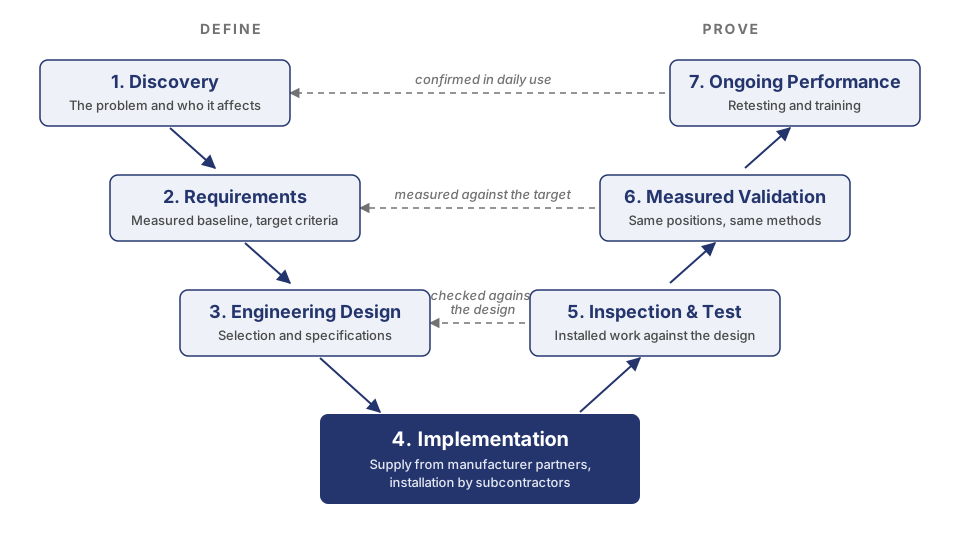
1. Discovery: the problem and who it affects.
2. Requirements: a measured baseline and the target criteria.
3. Engineering design: treatment selection and specifications.
4. Implementation: supply from manufacturer partners, installation by subcontractors.
5. Inspection and test: installed work checked against the design.
6. Measured validation: same positions and methods, measured against the target.
7. Ongoing performance: retesting and training as operations change.
Some engagements cover one part of the model, such as a test or a design review. The model shows where that part fits, and what comes before and after it.
- Checked against the design: inspection and testing confirm the installed work matches the specified assemblies and details.
- Measured against the target: validation repeats the baseline measurement at the same positions with the same methods, and compares the result with the requirement.
- Confirmed in daily use: retesting and training keep the result in place as operations change.
Our Process
From Design Approval to Verified Performance
2
Submittal & Substitution Review
We review every submittal and substitution against the acoustic target before it is approved.
4
Site Observation & Quality Assurance
We inspect the installations that carry acoustic performance, coordinate with the trades, and flag issues before they get covered up.
1
Design Handoff & Preconstruction Review
We review the approved design or specification and identify the assemblies and details where acoustic performance is most at risk.
3
Pre-Installation Briefing
We walk the contractor and installers through the assemblies and details that carry the rating before work starts.
5
Verification, Documentation & Closeout
We field-test the finished work against the engineered targets and deliver closeout documentation and a plain-language final report.
Field Test Methods and Standards
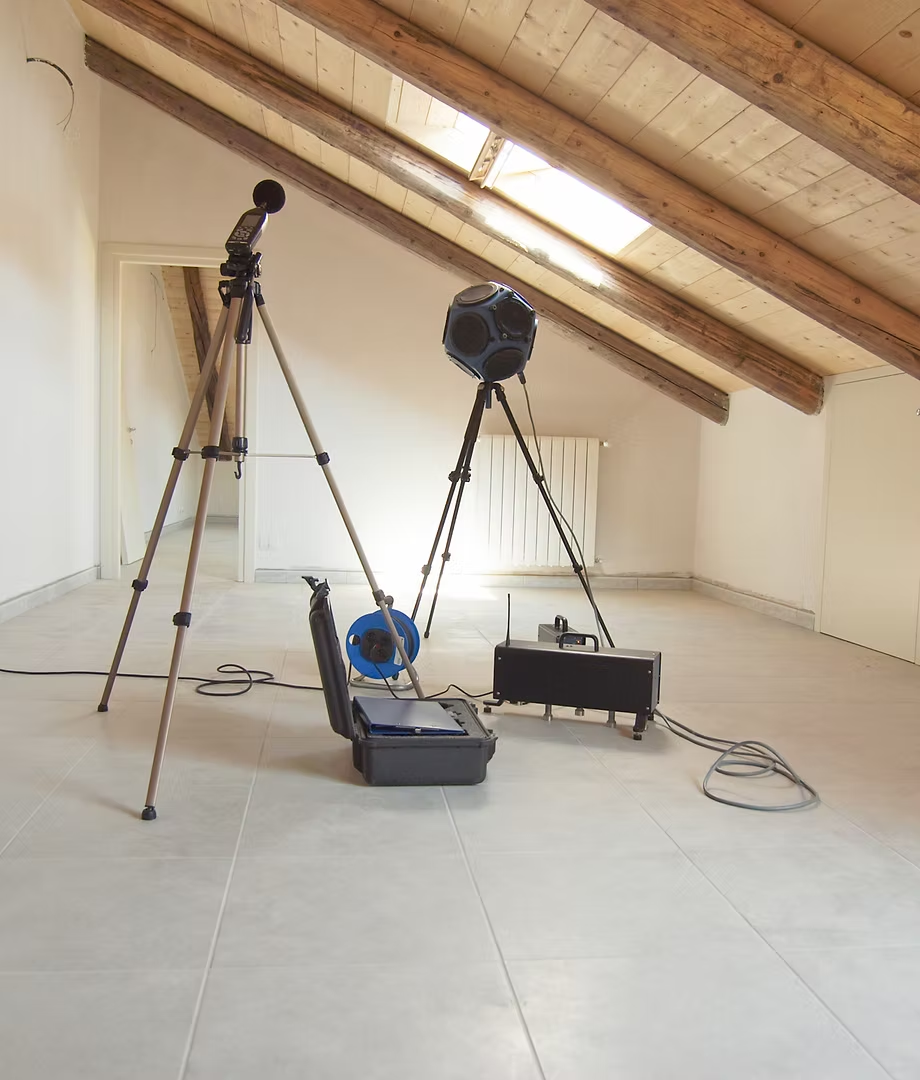
Memtech Acoustics verifies the finished work with recognized field test methods, so each result can be compared with the specification and repeated later.
A wall or floor rated in a laboratory is tested as a sample. In the building, sound also travels through the plenum, the doors, the penetrations and the structure. That is why field ratings carry their own names and their own methods, and why field results typically run 5 to 10 points below laboratory values. On one Memtech Acoustics project, an STC 50 to 55 objective corresponded to roughly ASTC 45 to 50 in the field.
A wall or floor rated in a laboratory is tested as a sample. In the building, sound also travels through the plenum, the doors, the penetrations and the structure. That is why field ratings carry their own names and their own methods, and why field results typically run 5 to 10 points below laboratory values. On one Memtech Acoustics project, an STC 50 to 55 objective corresponded to roughly ASTC 45 to 50 in the field.
How each target is verified:
- Airborne isolation, ASTM E336: a loudspeaker plays broadband pink noise on one side of the assembly, microphones record both sides at several positions, and background noise is measured separately. Results run in one-third octave bands from 125 to 4,000 Hz.
- Single-number ratings, ASTM E413: the measured curve is rated as ASTC, or as NIC or NNIC where the specification calls for a level-difference rating, such as a very large partition or a secure facility.
- Floor impact, ASTM E1007: a standard tapping machine runs on the floor above, and the result is reported as a field impact rating (AIIC or NISR).
- Reverberation, ISO 3382-2: RT60 and C50 by octave band, from several source and microphone positions, where the specification sets room acoustic targets.
- Calibrated instruments: Class 1 sound level meters, with a field calibration check before and after each session.
For the full isolation method, see our Acoustic Transfer Function assessment page. For room acoustics, see RT60 & C50 Testing.
Featured Case Study
Wall Sound Isolation Testing for an Office and Warehouse Build-Out
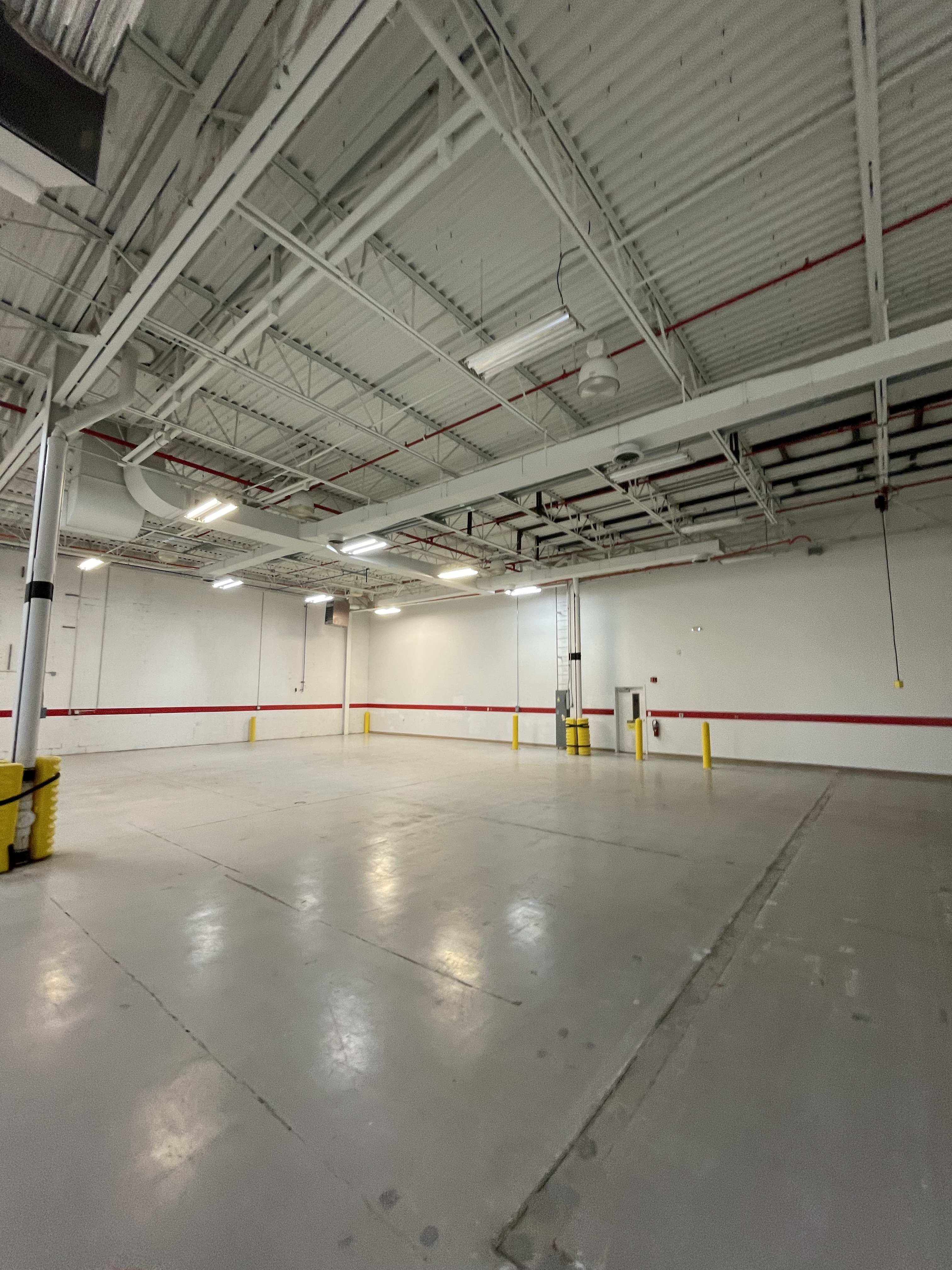
A general contractor needed to know whether the walls in an office and warehouse build-out met the project's STC 50 to 55 objective. Memtech Acoustics field-tested three partitions following ASTM E336, and all three fell short at ASTC 30 to 32. The report showed why: single-layer gypsum walls, walls that stopped short of the deck above a shared plenum, and sound paths at the doors and windows. It gave the contractor the specific upgrades needed to reach the objective.
Highlights
- Three as-built partitions field-tested following ASTM E336
- Measured ASTC 30 to 32 against an STC 50 to 55 objective, roughly ASTC 45 to 50 in the field
- Shortfall traced to the wall build, the shared plenum, and flanking at doors and windows
- Report specified the wall, ceiling, door, and window upgrades needed to close the gap
Lead Time &
Project Delivery
Every engagement is scoped to your project and schedule, from submittal review through verified performance.
- Submittals
Submittal and substitution review against the spec. - Briefing
Contractor and installers briefed on the details that carry the rating. - Inspection
Site observation and inspections timed to the construction schedule. - Validation
Field testing to confirm the space meets the design targets. - Timeline
Construction-phase engagements run alongside your build schedule, from a few weeks to several months.

The Memtech Difference
At Memtech, noise is our business. Our engineers oversee every step, ensuring that each project is properly delivered, on-time and within budget. This integrated approach delivers predictable results and protects your investment.

Certified Acoustic Professionals
Testing conducted by certified engineers and acoustic specialists, not general contractors or “safety consultants.”

National Standards Alignment
We follow OSHA 1910.95, NIOSH criteria, and ANSI S12.19-1996 methods for noise exposure assessment. Measurements are conducted via ISO procedures or per academically accepted methods.

Engineering Expertise
Noise measurements, analysis, modeling and installation support are overseen by professionals who understand acoustic theory, as well as the implementation of practical solutions.
High Responsiveness, Proven Reliability
We are your trusted local partner providing on-demand support and dependable project execution. Michigan-based with regional reach and national* shipping capabilities.

Confidential & Detailed Reporting
We don’t just submit a report. You are provided with complete documentation, delivered in easy-to-understand language with accurate data and comprehensive drawings.
*Shipping available across the continental USA, and international; installations are offered in select regions.
NOTE: We do not stock custom products in our U.S. warehouse. Ask us about lead times for your project.
NOTE: We do not stock custom products in our U.S. warehouse. Ask us about lead times for your project.

When Construction Administration Is Not the Right Service
Construction administration assumes two things: an approved acoustic design, and a contractor building it. If either one is missing, another Memtech Acoustics service fits the project better.
Consider these services instead:
- The design is not finished: Architectural Design-Assist sets the targets, assemblies and specifications while the drawings can still change.
- You want one team to design, supply and coordinate the installation: Design & Install carries the acoustic scope from measurement to a verified result.
- The space is already built and has a problem: RT60 & C50 Testing diagnoses reverberation in a room, and an Acoustic Transfer Function assessment finds where sound passes between rooms.
- The noise comes from machines or a process: Engineered Noise Control Systems treats it at the source.
Frequently Asked Questions (FAQs)
How is Construction Administration different from Design & Install?
In Design & Install, Memtech Acoustics designs the acoustic scope and manages the build as one package. Construction Administration is for when the design already exists, whether it is yours, your architect's, or another consultant's, and you need a specialist to review submittals and substitutions, inspect the acoustic work, and verify the finished space performs the way it was specified.
Does Memtech Acoustics self-perform the installation?
No. The general contractor and its installers build the work. Memtech Acoustics reviews, inspects, and tests it against the acoustic design, so architects and owners get a specialist checking the result without adding a separate labor contractor.
Can Memtech Acoustics administer a design it did not create?
Yes. If the acoustic specification came from another consultant or from your in-house team, Memtech Acoustics can administer it through construction and verify the measured result.
Does Memtech Acoustics replace our general contractor?
No. Memtech Acoustics administers the acoustic scope within your project and coordinates with the general contractor, the MEP trades, and the other subcontractors. It is the acoustic specialist on the team, not the project general contractor.
How does Memtech Acoustics keep a specified product from being value-engineered out?
Every submittal and substitution request is reviewed against the acoustic target before it is approved. When a proposed substitute will not hold the rating, Memtech Acoustics flags it and protects the assembly the design depends on.
When should you bring Memtech Acoustics in for construction administration?
Ideally before submittals begin, so every acoustic product is reviewed before it is ordered and inspections are planned around the schedule. Memtech Acoustics can also step in mid-construction to review an acoustic scope that is drifting from the design.
What do you get at the end of the project?
A space that meets its acoustic targets, field-tested against the specification, with closeout documentation and a plain-language final report. Where a project pursues LEED or WELL credits, Memtech Acoustics provides the supporting acoustic documentation.
What standards and ratings does Memtech Acoustics verify against?
Memtech Acoustics field-tests to the project STC, IIC, NRC, and RT60 targets and documents compliance under IBC, ANSI, ASTM, ISO, LEED, and WELL criteria as the project requires. Measurements follow recognized ASTM and ANSI field-test procedures.
Does Memtech Acoustics work outside of Michigan?
Yes. Memtech Acoustics is based in Rochester Hills, Michigan, and provides construction-phase services nationwide. Site visits are scheduled for the inspections and field testing that have to be done in person.
What is acoustic construction administration?
Acoustic construction administration is the construction-phase review of the acoustic scope. Memtech Acoustics reviews submittals and substitutions against the acoustic specification, inspects the assemblies that carry the rating before they are closed in, and field-tests the finished space against its targets. The general contractor and its installers build the work. Where an architect administers the construction contract, Memtech Acoustics supports that role for the acoustic scope.
What is the difference between STC and ASTC?
STC is a laboratory rating of a wall or floor assembly. ASTC, or apparent STC, rates the assembly as built, measured in the field following ASTM E336 and rated under ASTM E413. Because the field result includes flanking paths through plenums, doors and penetrations, it usually reads lower. Memtech Acoustics designs and reviews against laboratory ratings, then verifies the field rating, knowing that field results typically run 5 to 10 points below laboratory values.
What happens if a wall fails its field test?
Memtech Acoustics reports the measured rating and finds the cause. The analysis shows which frequency bands fall short, checks for flanking paths, and checks installation quality, such as gaps, mounting and missing sealant. The report then lists the corrections needed to reach the target. On one office and warehouse build-out, walls measured ASTC 30 to 32 against an STC 50 to 55 objective, and the report traced the shortfall to single-layer gypsum, a shared plenum and leaks at the doors and windows.
Which inspections matter most before walls and ceilings close?
The details that get covered up first. Memtech Acoustics checks that rated walls reach the deck instead of stopping at the ceiling grid, that joints and perimeters are sealed, and that penetrations for lighting, diffusers, conduit, pipe sleeves and outlets are sealed. Resilient clips and isolation mounts are checked against the design. Doors and glazing in a rated wall are checked as well, because an unsealed door perimeter or glass head limits the whole wall.
Let’s Engineer the Right Solution, Together.

Let's Get Started. Contact Us.
Talk to our experts. We’ll assess your needs and recommend a solution that works for your project.