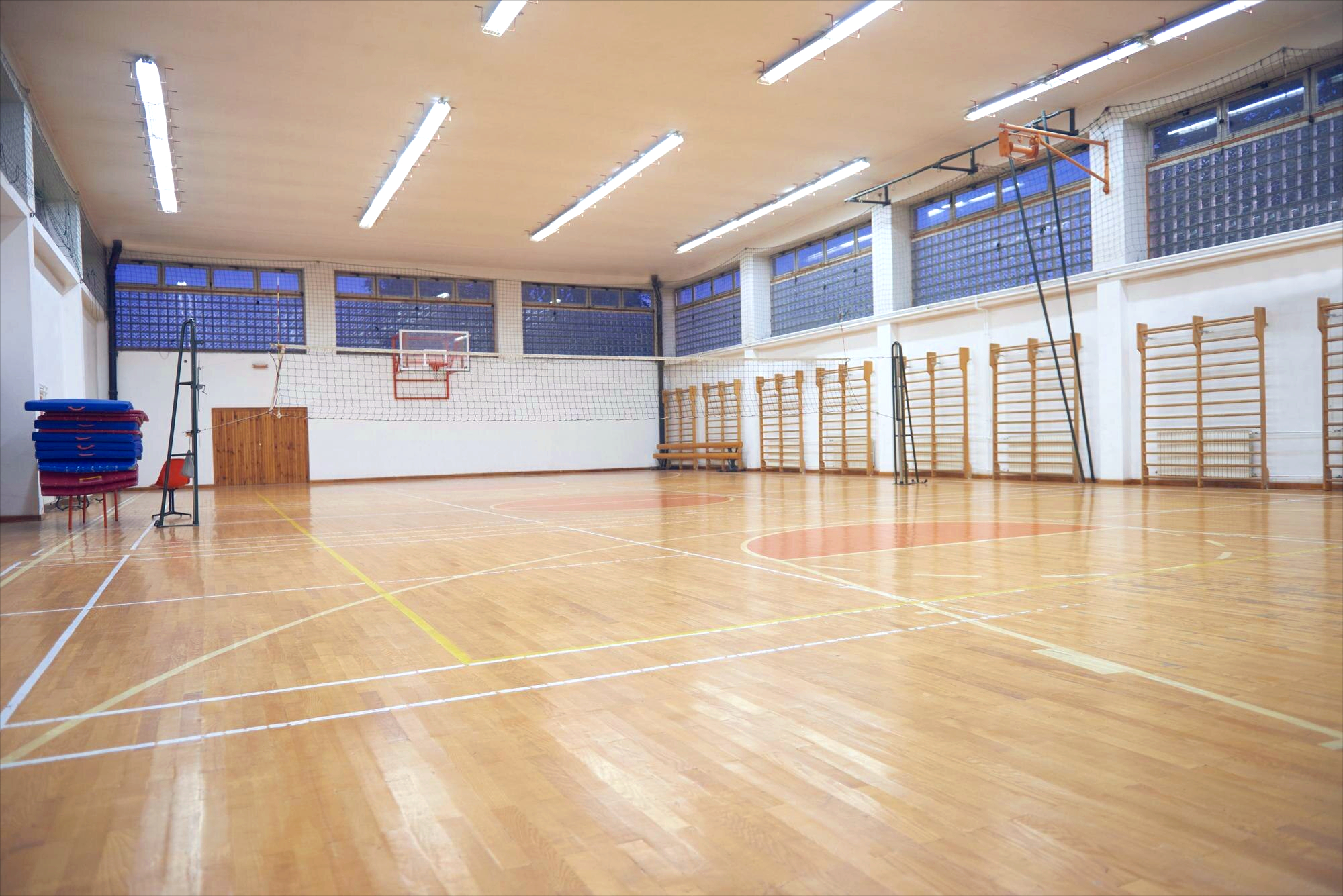
Reverberation Time (RT60) Calculator
Estimate the reverberation time of a classroom, office, gym or other room from its size and finishes, compare it to published targets, and see how much treatment it takes to meet them.
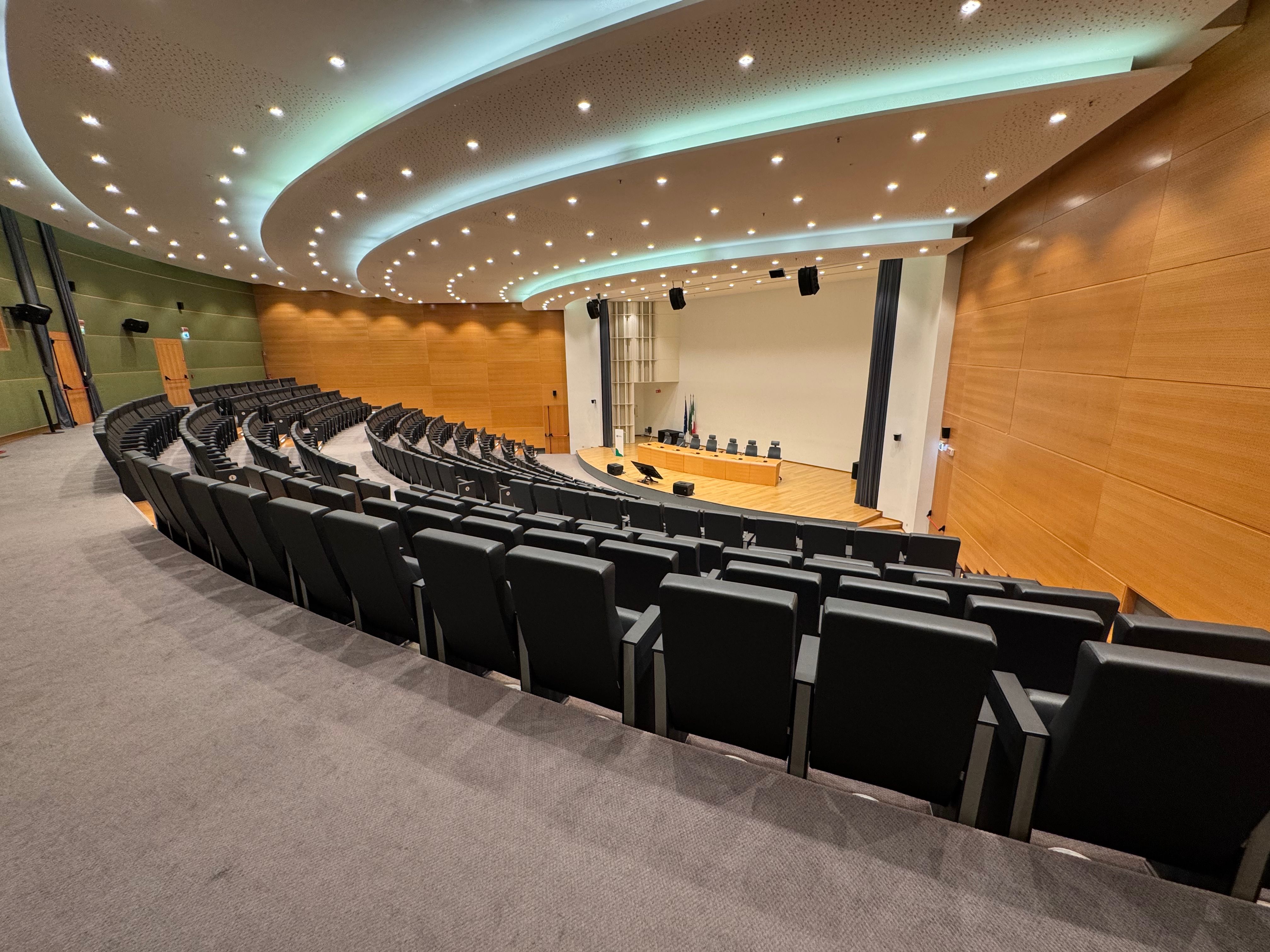
How to Calculate Reverberation Time
Reverberation time (RT60) is the time it takes for sound in a room to fade by 60 decibels after the source stops. The standard estimate is the Sabine formula: RT60 = 0.049 × V ÷ A, with V in cubic feet and A in sabins (0.161 × V ÷ A in metric units). A, the room's total absorption, is the sum of each surface's area times its absorption coefficient, so reverberation time changes from one frequency band to the next.
What this calculator adds to the Sabine formula:
- The Eyring formula
Sabine overestimates reverberation time as absorption rises. The headline estimate uses Eyring, which stays valid in absorptive rooms and matches Sabine in hard ones. - Uneven absorption
The Fitzroy and Arau-Puchades formulas account for absorption concentrated on one surface, such as an absorptive ceiling over hard walls. Their results set the model range. - Air absorption
In large rooms, air absorbs sound at high frequencies. The calculator adds it band by band using ISO 9613-1 and the temperature and humidity you enter. - Treatment sizing
It solves for the area of a chosen treatment that brings every band from 500 to 2000 Hz to the target.
A calculation is a design estimate, and its accuracy depends on the room. Before treatment is specified, Memtech Acoustics measures the existing room with RT60 & C50 testing, so the design starts from data.
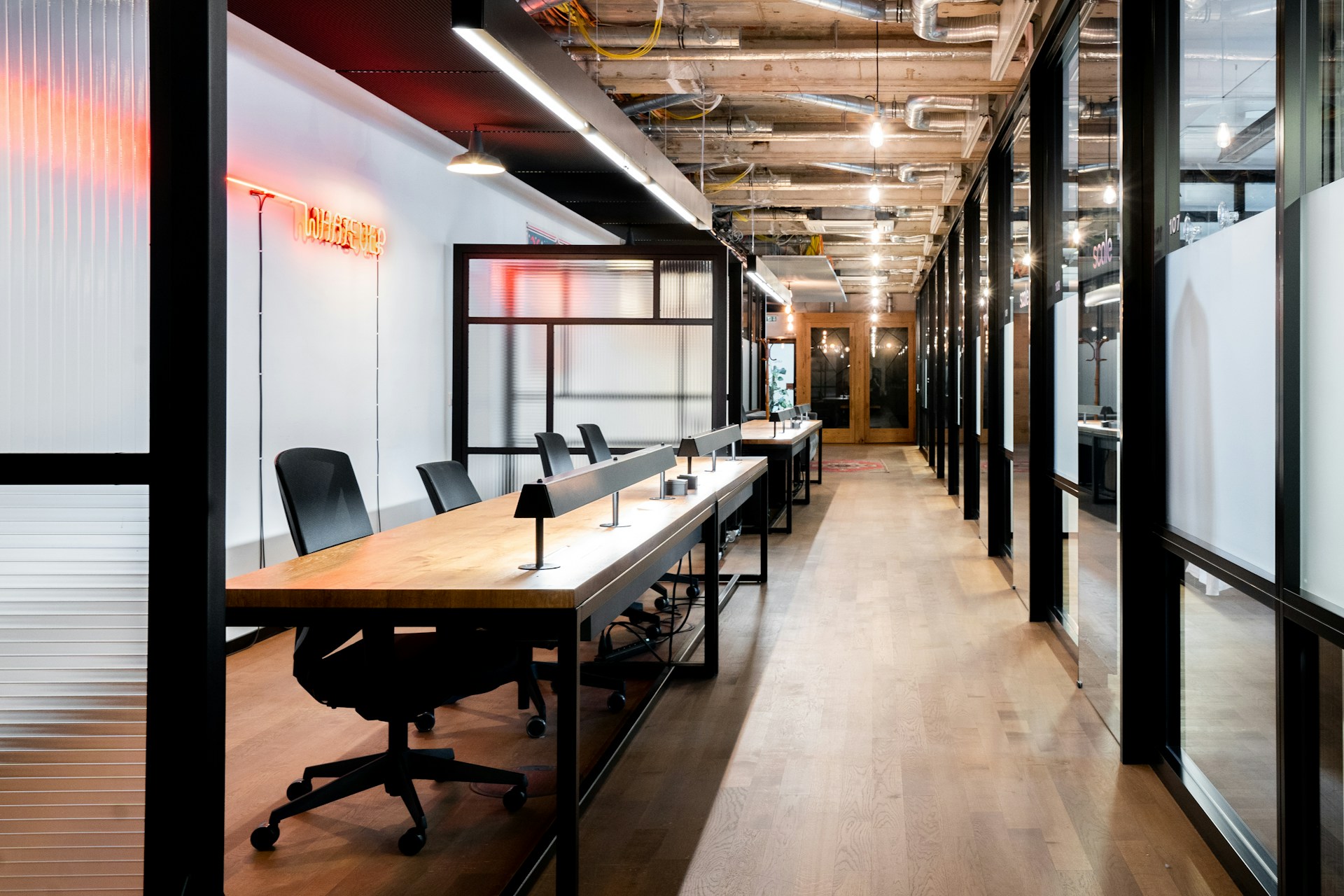
Recommended Reverberation Times by Room Type
Published criteria set a maximum reverberation time at 500, 1000 and 2000 Hz. The calculator compares your estimate to these limits.
Maximum reverberation times:
- Classrooms
0.6 seconds for core learning spaces up to 10,000 cubic feet and 0.7 seconds from 10,000 to 20,000 cubic feet (ANSI/ASA S12.60-2010 Part 1). - Offices and conference rooms
0.6 seconds for private offices, conference rooms and teleconference rooms; 0.8 seconds for open-plan offices (LEED v4). - Libraries
1.0 second (LEED v4). - Courtrooms
0.7 seconds with unamplified speech and 1.0 second with amplified speech (LEED v4). - Gymnasiums and natatoriums
2.0 seconds, or 1.5 seconds for large spaces with amplified speech (LEED v4).
Performing arts spaces and worship spaces with music programs have no single limit; the right reverberation time depends on the program. Architectural Design-Assist sets project-specific criteria during design.
Have an Acoustic Expert Review Your Estimate
The button under your results copies the estimate into this form. Send it, and one of our acoustic experts will review it with you, or schedule a discovery call directly using the calendar below.
Need help now?
Call us at (248) 289-1123 during our normal business hours (Mon-Fri, 8:00AM to 5:00PM ET) to speak directly with a noise control expert.
Schedule Your Discovery Call
Frequently Asked Questions (FAQs)
How do you calculate reverberation time?
Use the Sabine formula: RT60 = 0.049 × V ÷ A, where V is the room volume in cubic feet and A is the total absorption in sabins (in metric units, RT60 = 0.161 × V ÷ A with V in cubic meters). Find A by multiplying each surface's area by its absorption coefficient and adding the results. Repeat the calculation for each octave band, because absorption changes with frequency. For rooms with more absorption, the Eyring formula gives a more accurate estimate.
What is the difference between the Sabine and Eyring formulas?
Both estimate reverberation time from room volume and absorption. Sabine divides volume by total absorption, so it never reaches zero even when every surface absorbs all sound, and it overestimates reverberation time as absorption rises. Eyring replaces the absorption with −S × ln(1 − ᾱ), where S is the total surface area and ᾱ is the average absorption coefficient. The two agree closely in hard rooms; in absorptive rooms Eyring gives the shorter, more realistic figure.
What is a good reverberation time for a classroom?
ANSI/ASA S12.60-2010 Part 1 limits reverberation time in an unoccupied, furnished core learning space to 0.6 seconds when the room is 10,000 cubic feet or smaller, and to 0.7 seconds from 10,000 to 20,000 cubic feet, at 500, 1000 and 2000 Hz. The standard sets no limit for core learning spaces above 20,000 cubic feet.
What is a good reverberation time for an office or conference room?
LEED v4 sets a maximum of 0.6 seconds for private offices, conference rooms and teleconference rooms, and 0.8 seconds for open-plan offices, at 500, 1000 and 2000 Hz.
What is a good reverberation time for a gym?
LEED v4 sets a maximum of 2.0 seconds for gymnasiums and natatoriums, and 1.5 seconds for large spaces that use amplified speech, at 500, 1000 and 2000 Hz. Enter your gym's floor, wall and ceiling finishes in the calculator to see how far it sits from that target.
How accurate is an RT60 calculator?
A calculator assumes a rectangular room with sound spread evenly through it. Results are closest when absorption is spread across all surfaces, and least reliable when absorption sits on one surface, the room has coupled spaces or an unusual shape, or the finishes are uncertain. This calculator shows the spread across four formulas so you can see when they disagree. Measured RT60 from on-site testing is the reliable starting point for a treatment design.
How much acoustic treatment do I need to lower reverberation time?
Work out the total absorption the target requires, 0.049 × V ÷ target RT60, and subtract the absorption the room already has. Divide the difference by how much more each square foot of treatment absorbs than the surface it covers. Do this at each frequency band; the band needing the most treatment sets the amount. With thin panels, the 500 Hz band often sets it, because thin panels absorb less at lower frequencies. The calculator runs this calculation for each band using the Eyring formula.




© 2025 Memtech Acoustics. All rights reserved.