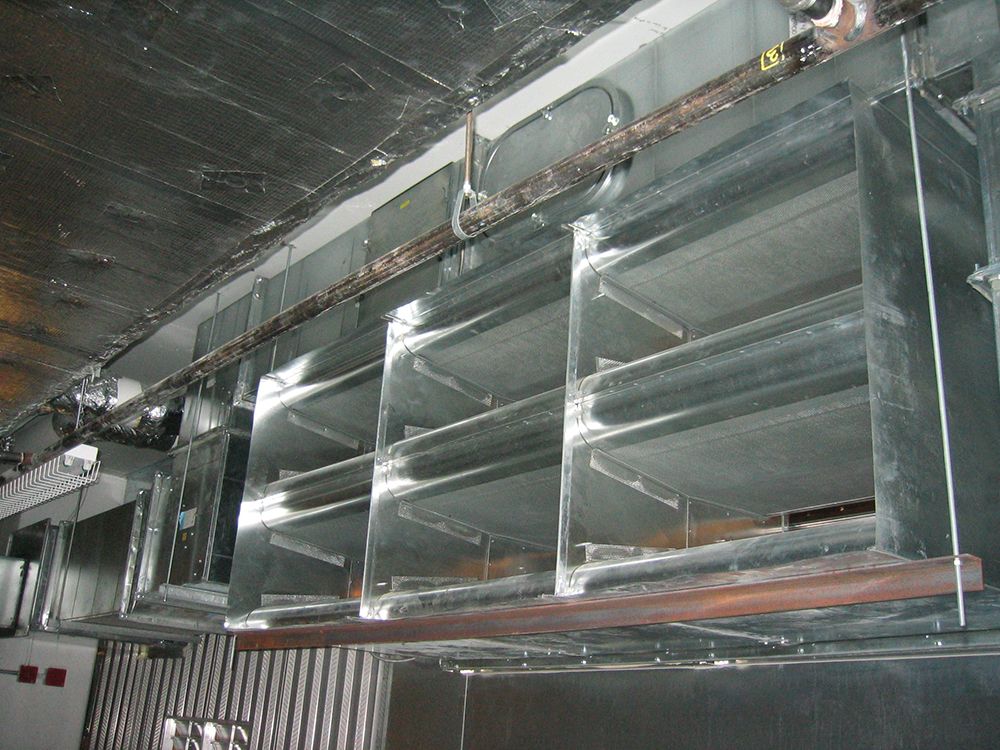
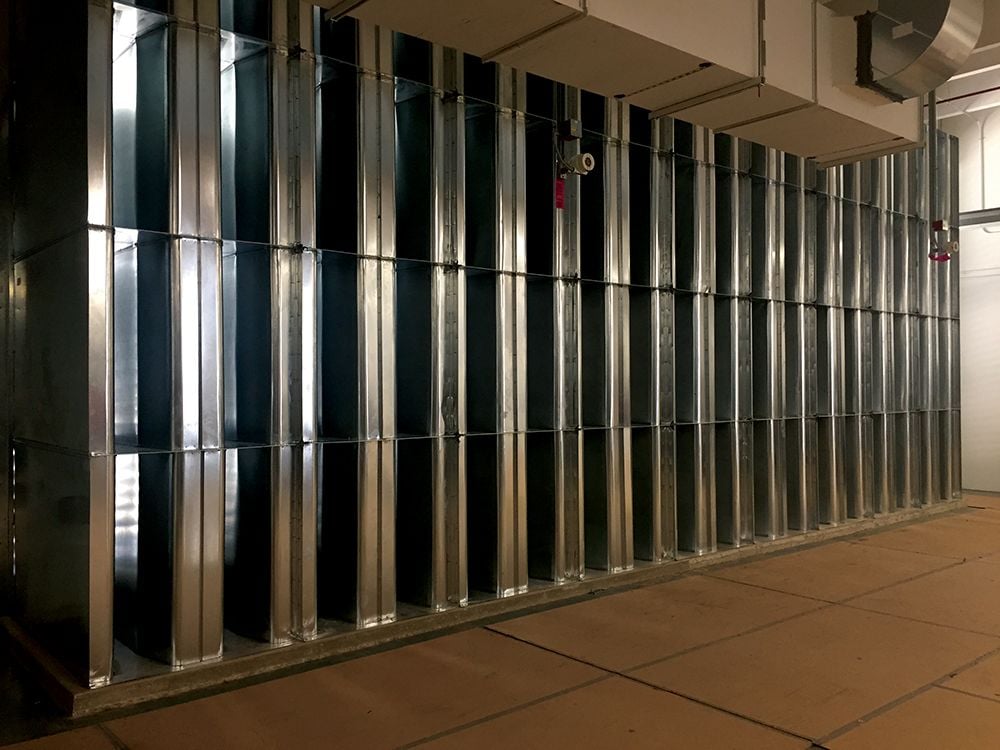
Control Noise Along the HVAC Airflow Path
HVAC equipment is one of the main sources of noise inside a building, and fan and equipment noise can also carry outdoors, where many municipalities set sound level limits.
Memtech Acoustics supplies Kinetics duct silencers and acoustic louvers for supply and return duct paths, fan inlets and discharges, mechanical room vents and openings between rooms. Each silencer is made to order, balancing available space, fan selection and pressure loss.
Memtech Acoustics supplies Kinetics duct silencers and acoustic louvers for supply and return duct paths, fan inlets and discharges, mechanical room vents and openings between rooms. Each silencer is made to order, balancing available space, fan selection and pressure loss.
Silencer performance comes down to three measures:
- Dynamic insertion loss: the change in sound level at a point before and after the silencer is installed, measured with air flowing
- Pressure drop: the difference in total pressure measured upstream and downstream of the silencer
- Generated noise: sound created by air expansion and turbulence as air moves through the silencer passages
The Memtech Advantage.
At Memtech, we don’t just supply materials, we deliver results. Our team works alongside your mechanical, architectural, and construction teams so every silencer and louver is properly selected, installed, and verified for performance.

Data-Driven Design
Our recommendations are based on sound and airflow data acquired at your location (or per your requirements), not on product spec sheets alone.

System Integration Expertise
We fit silencers and louvers to the duct layout, available space, and allowable pressure drop.

Long-Term Reliability
Casing materials and finishes are matched to indoor, outdoor, and high-humidity exposure.

Material Selection & Procurement
Direct access to rectangular, elbow, circular, crosstalk, and custom silencers plus acoustic louvers for simplified purchasing.

Local Turnkey Implementation
Clear installation documents and on-site guidance for connections, sealing, and outdoor weatherproofing.

Performance Verification
Optional field measurement and post-installation optimization.
Compare Duct Silencer Types
Duct Silencers & Acoustic Louvers
Rectangular Duct Silencer
Elbow Duct Silencer
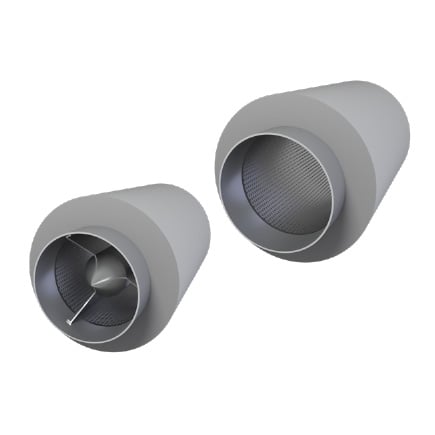
Circular Duct Silencer
Model
KCRS
Model
KCES
Model
KCCS
Best for
Most air velocities
Best for
Air velocities above 1,500 fpm
Best for
Air velocities above 2,000 fpm
Typical use
Long duct runs or chases
Typical use
Tight spaces; can replace a single-wall duct elbow to improve system effects
Typical use
Circular ductwork
Configurations
Straight dissipative (absorptive) or reactive (no media)
Configurations
Elbow dissipative (absorptive) or reactive (no media); T-elbow for rooftop units with bottom supply or return
Configurations
Straight dissipative or reactive; round endcap for VAV and FPAV connections
Testing
ASTM E477 and AMCA 1011, NVLAP-accredited lab
Testing
ASTM E477 and AMCA 1011, NVLAP-accredited lab
Testing
ASTM E477 and AMCA 1011, NVLAP-accredited lab
Product Overview
Duct Silencers & Acoustic Louvers
Kinetics® KCRS Rectangular Duct Silencers
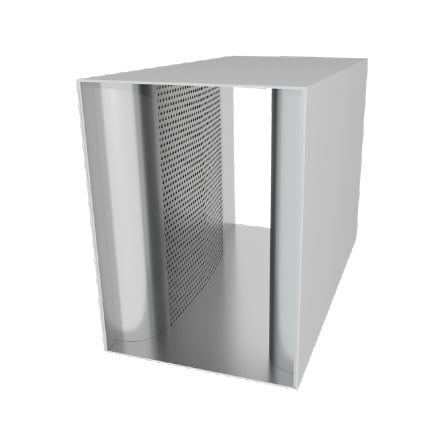
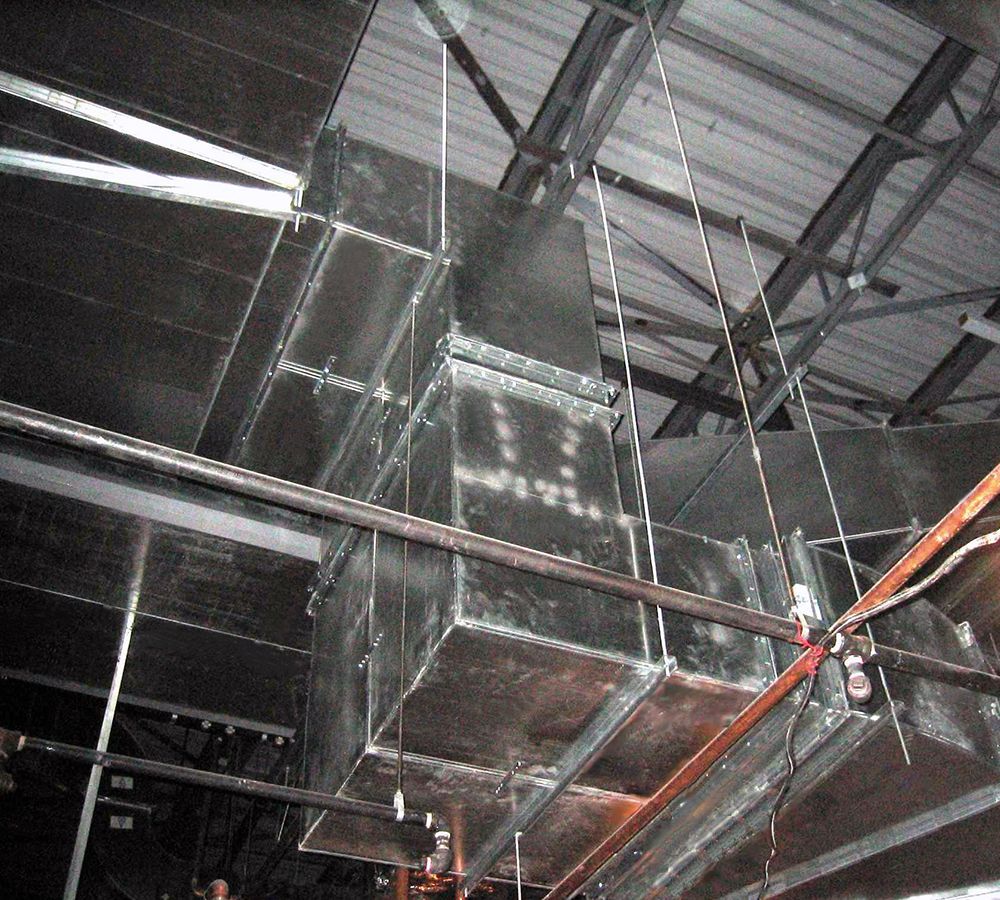
KCRS rectangular straight silencers install in line with rectangular ductwork to limit airborne noise traveling from fans and air handling equipment to occupied spaces. They are the standard choice for long duct runs and chases.
Performance & Design Highlights:
- Best for applications at most air velocities
- Suited to long duct runs and chases
- Straight dissipative (absorptive) or reactive (no media) designs
- Made to order to the duct size, airflow and allowable pressure drop
- Independently tested in an NVLAP-accredited laboratory to ASTM E477 and AMCA 1011
Duct Silencers & Acoustic Louvers
Kinetics® KCES Elbow Duct Silencers
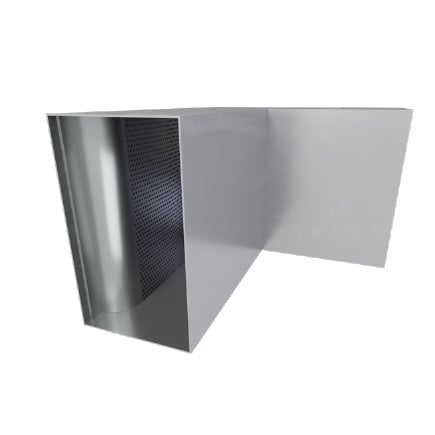
KCES elbow silencers combine a duct turn and a silencer in one component, saving space where a straight silencer will not fit.
They can also replace a single-wall duct elbow to improve system effects.
They can also replace a single-wall duct elbow to improve system effects.
Performance & Design Highlights:
- Best for air velocities above 1,500 fpm
- Saves space where a straight run is not available
- Elbow dissipative (absorptive) or reactive (no media) designs
- T-elbow configuration for rooftop units with bottom discharge (supply) or intake (return)
- Independently tested in an NVLAP-accredited laboratory to ASTM E477 and AMCA 1011
Duct Silencers & Acoustic Louvers
Kinetics® KCCS Circular Duct Silencers
KCCS circular silencers connect directly to round ductwork and suit higher-velocity systems.
Performance & Design Highlights:
- Best for air velocities above 2,000 fpm
- For use with circular ductwork
- Round endcap configuration for circular ductwork that needs a no-media silencer, or for VAV and FPAV connections
- Independently tested in an NVLAP-accredited laboratory to ASTM E477 and AMCA 1011
Duct Silencers & Acoustic Louvers
Kinetics® Crosstalk and Vent Shaft Silencers
Crosstalk and vent shaft silencers let air transfer between rooms and through vent shafts while limiting speech and noise transmission. They target the mid-frequency octave bands where most voice energy falls, so a transfer opening does not undercut the STC rating of a common wall.
Performance & Design Highlights:
- Equivalent STC values from 35 to 55, depending on application and configuration
- L-, Z-, U-shaped and straight configurations
- Aluminum, galvanized, 304 stainless or 316 stainless steel
- 22, 18 or 16 gauge construction
- Lightweight and easy to install, in standard and custom sizes
Duct Silencers & Acoustic Louvers
Kinetics® Fixed-Blade Acoustic Louvers
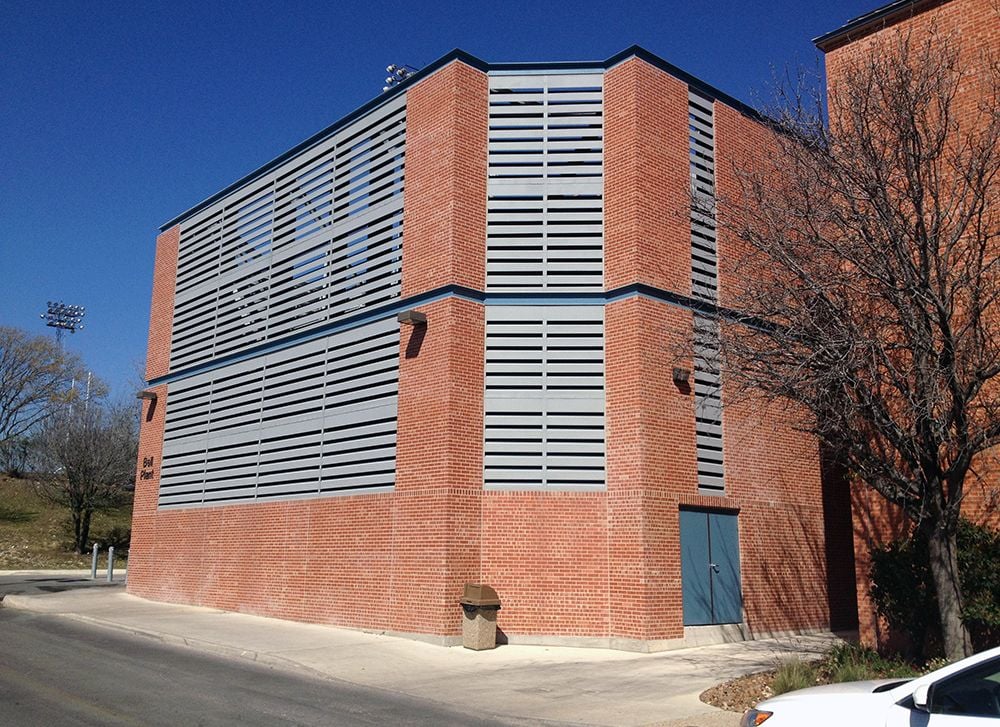
Acoustic louvers control equipment noise at intake and exhaust openings where there is no depth for a silencer. Their large face area compensates for limited depth, and models vary in depth, open area and blade shape to balance pressure loss against attenuation. Available in galvanized G90, aluminum 3003-H14, or 304 and 316 stainless steel, with powder coat or baked enamel finishes.
Performance & Design Highlights:
- KCAC: 30-40% open area, 12", 16" or 24" deep, no line of sight, maximum attenuation
- KCPL: 30-40% open area, 6", 8" or 12" deep, small vane spacing for low-frequency noise
- KCAL: 40-50% open area, 6" or 12" deep, low pressure drop, lightest weight and lowest cost
- KCFL: 33-38% open area, 6", 8" or 12" deep, airfoil blades that reduce pressure loss
- KCDC: up to 51% open area, 12" deep, no line of sight, built for data center airflow
- Options include flanges and bird screen, with manufacturer structural modeling for large louver banks
Duct Silencers & Acoustic Louvers
Custom Industrial and Commercial Silencers
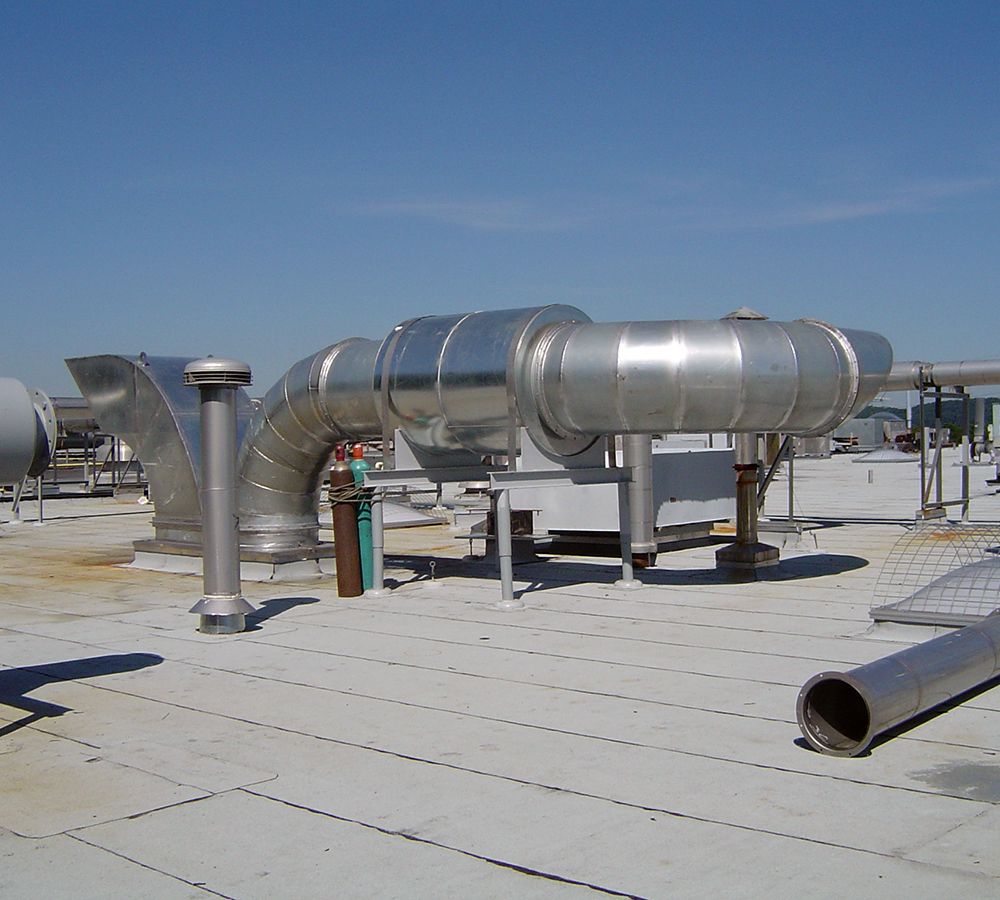
Custom silencers cover applications outside the standard duct silencer lines, from industrial fans to air pollution control equipment. The manufacturer's modeling software is used to size each unit to the application.
Performance & Design Highlights:
- Custom engineered to the application
- Construction standard set to the application requirements
- Variety of silencer mating options
- Galvanized and stainless steel construction
- Common uses: industrial fan inlets and discharges, air pollution control equipment, building and enclosure ventilation, and low-pressure vents
Duct Silencers & Acoustic Louvers
Performance & Design Highlights
Every silencer and louver is selected against measured performance, not catalog descriptions alone.
- Rated Under Airflow: Dynamic insertion loss is measured with air moving, so ratings reflect operating conditions.
- Pressure Drop Within Limits: Each unit is sized to the system's allowable pressure loss so fan performance holds.
- Generated Noise Accounted For: Noise created by air expansion and turbulence inside the silencer is part of the selection, alongside insertion loss.
- Independent Testing: Silencers are tested in an NVLAP-accredited laboratory to ASTM E477 and AMCA 1011.
Duct Silencers & Acoustic Louvers
Installation & Integration
Memtech Acoustics coordinates silencer and louver selection with your mechanical engineer and contractor so the products fit the duct layout and perform as intended.
Our approach includes:
- Selection using the manufacturer's eight-octave-band duct system analysis program
- A silencer questionnaire that captures dimensions, airflow, pressure drop limits, materials and connections
- Specification and submittal documentation for contractor bidding
- Outdoor installation guidance, including sealed seams and drain or weep holes
- Field measurement and post-installation verification from one accountable provider
Technical Highlights
Duct silencers and acoustic louvers for commercial, institutional and industrial HVAC systems.
Silencer Types
Rectangular, elbow, circular, crosstalk and custom
Construction
Dissipative (absorptive) or reactive (no media)
Test Standards
ASTM E477 and AMCA 1011, NVLAP-accredited laboratory
Performance Measures
Dynamic insertion loss, pressure drop and generated noise
Louver Open Area and Depth
30% to 51% open area, 6" to 24" deep, depending on model
Crosstalk Silencer Performance
Equivalent STC 35 to 55
Depends on application and configuration
Depends on application and configuration
Materials
Galvanized steel, aluminum, and 304 or 316 stainless steel, depending on product
Technical Data &
Product Literature
Can't find what you need?
Contact Us or call us at (248) 289-1123 during our normal business hours (Mon-Fri, 8:00AM to 5:00PM ET) to speak directly with a noise control expert.
Silencer Selection Table
Download PDF
Silencer Selection Questionnaire
Download PDF
Silencer Maintenance Instructions
Download PDF
Commercial Airflow Attenuation Brochure
Download PDF
Support Beyond the Product
Installation assistance available for Michigan and Great Lakes region clients
Engineering consultation to ensure proper material selection
Custom sizing and integration with other Memtech acoustic systems
Maintenance guidance for outdoor and high-humidity installations
Frequently Asked Questions (FAQs)
What is a duct silencer?
A duct silencer is a section installed in ductwork that limits airborne noise traveling through the duct from fans and HVAC equipment to occupied spaces or outdoors.
How do I choose between rectangular, elbow and circular silencers?
Rectangular silencers suit most air velocities and long duct runs or chases. Elbow silencers save space and suit velocities above 1,500 fpm. Circular silencers connect to round ductwork and suit velocities above 2,000 fpm.
What information is needed to select a silencer?
Duct dimensions, airflow (CFM or FPM), the maximum allowable pressure drop, location, airflow direction, materials and end connections. Our silencer questionnaire lists every item.
What is dynamic insertion loss?
It is the difference in sound level at a point before and after a silencer is installed, measured with air flowing. It shows how much the silencer attenuates under operating conditions.
When should I use an acoustic louver instead of a silencer?
Acoustic louvers suit intake and exhaust openings where there is little depth for a silencer, such as generator room vents and equipment enclosure ventilation. Their large face area compensates for their shallow depth.
Can a transfer air opening between rooms keep conversations private?
Yes. Crosstalk silencers let air pass between rooms while targeting the mid-frequency bands where most voice energy falls, with equivalent STC values from 35 to 55 depending on application and configuration.
Do you provide turnkey services?
Yes. We handle measurement, product selection, supply, installation coordination and post-installation testing, so you work with one accountable team.
Do duct silencers need maintenance?
Indoor silencers are essentially maintenance-free and are cleaned along with the ductwork. Outdoor silencers should be inspected every six months, and silencers on high-humidity equipment such as cooling tower discharge fans as often as every three months.
Let’s Engineer the Right Solution, Together.

Let's Get Started. Contact Us.
Talk to our experts. We’ll assess your needs and recommend a solution that works for your project.