HOME > WHO WE SERVE > General Contractors
Construction-Phase Acoustic Support
for General Contractors
One partner reviews submittals, coordinates the field, supplies the noise-control materials, and field-tests the finished assemblies (ASTC and AIIC), so acoustic issues are caught before occupancy.
How Acoustic Value Engineering Creates Closeout Risk
A specified STC is a laboratory rating for the assembly as drawn. What the owner experiences is the field performance of the wall as built. If framing, insulation, sealing, or a substitution departs from the tested detail, the field result can fall well short, and the drawing will not defend it.
The shortfall usually comes from several small details: a substitution approved on price without an acoustic equivalency check, an open path over the wall at the deck, or an unsealed penetration. Each is small on its own. Together they can erase much of the rating before anyone tests it.
If the shortfall surfaces after occupancy, the trades have left and retainage is at stake. The correction usually costs more than the value engineering saved.
The shortfall usually comes from several small details: a substitution approved on price without an acoustic equivalency check, an open path over the wall at the deck, or an unsealed penetration. Each is small on its own. Together they can erase much of the rating before anyone tests it.
If the shortfall surfaces after occupancy, the trades have left and retainage is at stake. The correction usually costs more than the value engineering saved.
Common Challenges We Solve.

Acoustic scope value-engineered out, then returning as a callback that holds up retainage.

Substitution requests approved on price, never checked for acoustic performance equivalency.

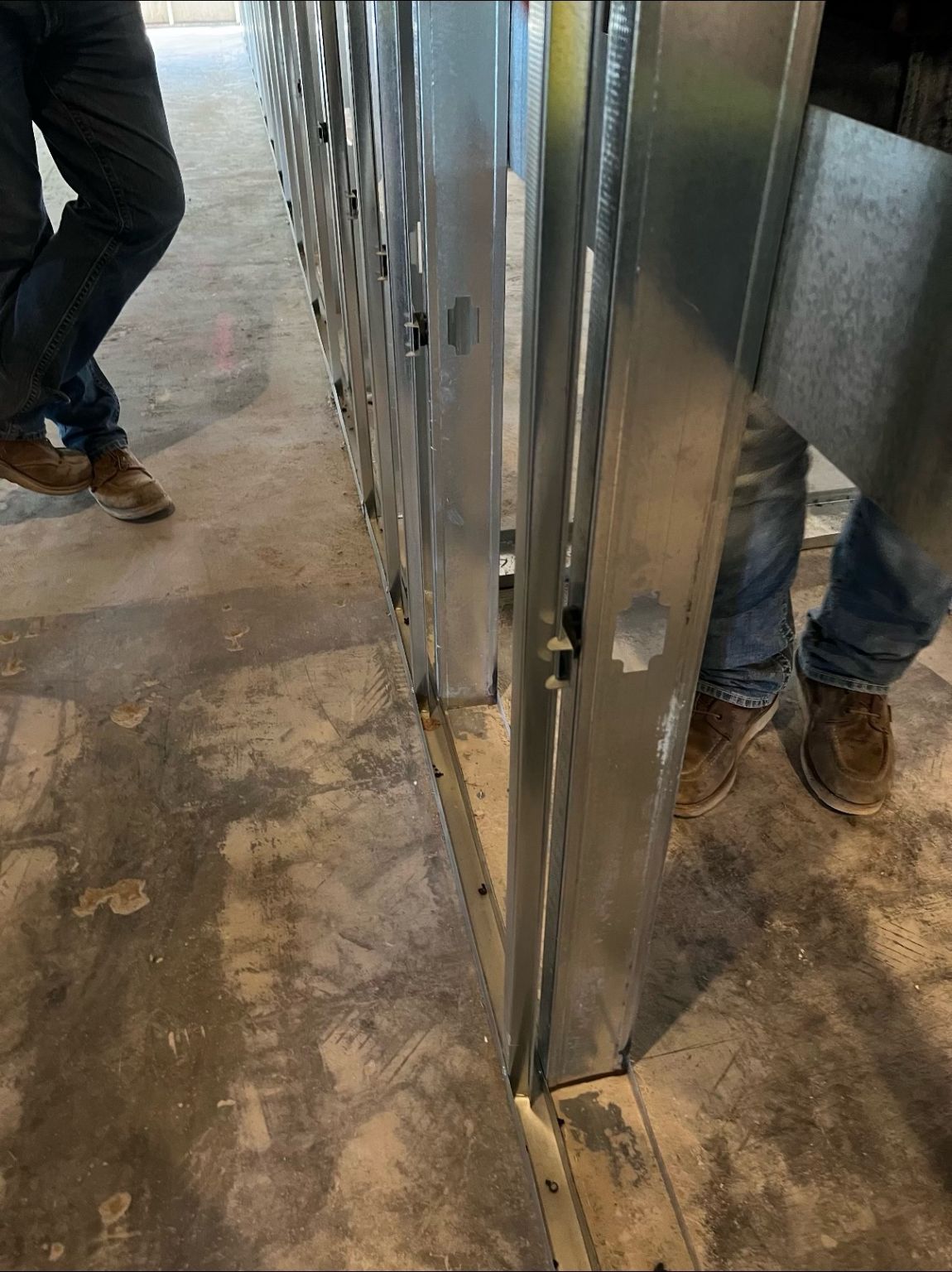
Flanking paths carrying sound around a wall that passed on paper.

Penetrations and firestop detailed for fire, not for the acoustic rating.

Partitions that test below their specified rating, found only after occupancy.

Acoustic scope with no owner, so it falls to you at closeout.
Construction Details That Lower Acoustic Ratings
General Contractors
Ratings Depend on the Assembly as Built
A laboratory STC describes the assembly as tested. The built wall only approaches it if framing, insulation, layers, seals, and backing match the tested detail.
A single flanking path can limit the whole assembly. Sound travels over a partition through an open plenum, under a door, or through a shared duct. With the deck above left open, a high-STC wall can perform far below its rating.
None of this shows up on the drawing set. It shows up in what gets framed, sealed, and substituted between mobilization and turnover. That is why acoustic performance has to be managed in the field, not assumed from the drawings.
A single flanking path can limit the whole assembly. Sound travels over a partition through an open plenum, under a door, or through a shared duct. With the deck above left open, a high-STC wall can perform far below its rating.
None of this shows up on the drawing set. It shows up in what gets framed, sealed, and substituted between mobilization and turnover. That is why acoustic performance has to be managed in the field, not assumed from the drawings.
General Contractors
Jobs Where Acoustic Performance Matters
Some building types carry acoustic ratings in the contract documents, tied to occupancy and owner sign-off. On these projects a missed STC or IIC target can hold up retainage, whether the work is new construction, a commercial build-out, or a tenant-improvement renovation.
- Offices and tenant fit-outs: partition STC targets for closed-office speech privacy
- Healthcare and clinics: patient-room speech privacy per the FGI Guidelines
- Schools and universities: ANSI/ASA S12.60 classroom background noise, reverberation, and sound isolation criteria
- Courthouses and civic buildings: courtroom privacy and jury-room separation
- Labs and advanced manufacturing: equipment noise and vibration isolation tolerances
- Hospitality and hotels: guestroom STC and IIC ratings in the spec
- Multifamily and mixed-use: building-code STC and IIC requirements for dwelling-unit separations
- Senior living: resident-unit privacy and dining-hall reverberation control
- Data centers: generator and chiller noise limits at the property line
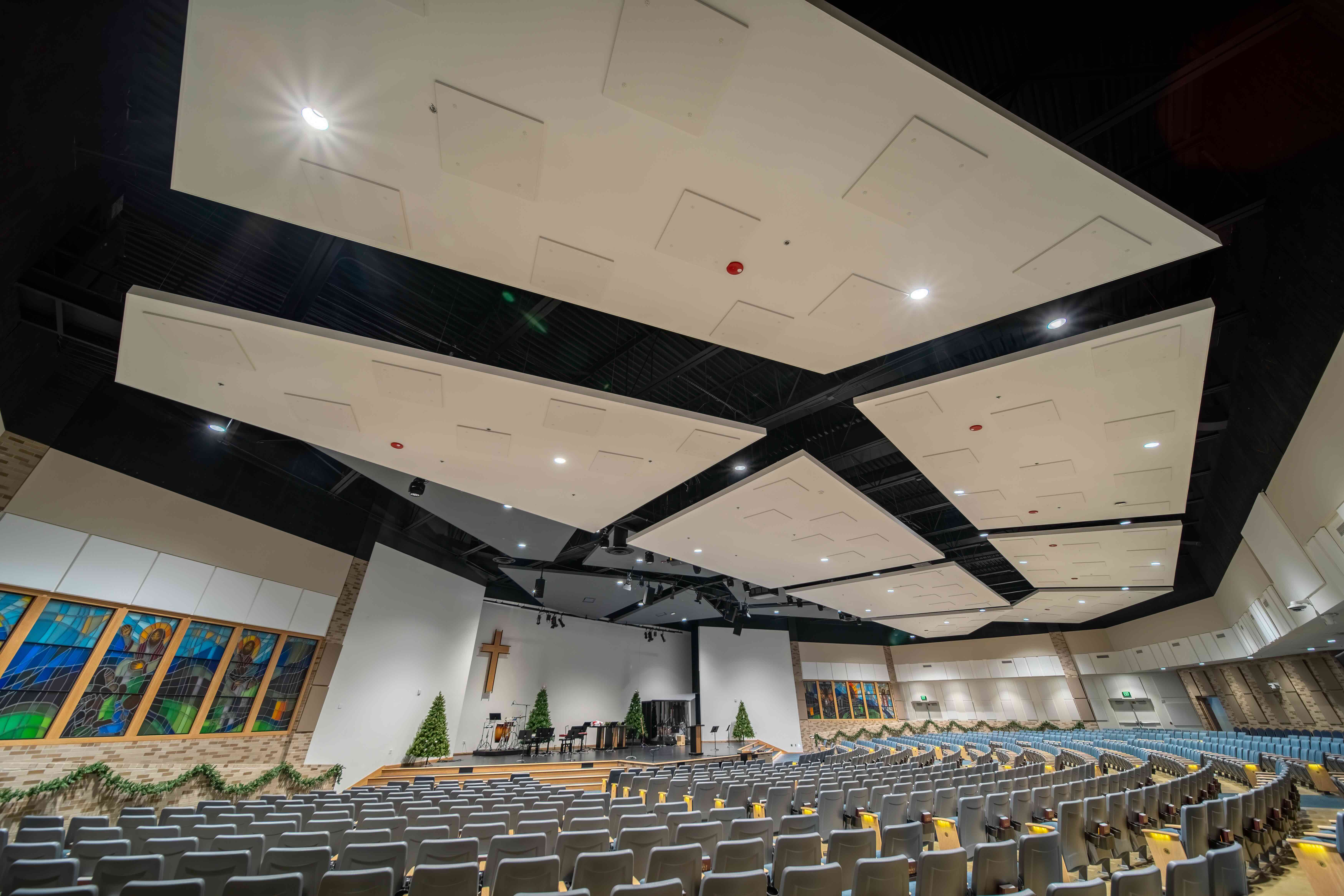
- Worship and performing arts: reverberation time and speech-clarity targets
- Libraries and museums: reading-room background noise and gallery reverberation
General Contractors
Our Construction-Phase Acoustic Capabilities
Every project runs on its own program, budget, and schedule. We bring the full acoustic capability set to your build, from analysis and design through material supply and field verification.
Our capabilities include:
- Submittal and substitution review for performance equivalency
- Rated wall, floor, and ceiling assemblies detailed for field performance
- Flanking-path and penetration detailing that protects the rating
- Vibration isolation for mechanical and structural systems
- Engineered noise-control material supply for the job, shipped FOB origin
- Installation coordination with turnover documentation
.jpeg)
General Contractors
Field Testing Before Turnover
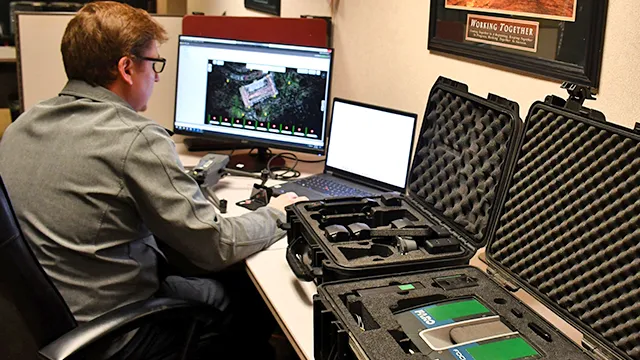
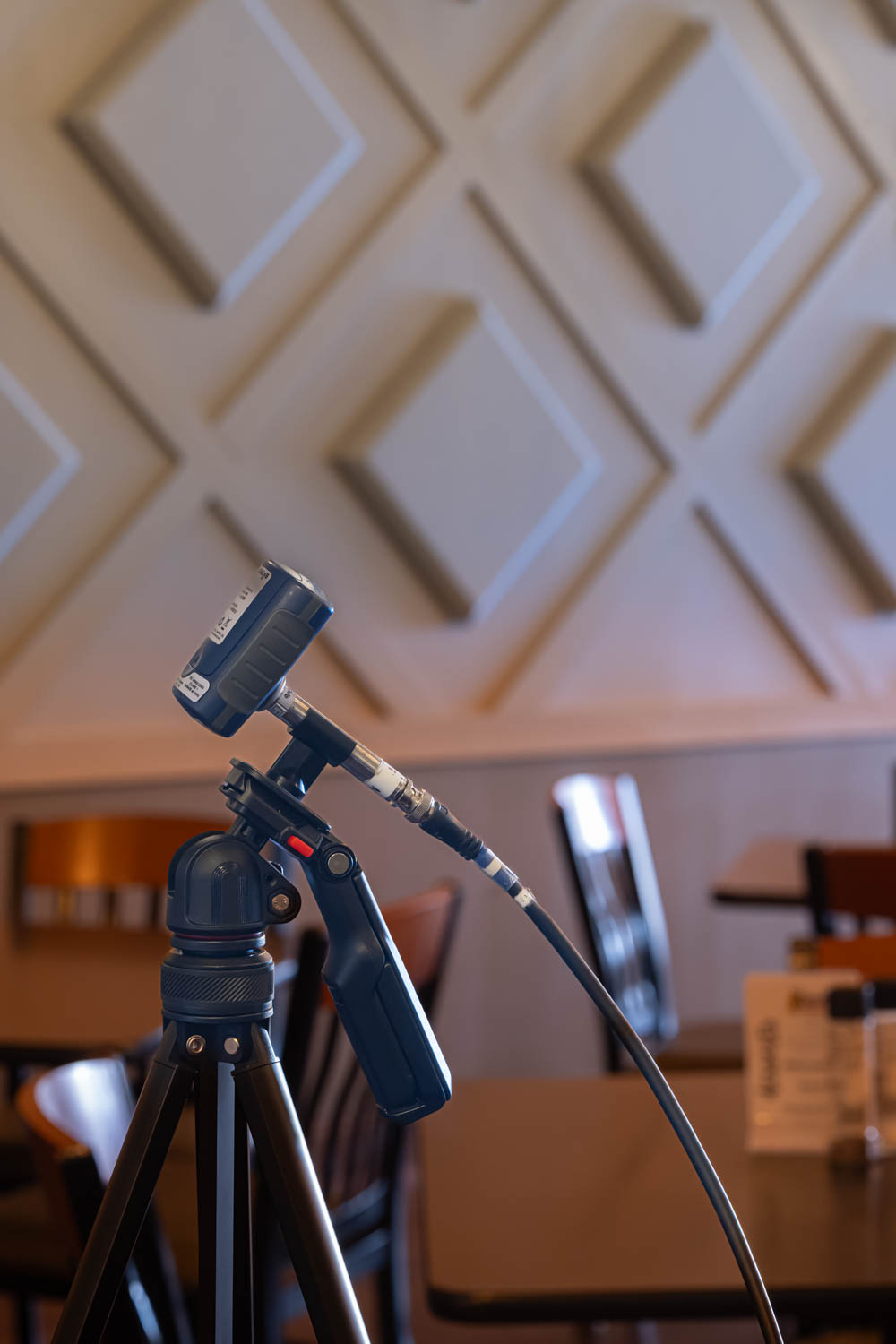
We field-test completed walls and floor-ceiling assemblies with calibrated, NIST-traceable Class 1 instrumentation, measuring field ratings (ASTC and AIIC under ASTM E336 and E1007) against the targets in the contract documents.
Timing matters. A shortfall found before turnover can be fixed while the trades are still on site. Found after occupancy, it means a callback, an owner complaint, and opening finished work. We test while correction is still practical.
Field testing also helps locate the problem. When an assembly misses its target, the test data points to the likely cause, such as a flanking path, an unsealed penetration, or a substituted component, so the trades know what to correct.
We hand over the field results for each tested assembly, giving the owner and architect a record of measured performance against the specified targets.
Timing matters. A shortfall found before turnover can be fixed while the trades are still on site. Found after occupancy, it means a callback, an owner complaint, and opening finished work. We test while correction is still practical.
Field testing also helps locate the problem. When an assembly misses its target, the test data points to the likely cause, such as a flanking path, an unsealed penetration, or a substituted component, so the trades know what to correct.
We hand over the field results for each tested assembly, giving the owner and architect a record of measured performance against the specified targets.
General Contractors
Engineered Noise Control We Supply to the Job
We specify and supply the noise-control materials matched to the specified rating, so the products on site are the ones the assembly was designed around. One partner reviews the submittals, supplies the materials, and field-verifies the result.
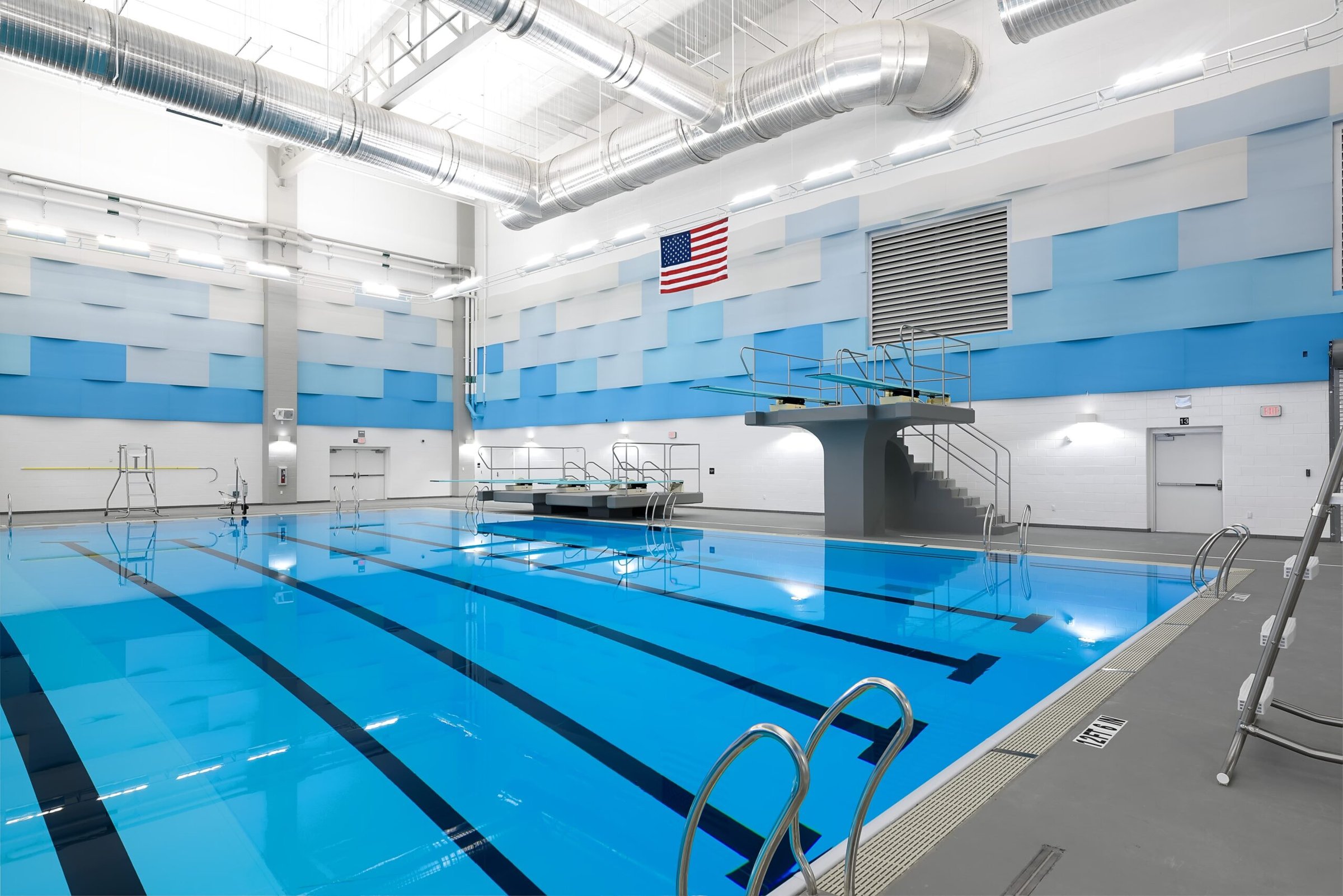
- Acoustic wall and ceiling panels for reverberation and absorption control
- Acoustic enclosures for equipment, generators, and process noise
- Sound barrier and composite mass systems for transmission control
- Mechanical and HVAC noise control: silencers, lagging, and duct treatment
- Floating floors and vibration isolation for equipment and rooms
- Sound masking and speech-privacy systems for open and closed offices
- Room acoustic and RT60 treatments for reverberation targets
Featured Case Study
Class A Walls, Verified for Turnover
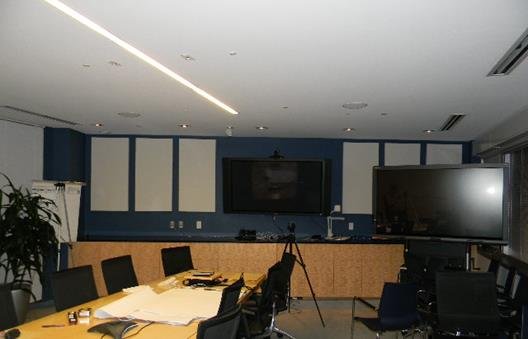
A construction manager finishing a Class A commercial office fit-out needed the new demising walls field-tested against their specified STC 50 to 55 rating before handing the space to the owner, on an urgent timeline. Memtech Acoustics tested the completed walls against the spec and delivered documented results the construction manager could turn over.
Highlights
- Class A demising walls tested against the specified STC 50 to 55 target
- Calibrated, NIST-traceable Class 1 instrumentation, following ASTM E336
- Documented results delivered on an urgent pre-turnover timeline
- Turnover paperwork the construction manager could hand straight to the owner

Why Memtech Acoustics?
- Precision Over Guesswork
We begin with by acquiring comprehensive data at your location. Our designs are not based on assumptions. - Full-Service, No Shortcuts
We’re Michigan’s only full-service firm. We design it, source it, and install it. - Certified Experts, Not Salespeople
Your project is led by engineers and trained acoustical analysts. We speak the language of results and compliance. - Consultative, Not Cookie-Cutter
No two environments are the same. We tailor every solution around your space, constraints, and business goals. - Quiet With Great Aesthetics
From conference rooms to corporate headquarters, our solutions are as aesthetically refined as they are acoustically effective.
Frequently Asked Questions (FAQs)
What is field sound isolation testing, and how do you check a built wall against its rating?
Field testing measures the airborne sound isolation of the wall as built, in place, per ASTM E336. Results are reported as apparent STC (ASTC), NIC, or NNIC, rather than the laboratory STC printed on a submittal. Memtech Acoustics tests the completed assembly with calibrated, NIST-traceable Class 1 instrumentation, so you have the measured as-built result before turnover.
How does your value engineering and substitution equivalency review work?
When a trade proposes a cheaper assembly or a product substitution, we review it against the specified performance, not just the price. We check the acoustic test data, mounting, and detailing to confirm the substitute provides equivalent STC or IIC. If it does not, you get that in writing before it is approved.
Do you coordinate in the field with our trades, or just show up to test?
We coordinate with your trades during construction so assemblies get built as drawn. That covers wall terminations, deck-to-deck detailing, sequencing with mechanical and electrical trades, and the small field decisions that undercut a rating if nobody is tracking them. That coordination is what protects the rating in the field.
What is flanking, and why does a wall pass in the lab but fail on site?
Flanking is sound transmission around a partition rather than through it, which is why a wall with a high laboratory STC can underperform in the field. Memtech Acoustics details the flanking paths early: penetrations, firestop, outlet boxes, ductwork, and the gap at the deck. In Memtech's experience, sealing those paths is usually what separates a passing field test from a callback.
What deliverables do we get for closeout?
You get documented field test results tied to each tested assembly, the measured rating against the specified target, the instrumentation and standard used, and a report the owner and architect can accept at turnover. It is turnover documentation that closes the acoustic scope, not a raw data dump.
What is the timeline, and can you work an urgent turnover schedule?
We work on tight closeout timelines. Testing a set of completed assemblies is typically a single site visit, with documented results back within days. Tell us your turnover date and we build the schedule backward from it, so verification lands before you hand over the space.
Do you supply materials as well as test?
Yes. We supply engineered noise-control materials and systems for the job and coordinate the specification, not only the testing. That is the difference from a testing lab: one partner reviews the submittals, supplies the materials, coordinates the field, and verifies the built result. Materials ship FOB origin.
How does an engagement start?
Send us the acoustic sections of the spec, the wall types, and your schedule. We scope what needs review or field verification and give you a defined proposal. Most GC engagements start with either a submittal and substitution review, field verification of completed assemblies, or both.
What is the cost basis?
Engineering and field verification are scoped to the work: the number of assemblies, the standards involved, and the coordination required. You get a defined fee, not an open meter. On full-package work where we design, supply, and verify, that fee is what backs the performance result we stand behind.
How early should we bring you in?
As early as the submittal and value engineering phase. Cutting acoustic scope in VE often moves the cost to closeout rather than saving it. Bringing us in before substitutions are approved generally costs far less than a callback after occupancy.
Let’s Engineer the Right Solution, Together.

Let's Get Started. Contact Us.
Talk to our experts. We’ll assess your needs and recommend a solution that works for your project.